Algeria
 Egypt
 Libya
 Morocco
 Sudan
 Tunisia
 Benin
 Burkina Faso
 Cabo Verde
 Côte d'Ivoire
 Ghana
 Guinea
 Guinea-Bissau
 Liberia
 Mali
 Mauritania
 Niger
 Nigeria
 Senegal
 Sierra Leone
 The Gambia
 Togo
 Cameroon
 Central African Republic
 Chad
 DR Congo
 Equatorial Guinea
 Gabon
 São Tomé and Príncipe
 Burundi
 Comoros
 Djibouti
 Eritrea
 Ethiopia
 Kenya
 Madagascar
 Malawi
 Mauritius
 Mozambique
 Rwanda
 Seychelles
 Somalia
 South Sudan
 Tanzania
 Uganda
 Angola
 Botswana
 Eswatini
 Lesotho
 Namibia
 South Africa
 Zambia
 Zimbabwe
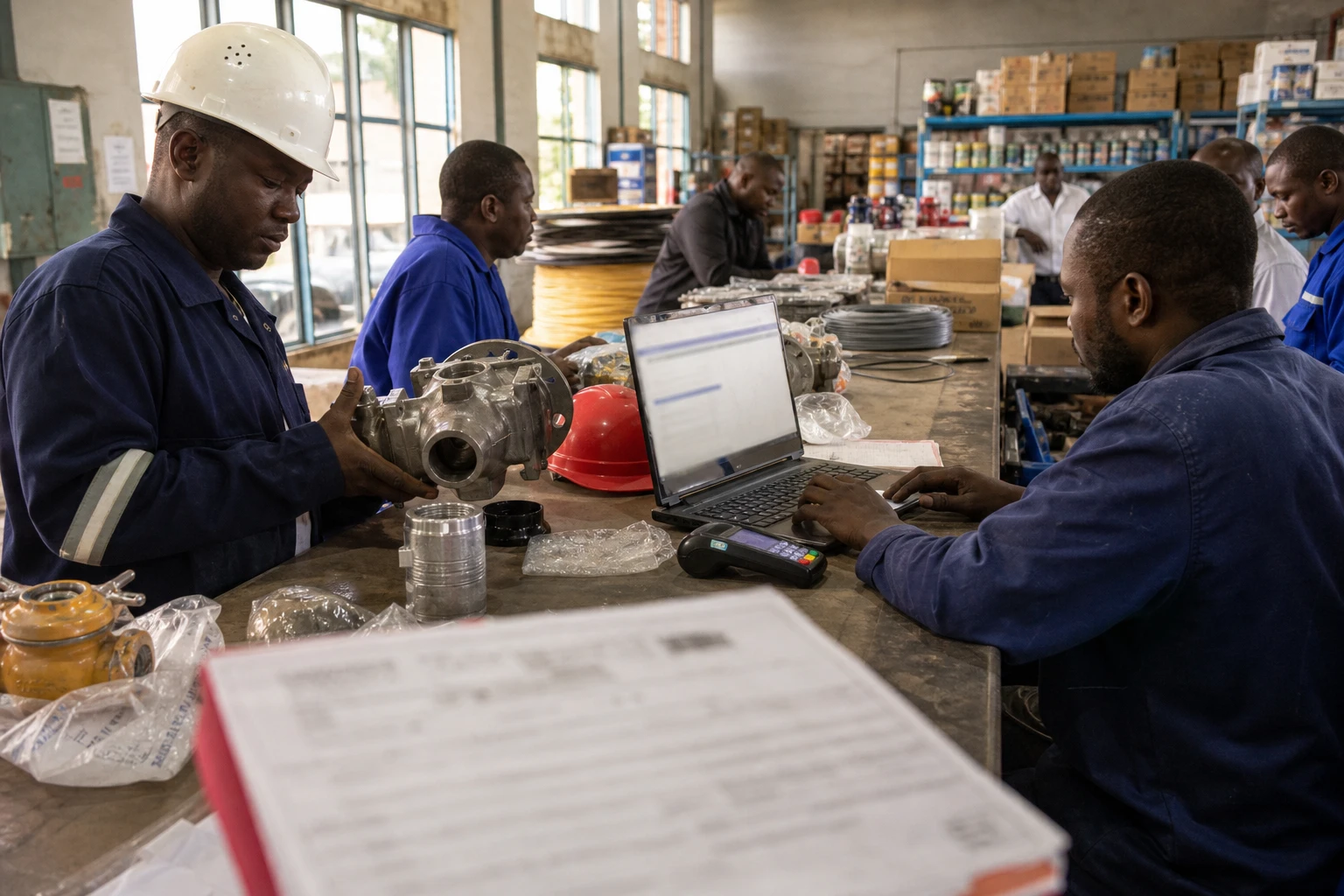
In Brazzaville, the challenge is no longer simply to extract more oil. It is now about how much of the value created will remain in the Congolese economy. With this in mind, a delegation from the Republic of the Congo travelled to Nigeria to study a system that has become central to the country’s energy policy: local content.
An exchange between two African producers
Local content refers to the rules and mechanisms that encourage the employment of national workers, procurement from domestic companies, training and technology transfer in a given sector. In hydrocarbons, it determines a producer country’s ability to turn its natural resources into skills, jobs and industrial activity.
On 21 September 2026, Congolese Minister of Hydrocarbons Stev Simplice Onanga was received in Abuja by Heineken Lokpobiri, Nigeria’s Minister of State for Petroleum Resources. The meeting focused on the experience of the Nigerian Content Development and Monitoring Board (NCDMB), the body responsible for guiding and overseeing Nigerian participation in the oil and gas industry.
The Congolese mission brought together representatives of the ministry, the National Petroleum Company of the Congo (SNPC) and domestic private companies. According to the Congolese Ministry of Hydrocarbons, it was intended to examine Nigeria’s regulations as well as their practical application in financing, training, manufacturing and skills transfer.
The delegation then travelled to Yenagoa, in Bayelsa State, where the NCDMB is headquartered. It also visited the Nigerian Oil and Gas Park Scheme in Emeyal I and a 10-megawatt gas-fired power plant in Elebele. These facilities were presented as examples of projects bringing together local companies, supplies of domestically produced gas and the creation of industrial capacity.
Nigeria relies on a structured institutional framework
Nigeria adopted the Nigerian Oil and Gas Industry Content Development Act in 2010. The legislation established a specific legal framework and tasked the NCDMB with monitoring operators’ obligations. The system is therefore not based solely on quotas. It also combines company certification, access to finance, technical training and oversight of contracts awarded by oil companies.
The NCDMB says the share of Nigerian content in projects monitored by the body reached 61 % in the third quarter of 2025. The figure is reported by the institution itself and measures the value generated in Nigeria in the projects concerned. It does not mean that 61 % of all national oil production comes from Nigerian companies.
The model includes financing mechanisms for local companies. In 2025, the NCDMB announced a $100 million equity investment programme for high-potential Nigerian energy companies. The aim is to enable them to acquire equipment, strengthen their capacities and take part in contracts previously reserved for major international groups.
This progress, however, is linked to several decades of industrial learning. Nigeria has a large domestic market, a long history in oil and a more developed network of services companies than the Congo. The model therefore cannot be transferred mechanically. It will have to take account of the size of the Congolese market, the availability of finance and the level of specialisation among its companies.
The Congo already has a legal framework
The Republic of the Congo is not without rules in this area. Law No. 28-2016 of 12 October 2016 establishing the Hydrocarbons Code contains several provisions on strengthening local content. It sets out obligations for contractors and companies involved in exploration, development and production activities.
The main challenge now lies in implementation. The rules need to be backed by verifiable indicators, monitoring procedures and sanctions that can be applied in practice. They must also specify the terms under which Congolese companies can access contracts, to prevent national preference from being confined to the least technical services.
For local companies, the issue extends beyond subcontracting. It also concerns their ability to provide engineering, maintenance, logistics, manufacturing and data-processing services. Without this move up the value chain, higher production could increase imports of goods and services instead of strengthening the national industrial base.
Production ambitions add to the pressure
The initiative comes as Brazzaville prepares for a new phase of upstream oil investment. The government is targeting production of 500 000 barrels of oil equivalent per day in the medium term, compared with a current level below that target. The ambition rests on developing new fields, redeveloping existing permits and giving natural gas a greater role.
At its meeting on 18 August 2026, the Council of Ministers considered the redevelopment of the Banga Kayo II permit. The Congolese government estimates that the project could mobilise $23 billion. The contractor group comprises the SNPC, with a 15 % stake, and Wing Wah Exploration & Production Pétrolière SAU, with 85 %.
The same Council of Ministers discussed the Holmoni and Cayo permits, whose development plan is expected to help increase national production. These projects should also inform the debate on local content. The larger the investments, the greater the demand for skilled labour, equipment, transport and specialised services.
For Congolese leaders, the challenge is therefore twofold: to attract the capital needed to raise production while securing greater benefits for the country. Companies will prioritise access to contracts and finance. For workers, the issue will be training and progression into technical and senior roles. In producing areas, the quality of local contracts and infrastructure will directly affect the projects’ economic impact.
An issue for Central Africa and the continent
Co-operation between Brazzaville and Abuja is part of a broader trend towards sharing experience among African hydrocarbon producers. Nigeria is now seeking to present its system as a tool for industrial development, rather than simply a measure to protect the market.
This approach aligns with debates within the African Petroleum Producers’ Organization (APPO), which the Congo regularly hosts for meetings on local content. It also aligns with the goals of the African Continental Free Trade Area, which seeks to increase the exchange of goods, services and skills between African economies.
The next test will be whether the Congo can turn this study mission into practical mechanisms. Progress will need to be tracked in the creation of a financing system, publication of local-content indicators, access for Congolese companies to major contracts and training for technicians able to support new projects. The success of the co-operation will therefore not be measured by the number of official visits, but by the lasting share of value added created in Brazzaville, Pointe-Noire and the country’s other centres of activity.