Algeria
 Egypt
 Libya
 Morocco
 Sudan
 Tunisia
 Benin
 Burkina Faso
 Cabo Verde
 Côte d'Ivoire
 Ghana
 Guinea
 Guinea-Bissau
 Liberia
 Mali
 Mauritania
 Niger
 Nigeria
 Senegal
 Sierra Leone
 The Gambia
 Togo
 Cameroon
 Central African Republic
 Chad
 DR Congo
 Equatorial Guinea
 Gabon
 Republic of the Congo
 São Tomé and Príncipe
 Burundi
 Comoros
 Djibouti
 Eritrea
 Ethiopia
 Kenya
 Madagascar
 Malawi
 Mauritius
 Mozambique
 Rwanda
 Seychelles
 Somalia
 South Sudan
 Tanzania
 Uganda
 Angola
 Eswatini
 Lesotho
 Namibia
 South Africa
 Zambia
 Zimbabwe
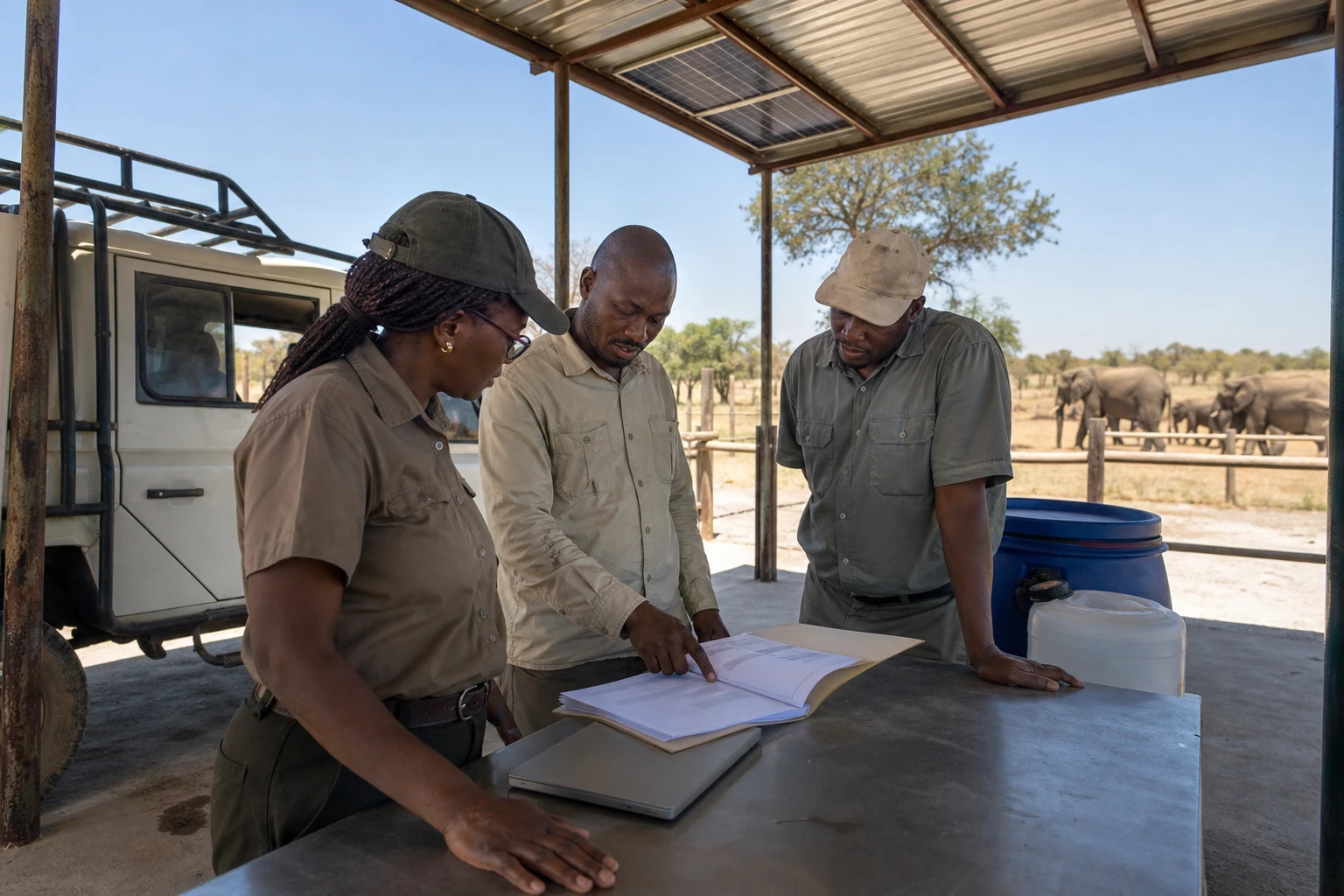
In Gaborone, celebrations marking Botswana’s 60th anniversary of independence have prompted an unexpected debate: how far can a state mobilise its wildlife in the name of a national event? The controversy centres on authorisation to hunt 23 elephants, along with other animals, to provide meat for festivities on 30 September 2026.
A decision linked to national celebrations
Botswana celebrated its independence on 30 September 2026, 60 years after the end of the British protectorate and the birth of the Republic on 30 September 1966. The ceremonies were organised around the theme “Building Resilience, Driving Prosperity”.
As part of this, the Ministry of Environment and Tourism approved free hunting licences to supply game meat for the celebrations. An administrative document dated 11 September 2026 reportedly provided for the hunting of 23 elephants across eight districts. The information was reported by Botswana news outlet News&All Botswana.
The same arrangement covers other wild species. The authorities asked local officials to facilitate the operations, while reminding them of the requirement to comply with hunting legislation. So far, public details on the exact locations, methods used and precise distribution of the meat remain limited.
This lack of detail is fuelling questions. The figure of 23 elephants is based mainly on the administrative document cited by the local press. It should therefore be distinguished from annual trophy-hunting quotas, which fall under a different wildlife management mechanism.
The country is home to a major elephant population
Botswana occupies a particular place in the conservation of African elephants. The main concentrations are in the north of the country, notably around Chobe National Park, the Okavango Delta and areas near the borders with Namibia, Zambia and Zimbabwe.
Available estimates put the number of elephants in Botswana at more than 130,000. They vary according to counting methods, seasonal movements and cross-border populations. This mobility complicates any strictly national assessment: the same herd may move between several countries in southern Africa.
The region comes under the Southern African Development Community, or SADC, which brings together several states committed to economic co-operation, natural resource management and combating cross-border crime. For elephants, this regional dimension is essential. Administrative boundaries do not correspond to the animals’ routes.
For several years, Botswana has advocated an approach combining conservation, population control and revenue for rural communities. Its officials point to damage to crops, risks to residents and the need for villages concerned to benefit from resources derived from wildlife.
A hunting policy that is already highly controversial
The country suspended hunting in 2014. The moratorium strengthened Botswana’s image as a major destination for conservation and wildlife-viewing tourism. In 2019, however, the government announced that hunting would resume, citing conflicts between people and animals among its reasons.
Since then, the debate has pitted two visions against each other. The first sees regulated hunting as a tool for management and redistribution. The second argues that it weakens herds’ social structures and reduces the incentive to protect animals in the long term.
Elephant protection organisations are particularly critical of the idea of killing animals for a national celebration. The Elephant Protection Society denounced a decision that, it said, could normalise the killing of elephants and blur the conservation message sent to citizens and foreign visitors alike.
Wildlife advocates also fear that repeated shootings will disrupt herds. Among elephants, the bonds between females, young and adult males play an important role in movement, learning and group protection. They fear that increased pressure on older animals could weaken this social organisation.
The government, for its part, says hunting takes place within a regulated framework. In 2025, a ministerial official told parliament that no large-scale culling programme was being considered. The official also presented quotas and animal-control measures as responses to agricultural damage and the difficulties faced by some communities.
Quota figures are not entirely consistent
The controversy comes as published figures for the 2026 elephant quota do not entirely tally. Some reports cite a cap of 430 animals, up from 410 in 2025. Another Botswana publication, citing statistics from the Department of Wildlife and National Parks, instead gives a figure of 415 elephants for 2026.
This difference is not minor. It may stem from a distinction between the national quota, the trophy-hunting quota, community permits or administrative adjustments. Above all, it highlights the need to publish a detailed official tally, by species and district.
Botswana would therefore benefit from clarifying the difference between the 23 elephants authorised for the celebrations and the annual hunting quota. Without that distinction, the public risks confusing a one-off operation with the general policy on elephant management.
Health concerns add another tension
The distribution of game meat is also taking place amid health concerns. Botswana is facing outbreaks of foot-and-mouth disease, an animal disease that mainly affects cloven-hoofed species and disrupts the movement of livestock and meat products.
Restrictions have already affected the movement of animals and meat in several areas. In February 2026, the Botswana authorities maintained restrictions in affected sectors while allowing certain movements subject to conditions. Official information has also reported cases in zones 3c and 6b.
Foot-and-mouth disease is not generally a human disease comparable to food poisoning. However, it requires strict rules on traceability, slaughter, transport and veterinary checks. Residents are therefore asking about the health conditions applied to game meat distributed during gatherings.
This concern affects different groups in different ways. In rural areas, meat from hunting can be a valued resource and a tangible benefit for communities. In urban centres such as Gaborone, the debate is more focused on the country’s image, conservation and food safety.
A national choice with regional repercussions
Botswana must now address a simple question with far-reaching consequences: how can it reconcile the protection of a global natural heritage, the rights of rural communities and the country’s sovereignty over its resources?
The answer matters across southern Africa. SADC is seeking to co-ordinate the management of migratory species, as elephants cross several territories and decisions made in one country can alter movements, tensions and hunting practices in neighbouring countries.
For the Botswana authorities, the challenge will be to document the authorisations, the results of the operations and where the meat goes. For communities, the benefits actually received and the measures intended to reduce agricultural damage will need to be verified. For conservation organisations, the central question will remain the cumulative impact of removals.
The debate is therefore not confined to the 30 September 2026 celebrations. It highlights a lasting tension between tourism, conservation, the safety of rural populations and national control of natural resources. In this equation, transparent figures and the quality of scientific monitoring will carry as much weight as political arguments.