Algeria
 Egypt
 Libya
 Morocco
 Sudan
 Tunisia
 Benin
 Burkina Faso
 Cabo Verde
 Côte d'Ivoire
 Ghana
 Guinea
 Guinea-Bissau
 Liberia
 Mali
 Mauritania
 Niger
 Nigeria
 Senegal
 Sierra Leone
 The Gambia
 Togo
 Cameroon
 Central African Republic
 Chad
 DR Congo
 Equatorial Guinea
 Gabon
 Republic of the Congo
 São Tomé and Príncipe
 Burundi
 Comoros
 Djibouti
 Eritrea
 Ethiopia
 Kenya
 Madagascar
 Malawi
 Mauritius
 Mozambique
 Rwanda
 Seychelles
 Somalia
 South Sudan
 Tanzania
 Uganda
 Angola
 Botswana
 Eswatini
 Lesotho
 Namibia
 South Africa
 Zimbabwe
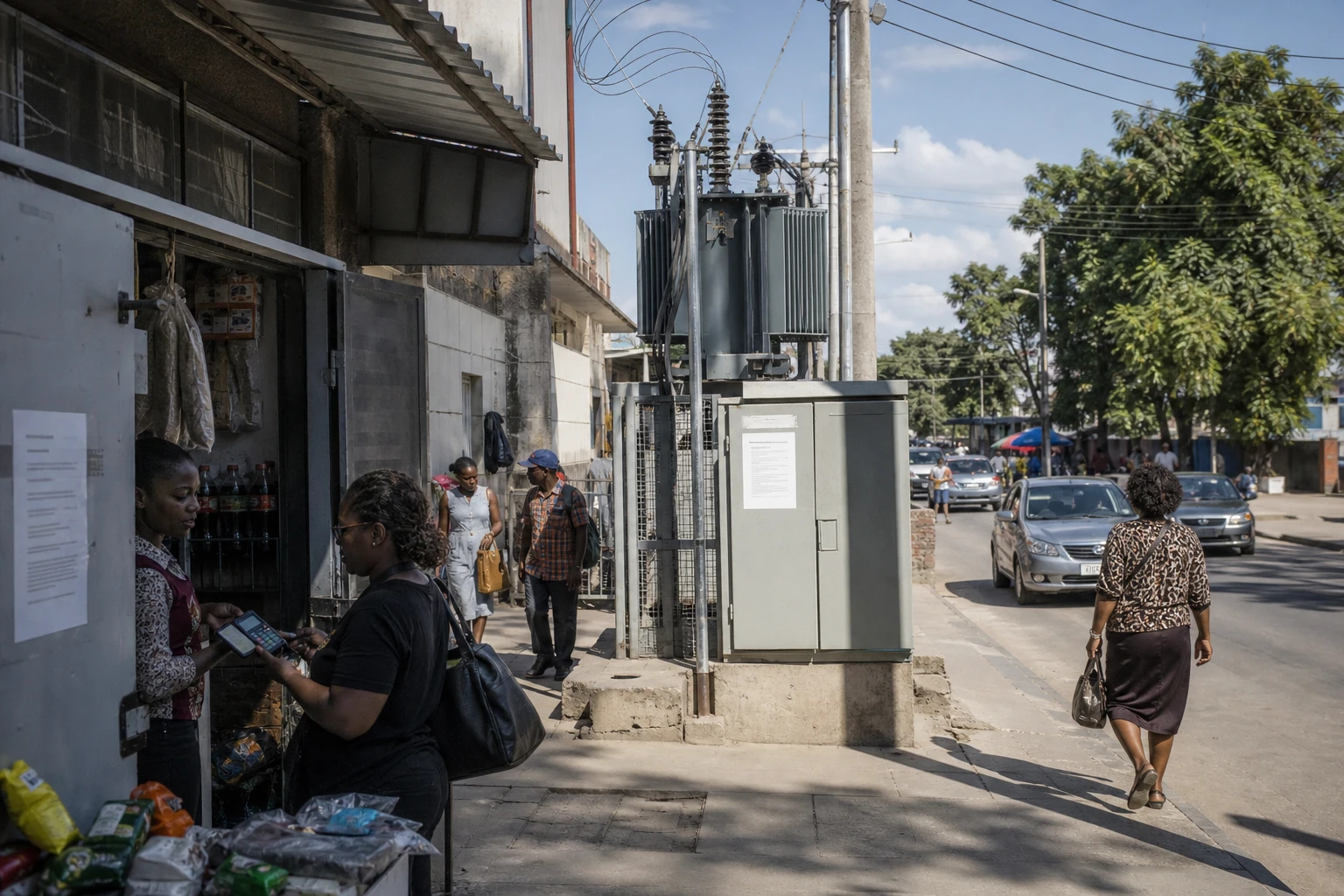
In Lusaka, the electricity question is no longer simply about generating more power. Zambia is now seeking to organise a market capable of attracting private capital, securing the grid and selling electricity beyond its borders. The $250 million agreement between Exergy and Mercuria illustrates this shift in scale.
A market opening up beyond generation
Announced in Lusaka on 25 September 2026, the agreement remains subject to regulatory approvals. It is intended to fund power generation and transmission projects run by two Exergy subsidiaries: Lunzua Power Company and Lusitu Transmission and Distribution Company.
The partners have yet to detail the list of projects that will benefit, the precise allocation of funds or the financial structure of the deal. Its scope, however, is clear: the financing is not aimed solely at new power plants. It also covers the infrastructure needed to deliver electricity to consumers and neighbouring markets.
Exergy operates across several segments. Lunzua Power develops generation capacity. Lusitu Transmission and Distribution works on the grid. Kanona Power Company handles trading and balancing supply and demand. This structure reflects a major shift in the sector: value is now being created throughout the electricity supply chain.
For Mercuria, an international energy and commodities group, the deal marks its entry into the regional electricity market. The company is bringing not only financial resources, but also experience in energy trading, risk management and cross-border transactions. Mercuria’s statement on the agreement with Exergy presents Zambia as a potential hub for electricity trading in southern and eastern Africa.
Zambian reforms make investment possible
The deal is part of a gradual reform of the domestic market. Adopted in 2024, Zambia’s open-access electricity rules allow independent power producers to sell their electricity directly to customers using the networks of ZESCO, Copperbelt Energy Corporation or North Western Energy Corporation, subject to regulated access to the infrastructure.
In other words, a producer is no longer necessarily obliged to sell all its electricity to the incumbent utility. Under certain conditions, an industrial customer can negotiate with another supplier. This option is particularly important for mines, factories and large businesses, which need a stable and predictable power supply.
The government has also introduced a single-licence system. The aim is to cut the administrative delays associated with energy projects. The regulator and the Ministry of Energy are working in parallel on the technical tools needed to put open access into practice: connection procedures, metering, consumption data and grid operating rules.
The momentum is already reflected in the regulator’s figures. According to the Energy Regulation Board’s 2025 annual report, the number of power purchase agreements for the Zambian market rose from 23 in 2024 to 101 in 2025. This leap reflects the urgency created by the energy crisis, as well as the arrival of new projects and business models.
Diversification becomes a national necessity
Zambia remains heavily dependent on hydropower. This specialisation long supported the country’s development, but it leaves it exposed to fluctuations in rainfall and water levels. Droughts have reduced output from dams and led to restrictions affecting households, businesses and mining operations.
The response is now to multiply both energy sources and operators. The Ministry of Energy says installed power capacity rose from 3,100 megawatts in 2021 to 4,576 megawatts in 2026. Over the same period, solar capacity is said to have increased from 88 to 841 megawatts. These figures appear in the official report by Zambia’s Ministry of Energy.
The expansion of solar power serves a dual purpose. It eases pressure on dams when water resources decline. It also makes it possible to add modular capacity quickly in a country where demand is rising with industry, agriculture, services and copper mining.
But generating more power is not enough. Without transmission lines able to accommodate new power plants, some electricity remains difficult to deliver. That is why Exergy and Mercuria’s financing also targets the grid. The issue of “bottlenecks” concerns cables and substations just as much as power plants themselves.
Private capital already active in the regional market
Mercuria is not the first private player to take advantage of this opening. In July 2025, BB Energy announced the commissioning of the first phase of Mailo, a 25-megawatt-peak merchant solar plant. Unlike a project backed by a single public buyer, a merchant plant sells its electricity according to market opportunities.
Mailo trades its electricity on the Southern African Power Pool, the regional market linking several electricity companies and large consumers in southern Africa. The project is expected to reach 118 megawatts-peak in its third phase, according to BB Energy.
GreenCo is also part of this shift. The company facilitates electricity trading and supports projects such as Ilute and Chisamba. Its model seeks, in particular, to mobilise financing without a direct sovereign guarantee. This can ease pressure on public finances while shifting a greater share of the risk to developers and investors.
This transformation is of particular interest to large consumers. Copperbelt mines need a steady supply to maintain production. Farms are looking for greater reliability for irrigation and processing. In rural areas, the priorities are different: access to the grid and the price of electricity remain paramount. Market liberalisation will therefore have broad social benefits only if investment extends beyond industrial corridors.
Zambia aims to become an electricity hub
Zambia’s geographic position adds to the regional importance of these projects. The country is a member of the Southern African Power Pool and borders several markets in southern and central Africa. New infrastructure could facilitate electricity trading with the Democratic Republic of the Congo, Tanzania and other neighbouring countries.
The government is targeting a supply capacity of 10,000 megawatts by 2031. It also plans to strengthen interconnections, particularly with Tanzania, to improve domestic reliability and regional trade. The Ministry of Energy’s budget policy statement lists this interconnection among the sector’s priorities.
The success of this strategy will nevertheless depend on several conditions: stable rules, transparent transmission tariffs, independent regulation and contracts robust enough to reassure investors. The next step will therefore be less spectacular than the announcement of financing, but decisive: turning regulatory liberalisation into electricity actually delivered, at an affordable cost, to businesses and households alike.