Algeria
 Egypt
 Libya
 Morocco
 Sudan
 Tunisia
 Benin
 Burkina Faso
 Cabo Verde
 Côte d'Ivoire
 Ghana
 Guinea
 Guinea-Bissau
 Liberia
 Mali
 Mauritania
 Niger
 Nigeria
 Senegal
 Sierra Leone
 The Gambia
 Cameroon
 Central African Republic
 Chad
 DR Congo
 Equatorial Guinea
 Gabon
 Republic of the Congo
 São Tomé and Príncipe
 Burundi
 Comoros
 Djibouti
 Eritrea
 Ethiopia
 Kenya
 Madagascar
 Malawi
 Mauritius
 Mozambique
 Rwanda
 Seychelles
 Somalia
 South Sudan
 Tanzania
 Uganda
 Angola
 Botswana
 Eswatini
 Lesotho
 Namibia
 South Africa
 Zambia
 Zimbabwe
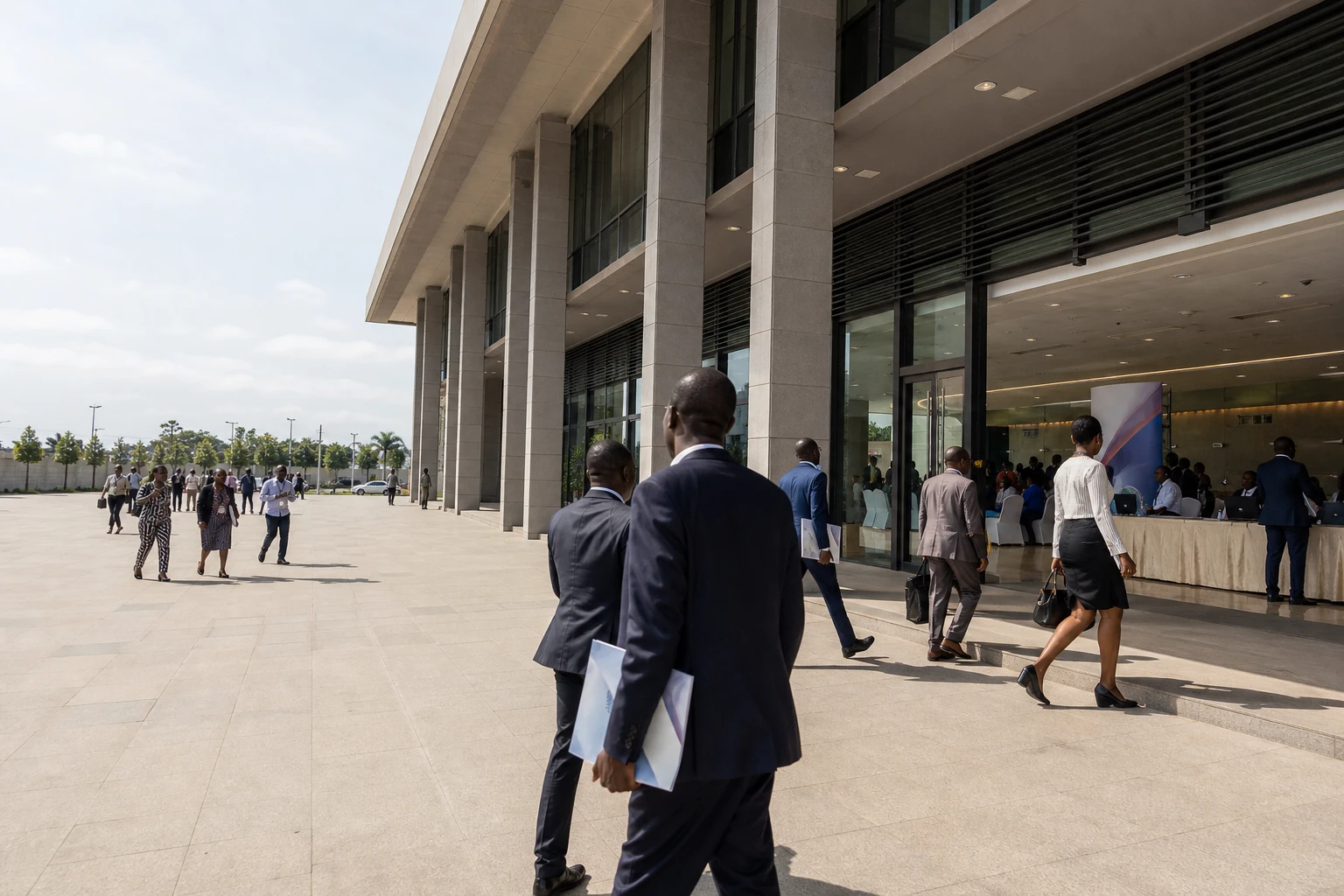
In Lomé, West Africa’s next major financial gathering will focus less on multiplying announcements than on turning projects into investment decisions. The ECOWAS Bank for Investment and Development is preparing the 2027 edition of its regional forum, aiming to bring businesses, governments, investors and development partners together directly.
Lomé strengthens its role as a regional financial hub
The second edition of the ECOWAS Investment Forum will take place on 7 and 8 April 2027 at the Palais des Congrès in Lomé. The event is organised by EBID, the financial institution of the Economic Community of West African States, which supports public and private projects in member countries.
Preparations were officially launched on Tuesday 29 September 2026 in the Togolese capital. The choice of Lomé builds on an existing momentum. The city is home to EBID’s headquarters and hosted the forum’s first edition on 4 and 5 April 2024.
For Togo, the event will raise Lomé’s profile in regional financing networks. The Togolese capital regularly hosts gatherings focused on trade, infrastructure and investment. It is seeking to consolidate its position as a point of connection between West Africa, international markets and private-sector players.
Forty projects announced, with transactions the priority
EBID plans to present around 40 projects and programmes at the 2027 edition. Four negotiation spaces, known as “deal rooms”, are intended to allow project sponsors to engage directly with financiers.
Available communications do not give a consistent picture of expected attendance. Initial announcements mention more than 500 participants and around 200 business leaders, development actors and public-agency representatives from at least 15 countries. The forum’s official website, meanwhile, sets a target of more than 1,000 participants and investors. These figures probably refer to different groups. EBID will therefore need to clarify the breakdown between participants, investors and speakers as the programme is finalised.
The chosen theme focuses on resilience and transformation in an uncertain global context. Discussions are due to cover agriculture, food security, energy, green industrialisation, financing for small and medium-sized enterprises, financial inclusion and the digital economy.
Sessions on climate finance are also planned. They are expected to be of interest to countries facing significant infrastructure needs, as access to capital becomes more costly and selective.
The challenge is not simply to showcase ideas. A project presented to an investor needs technical studies, a credible business model, a clear legal framework and a risk-sharing mechanism. Without these elements, announcements are difficult to turn into actual funding.
The 2024 precedent puts pressure on the new edition
The first edition of the forum brought together more than 700 participants from over 20 countries, according to accounts released by EBID and the Togolese authorities. It also led to three memorandums of understanding worth around $439 million for projects in Guinea, Nigeria and Senegal.
These agreements do not automatically mean funds have been disbursed. Rather, they mark a stage in negotiations between project sponsors and financiers. EBID says, however, that some of the projects concerned have entered a financing process. The 2027 edition will therefore be judged on one specific point: the bank’s ability to demonstrate progress from stated intentions to operations actually under way.
This requirement explains the language used by the bank’s officials. The stated aim is to move from a presentation-based approach to one focused on transactions. In other words, organisers want meetings to produce firm letters of intent, financing agreements or clearly structured partnerships.
Funding needs that exceed national budgets
West African economies need to finance electricity networks, road corridors, agricultural facilities, processing plants and digital services. These investments often exceed the budgetary capacity of any one state.
Regional cooperation can then reduce costs and expand markets. An interconnected energy project, a cross-border transport infrastructure or an agro-industrial value chain becomes more attractive when it serves several countries. ECOWAS, which brings together West African economies, provides the institutional framework for this approach, even as the region continues to face political tensions and shifting alliances.
Financing must also take account of differences between capital cities and other regions. A large company can access banks and financial markets more easily. By contrast, an SME based in a secondary region depends more heavily on public guarantees, local banks and financing mechanisms suited to irregular income.
In agriculture, for example, building a processing plant is not enough. Supply, roads, storage, access to electricity and commercial outlets must also be secured. The strongest projects will therefore be those that link financing, production and the regional market.
EBID seeks to strengthen its capacity to act
The forum comes as EBID seeks to improve its credibility with investors and lenders. In August 2026, Moody’s raised the bank’s long-term issuer rating from B2 to B1, with a stable outlook. The rating remains speculative, but it reflects a more favourable assessment of the institution’s financial position.
The change may make it easier to mobilise resources, but does not in itself guarantee cheaper financing. Project quality, the strength of guarantees and borrowers’ ability to repay will remain decisive. EBID must therefore use this improvement to expand its lending, guarantees and co-financing operations.
For local people, the forum’s success will be measured less by the number of badges handed out than by tangible economic effects. Investments should help create jobs, strengthen local businesses and reduce dependence on imports of energy, fertiliser or processed products.
A test for West African economic integration
EIF 2027 will take place in an ECOWAS facing significant political and economic challenges. Discussions on regional integration, the movement of goods, energy security and relations between ECOWAS and the countries of the Alliance of Sahel States directly affect the investment environment.
In this context, a forum focused on financing can play a practical role. It will not resolve political disputes, but it can maintain links between businesses, banks and administrations. Cross-border projects will nevertheless depend on stable rules, smooth trade and trust between states.
The next major gathering will therefore be in April 2027, in Lomé. Until then, key points to watch will include the final selection of the 40 projects, the identity of the investors attending and the number of agreements able to move quickly beyond the announcement stage. For EBID and ECOWAS alike, the credibility of this second edition will depend on delivery.