Algeria
 Egypt
 Libya
 Morocco
 Sudan
 Tunisia
 Benin
 Burkina Faso
 Cabo Verde
 Côte d'Ivoire
 Ghana
 Guinea
 Guinea-Bissau
 Liberia
 Mali
 Mauritania
 Niger
 Nigeria
 Senegal
 Sierra Leone
 The Gambia
 Togo
 Cameroon
 Central African Republic
 Chad
 DR Congo
 Equatorial Guinea
 Gabon
 Republic of the Congo
 São Tomé and Príncipe
 Burundi
 Comoros
 Djibouti
 Eritrea
 Ethiopia
 Kenya
 Madagascar
 Malawi
 Mauritius
 Mozambique
 Rwanda
 Seychelles
 Somalia
 South Sudan
 Tanzania
 Uganda
 Angola
 Botswana
 Eswatini
 Lesotho
 Namibia
 South Africa
 Zimbabwe
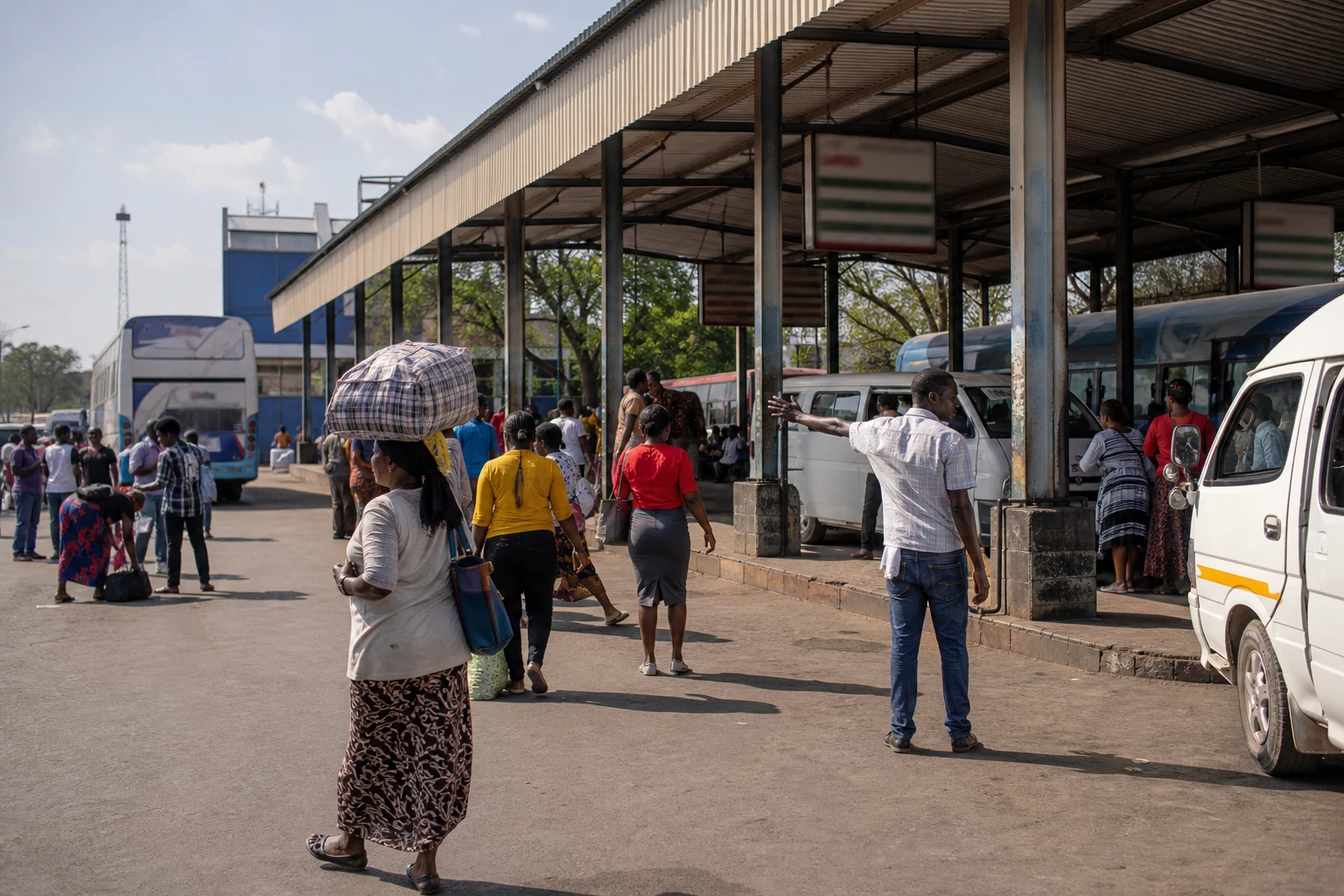
In Lusaka, the challenge is no longer simply to attract investment announcements. It is now to turn funding pledges into infrastructure, jobs and productive capacity. It is in this demanding phase that closer economic ties between Zambia and the United Arab Emirates are taking shape.
Abu Dhabi, a new step in Lusaka’s investment strategy
On 29 September 2026, Zambia and the United Arab Emirates signed several memorandums of understanding at a business forum in Abu Dhabi. Their announced value stands at $2.14bn, according to the Zambian presidency.
The agreements cover several sectors, including healthcare, renewable energy, logistics, technology, biotechnology and agriculture. Zambian authorities present them as a step in their economic transformation strategy.
The most significant detail concerns a medical city project valued at $2bn. The facility would be built in Lusaka, near Kenneth Kaunda International Airport. The project is being led by DIHAD Sustainable Project Management LLC, a United Arab Emirates-based company, according to the Zambian daily Times of Zambia.
The Zambian presidency has confirmed the total value of the memorandums, describing them as agreements intended to strengthen bilateral trade and investment. It has not presented them as disbursements already made. This distinction is essential: a memorandum expresses an intention and sets a framework for cooperation, but does not by itself guarantee a project’s financing or construction.
An economy seeking to overcome its constraints
For Hakainde Hichilema, this diplomatic push responds to a specific need: attracting private capital to an economy still heavily dependent on copper. The Zambian president champions agriculture, energy, industrial processing and services as necessary drivers of growth.
The government is promoting its “Grow Zambia Agenda”, a programme aimed at expanding the economy, broadening public revenues and creating more jobs. At the Abu Dhabi forum, Hichilema also said Zambia was ready to welcome businesses and investment.
The move comes after a period of severe financial strain. Zambia defaulted on its external debt in 2020. Since then, Lusaka has begun restructuring its debt with official and commercial creditors under the G20 framework, which brings together the world’s major economies and their financial partners.
The International Monetary Fund estimates that, in 2026, restructuring agreements cover about 94% of the relevant debt perimeter. The institution nevertheless notes that public debt remains at high risk of vulnerability. Fiscal stabilisation improves confidence, but does not eliminate either the cost of financing or the country’s investment needs.
The search for Emirati capital is therefore part of a broader trajectory. Lusaka is trying to restore its financial credibility while avoiding a development model based solely on mining. To achieve this, the country needs to attract investment that can generate local production, boost exports and strengthen public revenues.
From intention to delivery: the real test
The next step will be implementation. Authorities will need to set out the timetable, financing arrangements, operating partners and regulatory safeguards for each project. They will also need to establish how much capital has actually been mobilised compared with the total announced value.
The medical city project illustrates this challenge. Such a facility could strengthen healthcare provision in Lusaka, attract expertise and develop specialist services. It could also position the Zambian capital in the regional healthcare market. But its impact will depend on the ability to secure its financing, ensure access for Zambian patients and connect it to national health and training systems.
Energy projects, too, address an immediate constraint. Electricity shortages have weighed on industrial and mining activity. Higher generation and improved networks would benefit large companies, as well as small processing businesses and households that depend on a reliable supply.
In rural areas, agriculture remains a crucial sector. Investment will have lasting effects only if it funds irrigation, storage, secondary roads and local processing. Without this infrastructure, increased production may still run up against post-harvest losses and difficulties accessing markets.
Logistics is another challenge. Zambia is a landlocked country in southern Africa. Its trade therefore depends on corridors crossing several neighbouring states. Better logistics hubs and regional connections could cut transport costs and support exports to the markets of the Southern African Development Community, SADC, which comprises 16 countries in the region.
A closer relationship that goes beyond bilateral ties
For Abu Dhabi, Zambia offers access to mining, agricultural and energy resources, as well as to a market at the heart of southern Africa. For Lusaka, the Emirates represent a potential source of capital, technology and trade partnerships beyond its traditional lenders.
Diversifying its partners could give Zambia greater room for manoeuvre. It does not, however, relieve the government of the need to maintain transparent rules, fair competition and rigorous oversight of public commitments. Investors and citizens alike need to know the financial terms, tax obligations and expected effects on employment.
The deal will also be watched across SADC. Several countries in the region are seeking to attract investment in energy, infrastructure, healthcare and the processing of raw materials. If the Zambian-Emirati agreements lead to tangible results, they could serve as a model for other South-South partnerships.
In the short term, the indicators to watch are clear: the signing of final contracts, financial close, the start of construction and job creation. The $2.14bn figure gives the partnership political visibility. Its economic significance will depend on Lusaka and its partners moving swiftly from memorandums to measurable results.