Algeria
 Egypt
 Libya
 Morocco
 Sudan
 Tunisia
 Benin
 Burkina Faso
 Cabo Verde
 Côte d'Ivoire
 Ghana
 Guinea
 Guinea-Bissau
 Liberia
 Mauritania
 Niger
 Nigeria
 Senegal
 Sierra Leone
 The Gambia
 Togo
 Cameroon
 Central African Republic
 Chad
 DR Congo
 Equatorial Guinea
 Gabon
 Republic of the Congo
 São Tomé and Príncipe
 Burundi
 Comoros
 Djibouti
 Eritrea
 Ethiopia
 Kenya
 Madagascar
 Malawi
 Mauritius
 Mozambique
 Rwanda
 Seychelles
 Somalia
 South Sudan
 Tanzania
 Uganda
 Angola
 Botswana
 Eswatini
 Lesotho
 Namibia
 South Africa
 Zambia
 Zimbabwe
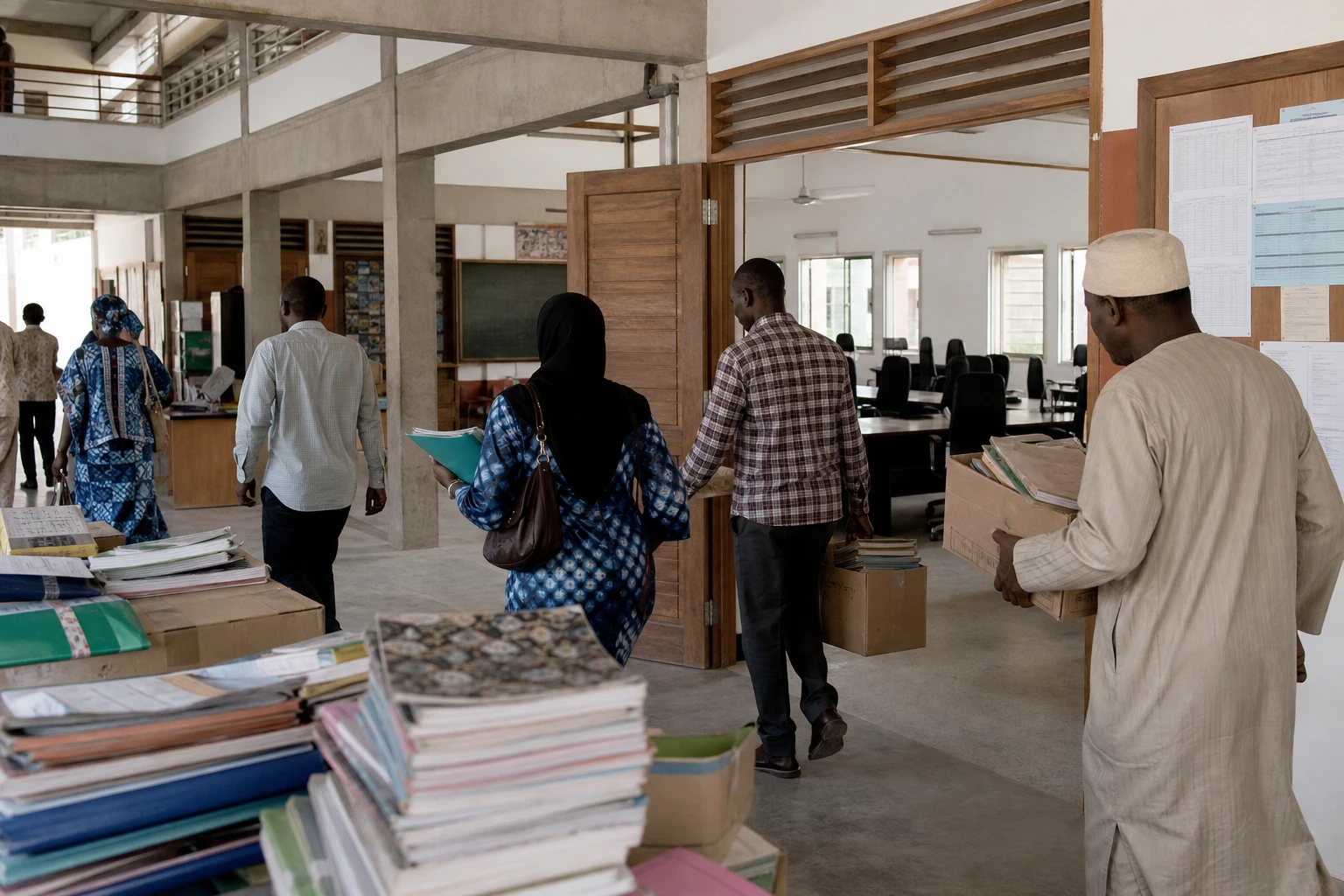
In Bamako and in the Malian regions most exposed to violence, the start of the school year on Thursday 1 October 2026 is about more than the resumption of classes. For hundreds of thousands of children, the first question remains whether they can get to a classroom.
Mali is opening the 2026-2027 school year with its education network still severely disrupted. Closures mainly affect areas where the administration, teachers and families have to contend with attacks, population displacement and the presence of armed groups.
One school in five remains out of service
According to data from the Mali Education Cluster, a coordination mechanism bringing together the Ministry of Education and partner organisations, 2,444 schools were non-functional at the end of April 2026. The figure was published on 24 June and remains the one cited as the new school year approaches.
These schools represent about one-fifth of the 11,860 schools covered by this monitoring. The closures directly affect 733,200 pupils and 14,664 teachers, according to figures cited by several Malian sector stakeholders.
The trend reflects a gradual deterioration. Mali had about 1,300 closed schools in 2020. The number had risen to nearly 1,800 in 2024, then to more than 2,000 in 2025. The 2026 figures therefore mark a further increase in pressure on the education system.
The figures do not point to a single cause. Some schools have been threatened or attacked. Others have been looted, damaged or destroyed. In several localities, teachers can no longer reach their posts without putting their safety at risk. Some schools are also being used to shelter displaced families.
The Education Cluster also reports the effects of population displacement and, in some areas, flooding. A school closure therefore does not always mean that the building was directly attacked. It may also reflect the collapse of the conditions needed to keep classes running.
The North and Centre face the greatest difficulties
The situation is particularly worrying in the northern regions. In Ménaka, the Malian authorities have full control only of the regional capital, while several rural areas remain exposed to armed groups. More than half the schools in the Ménaka education district are not operating, according to available data.
In Kidal and the Tessalit area, teachers’ circumstances also remain a major concern. Trade unions have put the issue at the heart of preparatory discussions with the Ministry of National Education, alongside school security and the availability of school supplies.
Disparities are just as pronounced in the Centre. The education districts of Bandiagara, Douentza and Tenenkou are among the hardest hit. Some rural communes remain difficult for public services to reach. There, a school closure often leaves children with no nearby alternative.
The problem therefore extends beyond the school calendar. When a classroom is no longer available, families may have to send their children to another locality. For displaced households or those dependent on the informal economy, transport, accommodation and school supplies create further obstacles.
Girls may be particularly vulnerable to this disruption. The distance to a school, insecurity along the way and mounting family responsibilities reduce their chances of returning to class. In rural areas, prolonged closures can also increase the risks of child labour or marriage before the end of schooling.
National ambitions meet realities on the ground
The president of the Transition, General Assimi Goïta, has declared 2026-2027 the “Year of Education and Culture”. The stated aim is to make a national effort to strengthen schools and invest in human capital.
The Malian government has held meetings with unions, parents’ associations, private-school operators and other sector partners. Discussions have focused in particular on school security, teacher postings, the placement of pupils who pass the Diploma of Fundamental Studies and the availability of textbooks.
This mobilisation may help keep classes running in accessible areas. However, it is not enough to reopen a school in a locality where teachers cannot travel or families have been displaced. The resumption of schooling therefore depends directly on the authorities’ ability to secure roads, villages and infrastructure.
Reopening schools also requires material resources. A damaged building must be repaired. A school occupied by displaced families needs an alternative place of shelter. A teacher posted to a fragile area needs safe accommodation, transport and minimum guarantees to remain in the post.
In this context, recruitment alone cannot resolve the crisis. Mali held a direct teacher recruitment examination in August 2026, but new postings will remain limited until security and accommodation conditions are in place.
An issue that extends beyond Mali’s borders
Mali’s school crisis is part of a regional trend. Across the Sahel, armed violence has displaced populations and interrupted public services in several countries. Schools have thus become a tangible indicator of the state’s effective presence, alongside healthcare, civil registration and access to water.
Mali has left the Economic Community of West African States, ECOWAS, along with Burkina Faso and Niger. The three countries have established the Alliance of Sahel States. This new regional configuration is changing the frameworks for cooperation, but it does not remove shared challenges: population movements, teacher safety, infrastructure funding and recognition of educational qualifications.
For the Malian authorities, the priority will be to turn the “Year of Education and Culture” into measurable results. The first indicator will be the number of schools actually reopened. The presence of teachers, continuity of classes and the ability of displaced pupils to re-enter the system must also be tracked.
The start of the school year on 1 October 2026 therefore opens a decisive period. It will show whether national pledges can reach communes far from Bamako. In these areas, the success of the school year will depend less on statements than on day-to-day security, families’ return and the patient rebuilding of public services.