Algeria
 Egypt
 Libya
 Morocco
 Sudan
 Tunisia
 Burkina Faso
 Cabo Verde
 Côte d'Ivoire
 Ghana
 Guinea
 Guinea-Bissau
 Liberia
 Mali
 Mauritania
 Niger
 Nigeria
 Senegal
 Sierra Leone
 The Gambia
 Togo
 Cameroon
 Central African Republic
 Chad
 DR Congo
 Equatorial Guinea
 Gabon
 Republic of the Congo
 São Tomé and Príncipe
 Burundi
 Comoros
 Djibouti
 Eritrea
 Ethiopia
 Kenya
 Madagascar
 Malawi
 Mauritius
 Mozambique
 Rwanda
 Seychelles
 Somalia
 South Sudan
 Tanzania
 Uganda
 Angola
 Botswana
 Eswatini
 Lesotho
 Namibia
 South Africa
 Zambia
 Zimbabwe
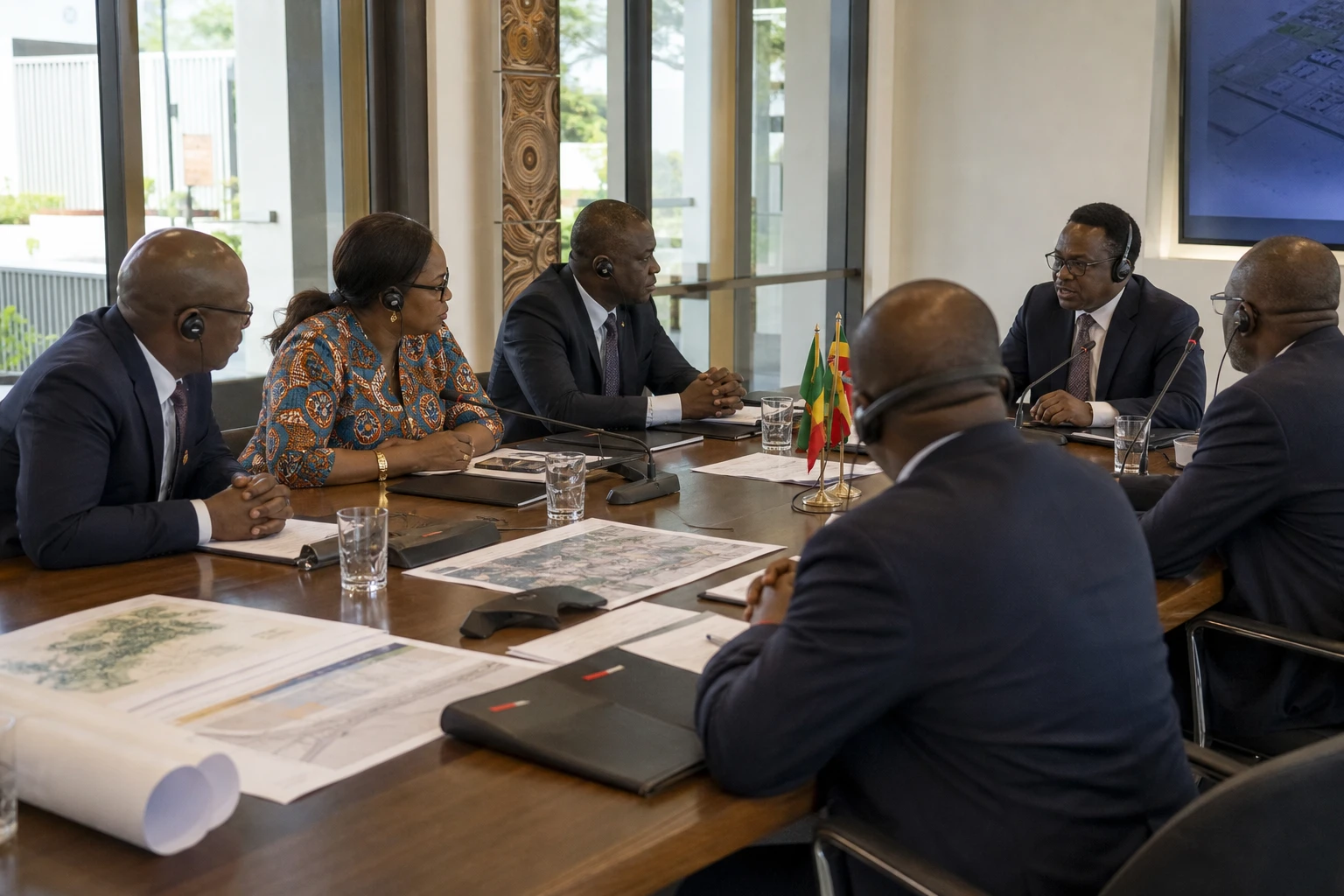
For Benin, the challenge is no longer simply to finance roads. It is now about linking urban centres, industrial zones, the port of Cotonou and regional markets with more reliable and less costly transport.
This ambition is entering a new phase. The country has agreed an indicative programme worth $730 million with the Asian Infrastructure Investment Bank, or AIIB, for 2027-2028. The funding envelope must still be turned into specific projects, subject to the usual studies, checks and approvals.
An agreement that broadens Benin’s financial partnerships
The agreement was announced by the AIIB on 24 September 2026. It is the bank’s first multi-year “pipeline” in Africa. In this context, the term refers to a changing list of projects that could be prepared and financed over several years.
The programme covers several priorities. These include energy, food security, economic resilience, climate and transport. According to the financial institution, $250 million is expected to come through policy-based financing. This type of support accompanies reforms or national policy directions, rather than funding only a single project.
The Beninese government presents this component as support for the implementation of its Benin Vision 2060. Its stated aim is to sustain the country’s economic transformation by mobilising external resources, without limiting the partnership to a single sector.
The signing follows a working visit to Benin by AIIB President Zou Jiayi. On 8 September 2026, the delegation was received at the Palais de la Marina in Cotonou to discuss national ambitions and strategic infrastructure projects. It also examined port facilities and connectivity needs around the country’s main economic centre.
Transport, a sector already under way in Greater Nokoué
Transport could take a prominent place in the future programme. There is already a precedent in the Greater Nokoué Sustainable Urban Mobility Project, to which the AIIB contributed $200 million in financing.
The project covers five municipalities: Cotonou, Porto-Novo, Abomey-Calavi, Sèmè-Podji and Ouidah. It aims to create a more integrated mobility network in Benin’s main urban area. The World Bank, which is co-financing the operation, says the plan is intended to improve journeys for several million people and increase access to jobs and services.
The programme is not limited to building roads. It includes bus-based public transport services, river and lagoon links, and works to ease congestion on key corridors. The infrastructure is intended in particular to improve connections to the port of Cotonou, the Glo-Djigbé Industrial Zone and the Akassato wholesale market.
Water transport has a particular place in this strategy. Lake Nokoué and the Porto-Novo lagoon offer routes that complement road networks, which are often congested. Integrating them into a multimodal network could ease pressure on motorbikes and minibuses while bringing the municipalities of Greater Nokoué closer together.
The project also has an energy component. It includes plans to prepare for electric buses and boats, as well as the gradual renewal of part of the motorcycle taxi fleet, known as “zemidjan”. The World Bank says this shift should encourage the emergence of a local electric mobility ecosystem, with jobs in maintenance, charging and transport services.
Funding that remains indicative
The $730 million figure does not represent an immediate disbursement. It is a framework for cooperation. Each operation will have to be prepared, assessed, negotiated and then approved. This distinction matters to avoid presenting the entire envelope as funding already available to the public purse.
The next step will be to identify projects that are sufficiently advanced to be included in the 2027-2028 programme. The authorities will have to specify costs, timelines, implementing agencies and co-financing sources. The private sector could also be involved in some components, particularly in transport and energy.
For users, the impact will depend less on the announcement than on the quality of implementation. In urban areas, the expected improvements concern journey times, road safety and access to activity centres. For informal operators, modernisation may create opportunities, but it may also bring new rules, technical standards and investments that are difficult to afford without support.
The effects will vary by area. Cotonou and Abomey-Calavi account for a large share of daily journeys. Porto-Novo, the administrative capital, should also benefit from more regular links with the rest of the conurbation. Municipalities along Lake Nokoué could gain from river and lagoon transport, provided that quays, boats and safety systems are fully operational.
A project with implications beyond Benin’s borders
The strategy is part of the ECOWAS region, the Economic Community of West African States. The port of Cotonou serves the Beninese market, but also trade corridors to Niger, Nigeria, Burkina Faso and the landlocked countries of the hinterland.
More predictable transport can therefore lower logistics costs for businesses and strengthen Benin’s position in regional trade. However, corridor performance also depends on border posts, efficient customs procedures and road safety. National investment will therefore need to be coordinated with ECOWAS regional projects and initiatives under the African Continental Free Trade Area.
The partnership with the AIIB also marks a diversification of Benin’s sources of funding. The Asian bank is working alongside the World Bank and other multilateral partners in a country seeking to attract infrastructure financing while maintaining debt sustainability.
The real measure will now be the list of projects selected. Upcoming decisions will show what share of the $730 million will actually go to transport, which projects will be prioritised and how quickly the funding can be mobilised. For Benin, the task now lies in technical preparation and the ability to turn a financial programme into services that people can see and use.