Algeria
 Egypt
 Libya
 Morocco
 Sudan
 Tunisia
 Benin
 Burkina Faso
 Cabo Verde
 Côte d'Ivoire
 Ghana
 Guinea
 Guinea-Bissau
 Liberia
 Mali
 Mauritania
 Niger
 Nigeria
 Senegal
 Sierra Leone
 The Gambia
 Togo
 Cameroon
 Central African Republic
 Chad
 DR Congo
 Equatorial Guinea
 Gabon
 Republic of the Congo
 São Tomé and Príncipe
 Comoros
 Djibouti
 Eritrea
 Ethiopia
 Kenya
 Madagascar
 Malawi
 Mauritius
 Mozambique
 Rwanda
 Seychelles
 Somalia
 South Sudan
 Tanzania
 Uganda
 Angola
 Botswana
 Eswatini
 Lesotho
 Namibia
 South Africa
 Zambia
 Zimbabwe
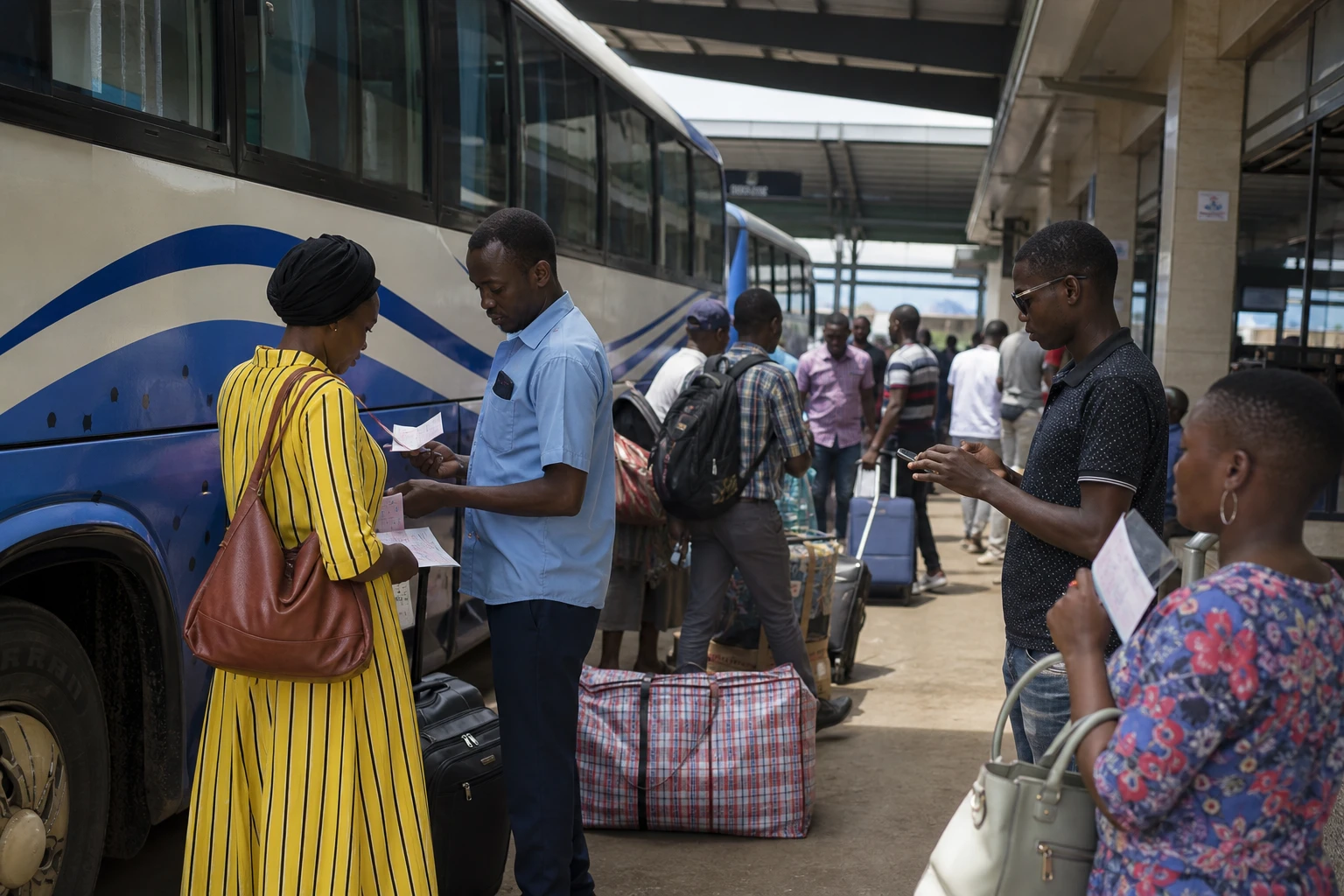
For Burundi, the issue is not limited to the possible arrival of a few people deported from the United States. It touches on sovereignty, migrants’ legal protection and how Gitega intends to manage a relationship that has become strategic with Washington.
A deal announced, but still poorly documented
On 29 September 2026, Burundi’s presidential spokesperson, Nancy Ninette Mutoni, confirmed that Burundi would soon accept migrants deported from the United States. She said those transferred should not face criminal prosecution and should have no links to terrorism, according to statements reported by Anadolu Agency and the Associated Press.
The announcement does not specify the number of people involved, the date of any flight or the length of their stay. The Burundian authorities have also not made public the text of the agreement, its legal safeguards or its funding arrangements. For now, this lack of detail limits the precise scope of Gitega’s commitment.
US lawyers specialising in migrants’ rights said a flight from Louisiana had been considered to transport about 70 people to Burundi, Rwanda and the Central African Republic. The flight was later cancelled. The information shows that cooperation is being prepared, but does not establish that a first group has already arrived in Burundi.
The issue comes amid a tougher US immigration policy since Donald Trump returned to the White House. Washington is seeking to remove quickly people who can no longer remain on US territory, including to countries of which they are not citizens. This mechanism is often referred to as deportation to a “third country”.
Kinshasa’s precedent highlights the risks
The Democratic Republic of the Congo has already tried this arrangement. On 17 April 2026, about 15 people from Colombia, Peru and Ecuador arrived in Kinshasa after being deported from the United States. Their presence in Africa was therefore not linked to the DRC by family, nationality or geography.
The Congolese government described their stay as temporary. The International Organization for Migration was asked to provide humanitarian assistance. US authorities were expected to cover the costs of accommodation and transport. Several people were later directed towards their countries of origin, but questions were raised about the conditions of their departure and their legal status.
A US court also ordered the administration to seek the return of a Colombian national sent to the Democratic Republic of the Congo, after Kinshasa said it could not host her. The episode highlights a central difficulty: when a person is transferred to a third state, responsibility for their protection becomes harder to establish and monitor.
Burundi could therefore face similar problems. The transferred migrants will not necessarily speak Kirundi, French or English. They may have no local support network. Their access to a lawyer, an interpreter, healthcare or an appeal process will have to be guaranteed in practice, not merely announced in a diplomatic agreement.
For Gitega, a diplomatic choice with conditions
Burundi’s position rests on two arguments. The first is the country’s tradition of offering refuge. Burundi has for several years hosted refugees and asylum seekers, including from the Democratic Republic of the Congo. The second concerns its relationship with the United States, which remains an important partner in health, humanitarian aid and development.
The relationship was strengthened in February 2026 with the signing of a five-year health co-operation agreement. Washington pledged to support programmes on HIV, malaria and epidemiological surveillance. In this context, migration could become a new element in bilateral negotiations.
For the authorities in Gitega, temporarily hosting migrants could bring access to financial resources, technical co-operation and direct dialogue with Washington. But the diplomatic benefits will not remove the administrative costs. The authorities will have to identify the people, ensure their safety, arrange accommodation and determine who will make decisions if they apply for asylum or challenge their transfer.
Burundians may also view the agreement differently depending on their location and social background. In Gitega and Bujumbura, attention will focus on security and transparency in decision-making. In areas already involved in hosting refugees, the main concern will be available capacity and the distribution of resources. Informal-economy workers could be called on to provide everyday services without necessarily receiving equivalent public support.
International law at the centre of concerns
Human rights organisations have criticised the lack of transparency surrounding these arrangements. Their concerns focus in particular on the principle of non-refoulement. This principle prohibits returning a person to a country where they face persecution, torture or inhuman treatment.
The difficulty is compounded when deportees have not had an effective hearing before their transfer. A person may have challenged their removal, sought asylum or cited a risk in their country of origin. Sending them to a third state must not deprive them of the right to an individual assessment.
Burundi will therefore have to clarify several points: access to a judge, the maximum length of stay, the administrative status of transferred people, the possibility of contacting a lawyer and the conditions for voluntary return. It will also need to specify whether the International Organization for Migration will be involved only in logistical assistance or also in legal support and the search for durable solutions.
An issue that extends beyond Burundi’s borders
Burundi is not the only African country approached by Washington. Similar agreements or arrangements have been reported with Ghana, Sierra Leone, Liberia, Cameroon, Uganda, Rwanda, Eswatini, South Sudan, the Central African Republic, Equatorial Guinea and the Democratic Republic of the Congo.
The proliferation of these agreements is gradually changing the geography of US deportations. It is placing African states in a new position: they are no longer only countries of origin, transit or regional refuge, but also destinations for transfers decided by an external power.
For Burundi, a member of the East African Community, this development could also raise regional questions. The EAC, an organisation that promotes economic and political co-operation among its member states, will sooner or later have to contend with the movement of deportees, residency rules and responsibilities between neighbouring countries.
The next step will therefore be decisive. It will depend on whether the agreement is published, whether a first transfer is confirmed and whether the Burundian authorities can secure verifiable safeguards. Until these details are known, Gitega’s announcement amounts less to a fully operational arrangement than to a diplomatic signal with consequences that remain uncertain.