Algeria
 Egypt
 Libya
 Morocco
 Sudan
 Tunisia
 Benin
 Burkina Faso
 Cabo Verde
 Côte d'Ivoire
 Ghana
 Guinea
 Guinea-Bissau
 Liberia
 Mali
 Mauritania
 Niger
 Nigeria
 Senegal
 Sierra Leone
 The Gambia
 Togo
 Cameroon
 Central African Republic
 Chad
 DR Congo
 Equatorial Guinea
 Gabon
 Republic of the Congo
 São Tomé and Príncipe
 Comoros
 Djibouti
 Eritrea
 Ethiopia
 Kenya
 Madagascar
 Malawi
 Mauritius
 Mozambique
 Rwanda
 Seychelles
 Somalia
 South Sudan
 Tanzania
 Uganda
 Angola
 Botswana
 Eswatini
 Lesotho
 Namibia
 South Africa
 Zambia
 Zimbabwe
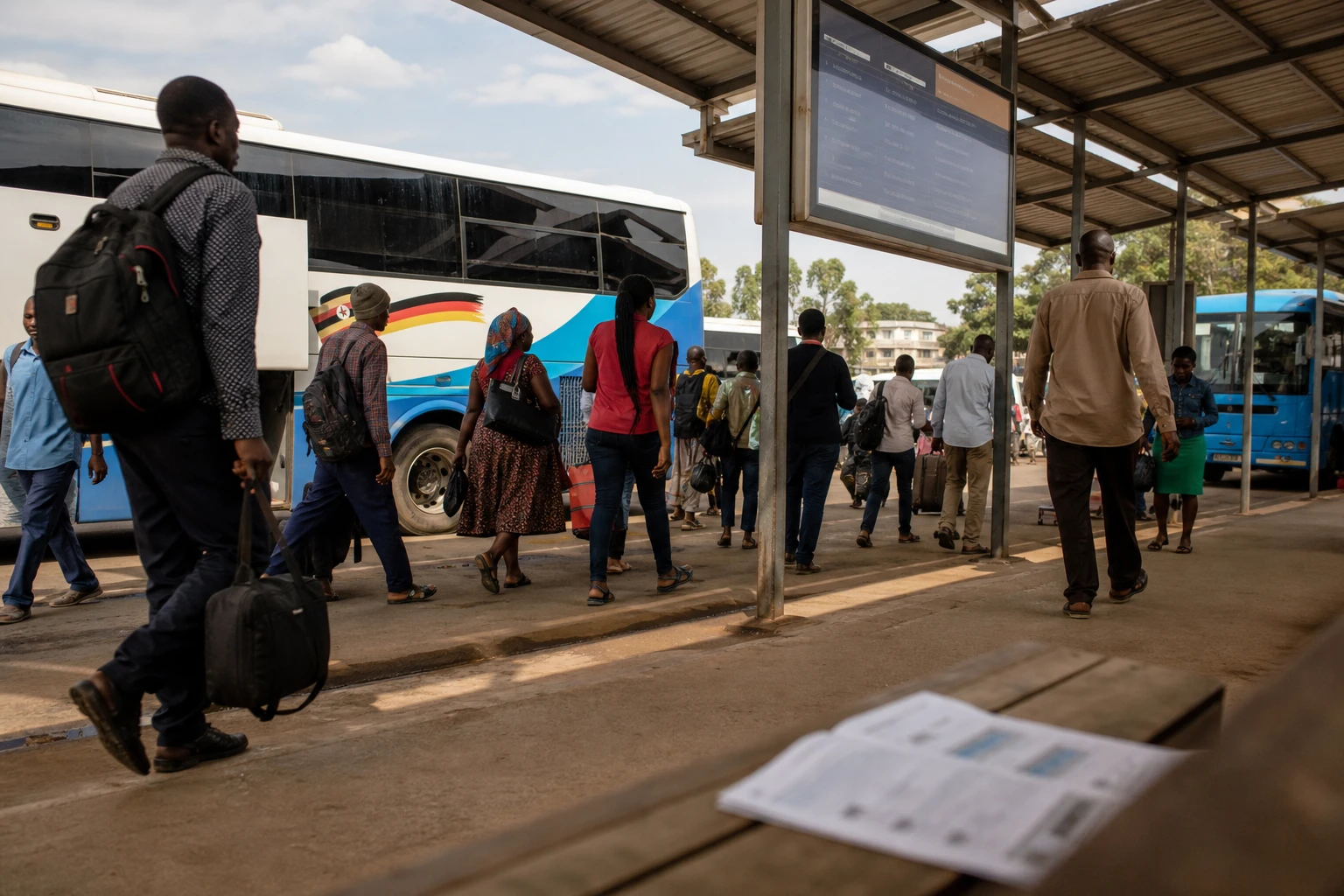
In Gaza, the question is no longer only one of a ceasefire. It now concerns the forces that could be tasked with securing the enclave, protecting aid and accompanying a possible political transition. Within this still incomplete arrangement, several African countries are at the forefront, with very different interests and room for manoeuvre.
Force announced, but no precise timetable yet
The International Stabilisation Force for Gaza is part of the plan put forward by Donald Trump’s administration. Its principle is tied to a transition phase: the gradual withdrawal of Israeli forces, the disarmament of armed groups, the establishment of a provisional Palestinian administration and the deployment of foreign units in the areas concerned.
The project, however, remains largely to be developed. Its operational mandate, rules of engagement and precise timetable are not fully public. The chain of command is expected to be under US supervision, while the force could number around 20,000 personnel, according to statements by its command reported by the Associated Press.
A document submitted to the United Nations states that five countries formalised their intention to contribute to the force in February 2026: Albania, Indonesia, Kazakhstan, Kosovo and Morocco. This list does not yet mean that all contingents have been deployed. Rather, it marks a political and military commitment that remains to be defined.
The arrangement also depends on a broader agreement on the governance of Gaza. Under the plan, a Palestinian technocratic committee is to administer the territory during a transitional period. The stated aim is to prepare for the return of a reformed Palestinian Authority. But the respective responsibilities of this administration, the international force, Israel and Palestinian actors remain a major source of uncertainty.
Morocco already committed, Uganda authorised to take part
Morocco is, at this stage, the African country most clearly committed. Rabat signed an agreement on 15 July 2026 setting out the framework for its participation in the force. The Moroccan contribution is to include military officials, police personnel and a field hospital, according to information provided by Morocco’s defence administration and reported by the national press.
This choice extends Morocco’s active diplomacy on the Palestinian issue. The kingdom has maintained relations with Israel since restoring diplomatic ties in 2020, while continuing to officially support the creation of a Palestinian state. Rabat will therefore have to explain to its public and Arab partners the concrete role of its soldiers in an area where the mission’s neutrality will come under scrutiny.
In Uganda, parliament approved the principle of a military deployment as part of the international force on 6 August 2026. Defence Minister Kiryowa Kiwanuka highlighted the Ugandan army’s experience in peacekeeping operations, particularly in Somalia.
The decision was not unanimous in Kampala. Opposition MPs asked what the exact mission of Ugandan soldiers would be and whom they might be required to act against. The question is central: securing facilities, escorting aid and training Palestinian forces do not fall under the same mandate as disarming an armed group.
For Uganda, participation could strengthen its diplomatic and military influence. It also carries risks. The country is already involved in complex regional operations, particularly in Somalia. A new overseas mission would require additional resources and expose its soldiers to a particularly sensitive political and security environment.
Burundi interested, Somaliland in a grey area
Burundi is also considering a contribution. Burundian and Ugandan military officials travelled to Israel in August to discuss possible terms for an engagement. No final agreement had been announced at the time of those discussions. Caution is therefore warranted: the interest expressed by Bujumbura does not amount to a decision to deploy.
Burundi has considerable experience of international missions, particularly in Africa. Its soldiers have taken part in peace operations on the continent. This experience may serve as an argument for the force’s proponents. It does not, however, resolve the political questions: who will give the orders, what legal protection will be granted to the military personnel, and how can they avoid being seen as instruments of a foreign power?
Somaliland is also mentioned among the territories that could take part in the arrangement. This possibility should be treated with caution. Somaliland functions as an autonomous political entity in northern Somalia, but it does not enjoy full international recognition. Any involvement would therefore raise an additional question of status and could provoke a reaction from Mogadishu.
For Somaliland’s authorities, taking part in an international operation could offer diplomatic visibility. For Somalia, by contrast, it could bolster an actor whose independence is not recognised. This regional dimension cannot be separated from the security context in the Horn of Africa, where the balance between Mogadishu, Hargeisa, Ethiopia and international partners remains fragile.
An African mission facing conflicting expectations
The presence of African contingents would give the force a composition that was less exclusively Western. It could also facilitate dialogue with Arab and Muslim countries, as well as with some African societies that are deeply engaged with the Palestinian issue.
But this presence alone will not guarantee the operation’s legitimacy. In several African capitals, public opinion is following Gaza closely. It could reject any mission seen as taking part in the disarmament of Palestinians or as indirectly protecting Israeli interests.
The distinction between peacekeeping and coercive action will therefore be decisive. A force tasked with monitoring a ceasefire must have a mandate accepted by the parties and an independent oversight mechanism. By contrast, a mission called on to impose disarmament would quickly enter into a logic of confrontation.
African countries will also have to weigh the domestic impact of such a commitment. Governments may see it as an opportunity to strengthen ties with Washington, secure financial support or showcase their military expertise. Populations, for their part, will focus above all on any casualties, the budgetary cost and whether the mission is consistent with official positions on Palestine.
The next test will be the mandate
The decisive question, then, is not only which countries will provide soldiers. It is also who will control the force, which areas it will operate in and what guarantees will be in place for Palestinian civilians.
Deployment will first depend on the implementation of the second phase of the ceasefire. The Israeli withdrawal, the disarmament of armed groups, the role of the Palestinian administration and the financing of reconstruction will then need to be clarified.
For Rabat, Kampala and Bujumbura, the commitment could enhance the international standing of their armies. It could also place them at the heart of a crisis whose political objectives remain contested. Until the mandate is made public and accepted by the main Palestinian actors, any announcement of participation will remain a promise subject to conditions.