Algeria
 Egypt
 Libya
 Morocco
 Tunisia
 Benin
 Burkina Faso
 Cabo Verde
 Côte d'Ivoire
 Ghana
 Guinea
 Guinea-Bissau
 Liberia
 Mali
 Mauritania
 Niger
 Nigeria
 Senegal
 Sierra Leone
 The Gambia
 Togo
 Cameroon
 Central African Republic
 Chad
 DR Congo
 Equatorial Guinea
 Gabon
 Republic of the Congo
 São Tomé and Príncipe
 Burundi
 Comoros
 Djibouti
 Eritrea
 Ethiopia
 Kenya
 Madagascar
 Malawi
 Mauritius
 Mozambique
 Rwanda
 Seychelles
 Somalia
 South Sudan
 Tanzania
 Uganda
 Angola
 Botswana
 Eswatini
 Lesotho
 Namibia
 South Africa
 Zambia
 Zimbabwe
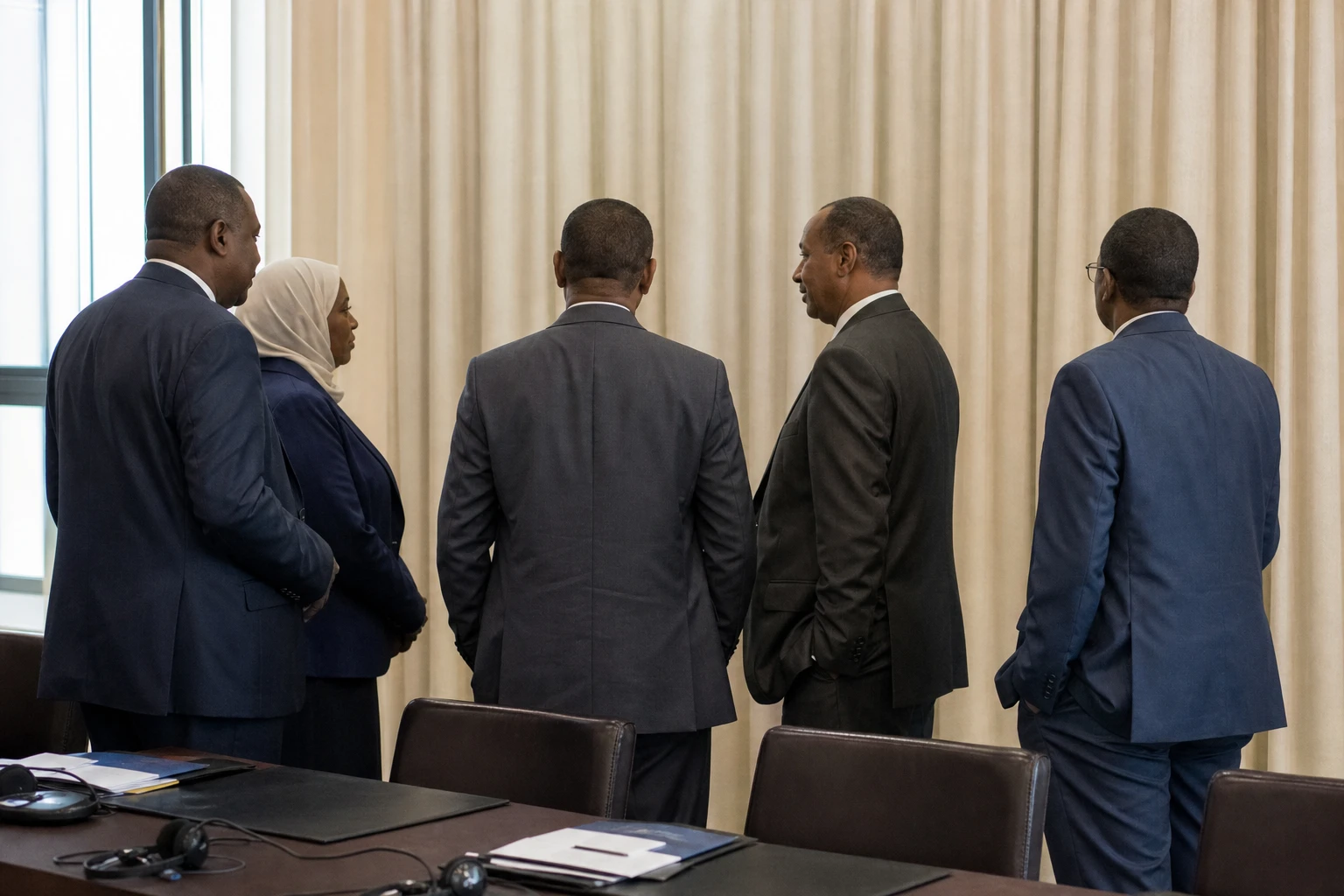
In New York, Sudan’s war has spilled into a diplomatic battle that goes beyond UN protocol. General Abdel-Fattah al-Burhan’s absence from the General Assembly has opened a new confrontation between the Sudanese authorities, Washington and the mediators working to secure a ceasefire.
Sudan’s crisis now being contested in diplomatic forums
Sudan has been at war since 15 April 2023. The conflict pits the Sudanese Armed Forces, led by Abdel-Fattah al-Burhan, against the Rapid Support Forces, a paramilitary formation commanded by Mohamed Hamdan Dagalo, known as Hemetti.
Fighting began in Khartoum before spreading to Darfur, Kordofan and several regions in the east of the country. The army controls Port Sudan, among other areas, where authorities allied with the Sovereignty Council have established themselves. The RSF, meanwhile, maintains a strong presence in western Sudan.
The war is part of an interrupted political transition. After Omar al-Bashir’s fall in 2019, military and civilian forces had attempted to share power. The process collapsed after the October 2021 coup, followed by the split between the army and the RSF.
At the regional level, the Intergovernmental Authority on Development, or IGAD, is mediating in East Africa. The African Union and the United Nations are also seeking to coordinate their efforts. However, diplomatic initiatives remain weakened by the external support received by both sides.
US visa at the heart of the standoff
Sudan’s Minister of Foreign Affairs and International Cooperation, Mohi El-Din Salim Ahmed Ibrahim, told the General Assembly that the United States had not issued Abdel-Fattah al-Burhan’s required visa in time.
The head of the Sudanese army was due to attend the high-level segment of the annual session. The minister spoke in his place and denounced the host country’s decision. The Sudanese authorities see it as a political restriction targeting their most senior representative in international negotiations.
Reports by Sudan Tribune indicate that the dispute arose around a US ceasefire proposal. According to diplomatic sources cited by the Sudanese media outlet, Washington is said to have linked the visa issue to talks aimed at ending hostilities.
This account has not been set out publicly in detail by the US administration. It should therefore be treated with caution. A foreign leader’s visa falls both under the rules governing entry into US territory and within the diplomatic power dynamics surrounding the conflict.
Abdel-Fattah al-Burhan previously addressed the General Assembly on 26 September 2024. The official United Nations record then described him as president of the Transitional Sovereignty Council of the Republic of Sudan.
Khartoum accuses foreign backers of sustaining the war
In his address, Mohi El-Din Salim Ahmed Ibrahim called for an end to deliveries of weapons, ammunition and military technology to groups involved in the conflict. He also called for weapons to remain under the exclusive control of the state.
“The just solution in Sudan, which guarantees that the conflict will not resume, lies in ending the incessant foreign interventions,” he said, according to the account of his address.
The minister also advocated disarming non-state forces. This call reflects the position of the Port Sudan authorities, who present the army as the legitimate national institution in opposition to the RSF.
The issue, however, is more complex. Both belligerents are accused of serious violations against civilians. The United Nations has documented attacks on populated areas, sexual violence, forced displacement and obstruction of humanitarian aid.
The question of external support is therefore not limited to one side. UN reports and international investigations have described transnational networks involved in delivering weapons, fighters, drones and logistical support to the RSF. A summary published by Anadolu Agency based on the report of the UN fact-finding mission refers in particular to networks operating in several countries.
The Security Council had already been alerted to the role of external support in prolonging the war. In April 2024, a United Nations official said that the support received by the belligerents was contributing directly to the duration of the conflict.
A war weighing on the entire region
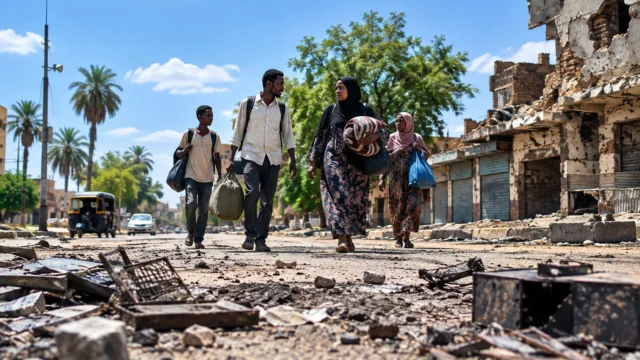
The consequences extend far beyond Sudanese territory. Millions of people have fled to Chad, Egypt, South Sudan, Ethiopia and Libya. These neighbouring countries must manage the reception of refugees, secure their borders and address the risks of weapons moving across them at the same time.
Darfur is a particular source of concern. The region shares porous borders with Chad and Libya. Trade routes, recruitment networks and armed alliances have long extended beyond national boundaries.
The effects vary across Sudan for its population. In Khartoum, the recovery of some neighbourhoods does not mean a return to normality. In rural areas, access to markets, healthcare and harvests remains severely disrupted. Informal-economy workers are particularly exposed because they depend on travel that has become dangerous.
The Port Sudan authorities are seeking to strengthen their diplomatic recognition. The RSF, for its part, is trying to consolidate its territorial positions and external links. In this context, every international platform becomes an instrument of legitimisation.
Next challenge: turning accusations into effective pressure
Diplomatic pressure alone will not be enough to stop the fighting. The priority remains securing a verifiable ceasefire, accompanied by regular humanitarian access and guarantees for civilians.
The impact of Sudan’s address will depend above all on the response of states accused of providing military or logistical support to the belligerents. Public statements will need to be followed by checks on arms transfers, measures against financing networks and closer regional monitoring.
The African Union and IGAD will also need to avoid a proliferation of mediation efforts. Without coordination, competing initiatives risk giving the parties further room to buy time.
At the UN, the debate over Abdel-Fattah al-Burhan’s visa has therefore revealed a deeper issue: who can speak on behalf of Sudan, under what conditions, and with what guarantees for the people caught up in the war? The answer will not be decided in New York alone. It will also depend on decisions taken on Sudan’s borders and in the capitals that fuel, directly or indirectly, the continuation of the conflict.