Algeria
 Egypt
 Libya
 Morocco
 Sudan
 Tunisia
 Benin
 Burkina Faso
 Cabo Verde
 Côte d'Ivoire
 Ghana
 Guinea
 Guinea-Bissau
 Liberia
 Mali
 Mauritania
 Niger
 Nigeria
 Senegal
 Sierra Leone
 The Gambia
 Togo
 Cameroon
 Central African Republic
 Chad
 DR Congo
 Equatorial Guinea
 Republic of the Congo
 São Tomé and Príncipe
 Burundi
 Comoros
 Djibouti
 Eritrea
 Ethiopia
 Kenya
 Madagascar
 Malawi
 Mauritius
 Mozambique
 Rwanda
 Seychelles
 Somalia
 South Sudan
 Tanzania
 Uganda
 Angola
 Botswana
 Eswatini
 Lesotho
 Namibia
 South Africa
 Zambia
 Zimbabwe
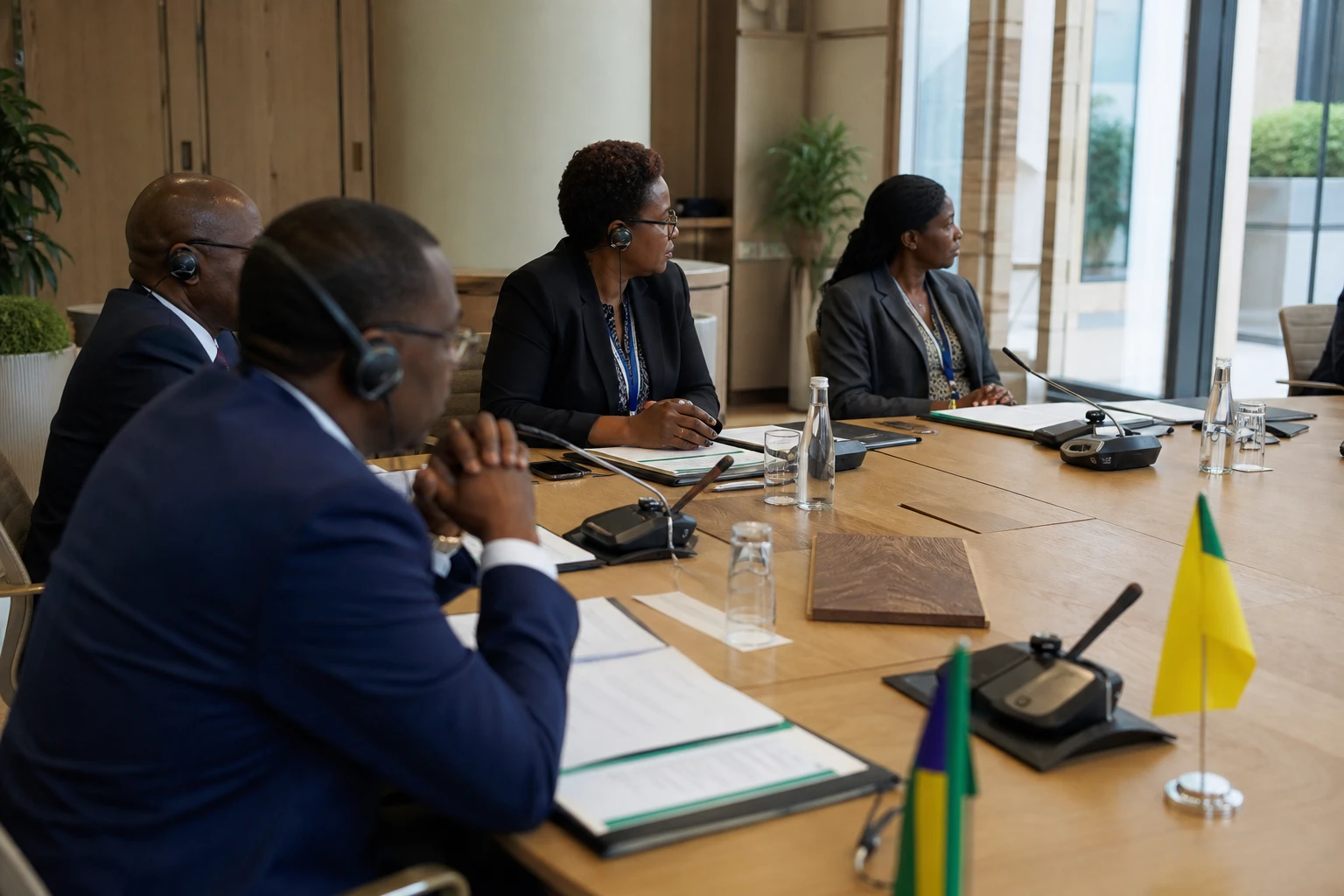
In Gabon, forests cover most of the country, but their resources do not yet benefit the territories that host them equally. From carpentry workshops and small craft businesses to the large factories in Nkok, the same challenge keeps arising: process more timber locally to create value, jobs and products affordable to Gabonese people.
From exported logs to processed products
The country embarked on a major shift in 2010, banning exports of raw logs. A log is a tree trunk that has not been processed after felling. The aim was clear: to move beyond a timber industry limited to extraction and shipping, and develop sawmilling, veneer, plywood, furniture-making and other industrial activities.
The decision formed part of a broader strategy to diversify an economy long driven by oil, manganese and raw materials. Timber remains one of the pillars of Gabon’s economy. According to publicly available government data, the forestry sector accounted for around 6% of exports and 5% of gross domestic product in 2023.
Nearly 85% of Gabon is covered by forest, according to the Directorate General for Industry and Competitiveness. This natural wealth places the country at the heart of the Congo Basin, the world’s second-largest tropical forest after the Amazon. It also requires strict rules on concession management, traceability and ecosystem protection.
Industrial processing has largely been concentrated around the Nkok Special Economic Zone. Located 27 kilometres from Libreville, the platform covers 1,126 hectares. It brings together industrial, commercial and logistics activities, including a major timber hub.
According to information published by the Gabonese authorities, the zone hosts 144 companies from 16 countries. Of these, 84 work in timber processing. The site produces sawn timber, veneer sheets, plywood and furniture, among other products. This concentration makes it easier to access electricity, equipment, transport and customs services.
The challenge facing provinces and villages
Nkok’s development does not automatically resolve the difficulties faced inland. In several communities, craftspeople still have to contend with transport costs, unreliable access to electricity, the price of machinery and the difficulty of obtaining sufficient quantities of legal timber.
For a family-run carpentry business, buying a suitable saw or kiln is a major investment. Fuel, maintenance and the cost of transporting planks add to the burden. These constraints limit craftspeople’s ability to meet local needs, whether building a house, making doors or supplying a school with desks and benches.
Yet small-scale processing plays an essential role. It makes it possible to produce closer to consumers and sustain incomes in neighbourhoods and inland towns. It also trains apprentices in technical trades such as carpentry, cabinetmaking, timber framing, finishing and equipment maintenance.
Gabon’s Labour Ministry also supports apprenticeship schemes in small craft businesses. These programmes aim to strengthen young Gabonese people’s skills and help them find work in trades where practical experience matters as much as theoretical training.
For this momentum to reach beyond Libreville, several conditions must be met. Craftspeople need access to shared equipment, regular training and reliable supply chains. Local authorities can also play a role by including more domestic producers in public procurement, particularly for school and office furniture.
A value-creating industry under scrutiny
Local processing increases the value of a piece of timber before it is sold. An exported trunk brings in less than a dried plank, a panel or a finished piece of furniture. This added value can support jobs, tax revenues and activity in transport, maintenance, design and trade.
However, the results remain uneven. Some jobs are concentrated in industrial zones near Libreville. People living in forest areas may still lack access to affordable processed products. The industry’s development should therefore be measured not only by the number of factories or export volumes, but also by the availability of materials in local markets and rising incomes in the provinces.
Environmental considerations are just as important. Processing more timber does not mean exploiting forests without limit. Production must comply with forest management plans, timber traceability rules and replanting or regeneration requirements. Gabon has also developed certification mechanisms and a national traceability system to better track timber from the forest to the finished product.
This requirement reflects two sets of expectations. International markets seek guarantees about the origin of products. Local communities, for their part, want more transparent management of resources and more visible economic benefits. The industry cannot develop sustainably without combining industrial performance, public oversight and respect for people’s rights.
A challenge for Central Africa
The issue extends beyond Gabon’s borders. Within the Economic and Monetary Community of Central Africa (CEMAC), which comprises six states that share, among other things, economic and monetary cooperation, local processing of resources is becoming a central concern.
Cameroon, the Republic of the Congo, the Central African Republic, Equatorial Guinea, Chad and Gabon have significant forest or mining resources. But their industrial supply chains often remain concentrated around a few urban hubs. Timber illustrates the challenge: forests lie far from ports, while equipment and solvent markets are concentrated in capital cities.
Gabon could therefore serve as a regional testing ground, though its model cannot automatically be replicated elsewhere. Nkok demonstrates the value of an integrated platform. But its limitations are a reminder that successful industrialisation must also connect the provinces, craftspeople, training centres and domestic markets.
The next step is to determine whether the processing policy will bring greater benefits to forest regions. The number of companies based in Nkok matters. But the most telling measure will be Gabon’s ability to provide skilled work for young people, affordable products for households and sustainable incomes for communities living alongside the forest.
The official presentation of the Nkok Special Economic Zone sets out its location, industrial activities and the role of timber in the strategy. The African Development Bank also analyses Nkok’s role in Gabon’s economic diversification and industrialisation.