
 Algeria
 Egypt
 Libya
 Morocco
 Sudan
 Tunisia
 Benin
 Burkina Faso
 Cabo Verde
 Côte d'Ivoire
 Ghana
 Guinea
 Guinea-Bissau
 Liberia
 Mali
 Mauritania
 Niger
 Senegal
 Sierra Leone
 The Gambia
 Togo
 Cameroon
 Central African Republic
 Chad
 DR Congo
 Equatorial Guinea
 Gabon
 Republic of the Congo
 São Tomé and Príncipe
 Burundi
 Comoros
 Djibouti
 Eritrea
 Ethiopia
 Kenya
 Madagascar
 Malawi
 Mauritius
 Mozambique
 Rwanda
 Seychelles
 Somalia
 South Sudan
 Tanzania
 Uganda
 Angola
 Botswana
 Eswatini
 Lesotho
 Namibia
 South Africa
 Zambia
 Zimbabwe
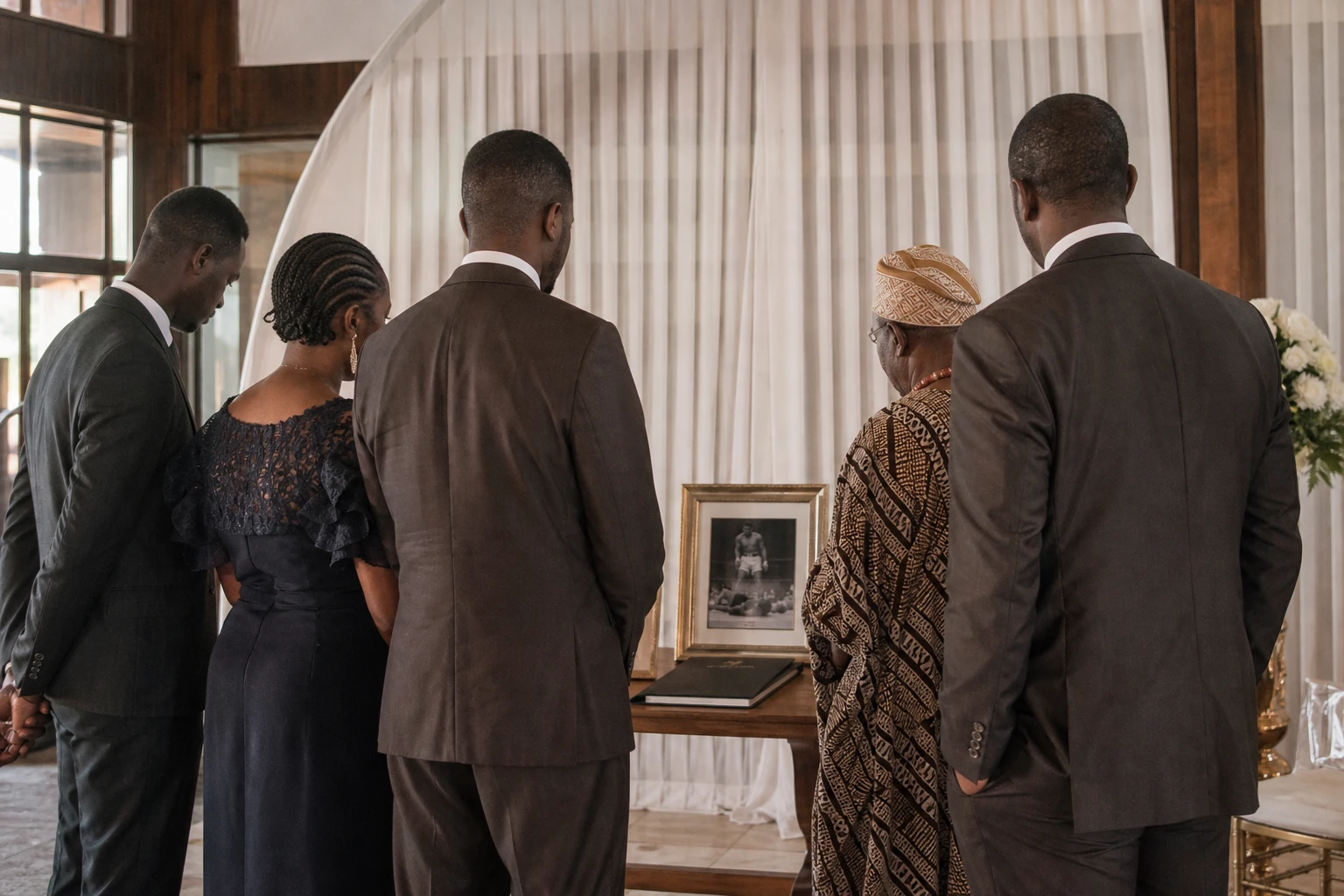
In Cardiff on 11 December 2026, Anthony Joshua will not simply take part in a highly anticipated bout against Tyson Fury. The British boxer of Nigerian origin will also carry a family history linking the British ring to Sagamu, in Ogun State.
A British fight, a Nigerian echo
The fixture is now official. Tyson Fury and Anthony Joshua will meet on Friday 11 December 2026 at the Principality Stadium in Cardiff, Wales. The fight will be shown live on Netflix, which confirmed the agreement on 24 September 2026. The official announcement of the Fury-Joshua fight presents the bout as one of the major British clashes in the heavyweight division.
The showdown comes after several years of stalled talks. Fury, a former world champion who was unbeaten until his two defeats to Oleksandr Usyk, currently has 36 wins, two losses and one draw. In April 2026, he returned to winning ways against Russian boxer Arslanbek Makhmudov.
Joshua has 30 wins and four losses. He returned to winning ways in December 2025 against Jake Paul, before beating Albania’s Kristian Prenga on 26 July 2026 in Jeddah, Saudi Arabia. That latest outing helped him regain his rhythm ahead of the Cardiff fixture. The report on Joshua’s victory over Kristian Prenga notes that the fight marked his return after several difficult months.
From Watford to Sagamu, an identity embraced
Anthony Oluwafemi Olaseni Joshua was born in Watford, England. His family, however, has ties to Sagamu, a town in Ogun State in south-west Nigeria. The region is part of Yorubaland, one of Nigeria’s main cultural and linguistic groups.
Joshua spent part of his childhood in Nigeria and went to school there. His story is therefore not simply one of claimed ancestry. It is also rooted in personal, family and cultural experience, shaped between the United Kingdom and Nigeria.
The boxer has regularly presented this dual belonging as a strength. He identifies as both British and Nigerian. At public appearances, the United Kingdom flag has sometimes been displayed alongside Nigeria’s. His tattoo depicting the African continent extends this representation of an identity that is not confined to a single national border.
This dimension matters in a country where elite sport plays an important role in shaping collective imaginaries. In Nigeria, Joshua is followed as a champion trained in the United Kingdom, but also as one of their own. In Sagamu, that connection has a particular significance. The town is not merely where his family comes from. It has become a symbolic anchor in his story.
The December 2025 tragedy strengthened the bond
Joshua’s relationship with Nigeria took on a more personal dimension after the accident on the Lagos-Ibadan Expressway on 29 December 2025. The vehicle he was travelling in struck a stationary lorry. Sina Ghami and Latif “Latz” Ayodele, two members of his professional entourage, lost their lives.
Joshua was hospitalised in Lagos and later cleared to continue his recovery in Nigeria. The Associated Press confirmed he would remain in Nigeria after leaving hospital. Lagos authorities had also said the boxer was stable enough to recover with his loved ones.
The tragedy affected his sporting preparations. His return against Prenga, seven months later, was watched for its personal significance as much as its athletic importance. After the fight, Joshua paid tribute to the two men who had died. He had chosen to resume his career in Saudi Arabia, but the accident remained tied to Nigerian soil, where he was staying at the time.
That relationship should not, however, be reduced to the experience of hardship alone. Nigeria is also a family and cultural home for Joshua. His story with the country did not begin with the accident. It was built long before, through his childhood, visits and public acknowledgement of his roots.
A fixture followed well beyond the ring
In Cardiff, the sporting dimension will naturally take centre stage. Fury and Joshua have been two central figures in British and world boxing. They have won major titles, filled major venues and sustained a rivalry that long remained theoretical. For this reason, the fight retains considerable prestige, even without a world title directly at stake.
The choice of the Principality Stadium is also significant for Joshua. In 2018, he beat New Zealand’s Joseph Parker there and unified several heavyweight titles. The Welsh stadium is therefore associated with one of the brightest periods of his career.
For Nigerian supporters, the stakes will be different. They will be following the performance of a champion whose career is officially British, but whose identity remains deeply connected to Nigeria. Group screenings, particularly in Ogun State, could extend the fight’s presence in public spaces, businesses and sporting communities.
The global Netflix broadcast will widen that audience further. It will give Nigerian viewers direct access to the event, without relying solely on traditional sports channels. In a country where mobile phones and digital platforms increasingly shape sports consumption, this visibility matters to fans and the local entertainment industry alike.
Regional and continental significance
The fight does not directly concern ECOWAS, the organisation that brings together West African states. Yet it resonates across a region where sporting careers span countries, diasporas and international markets.
Joshua embodies a trajectory now common in African sport: an athlete born or trained in Europe whose emotional and cultural legitimacy remains tied to an African country. This goes beyond the Nigerian case. It also applies to many diaspora athletes who compete under one country’s colours while retaining strong ties to their country of origin.
On 11 December 2026, eyes will be on Cardiff. But some of the audience will also follow the fight from Lagos, Abuja, Sagamu and Nigerian diaspora communities. For Joshua, beating Fury would not be enough to sum up what is at stake. The bout will also put a transnational identity on display, shaped by Yoruba heritage, a British career and enduring ties to Nigeria.



