
 Algeria
 Egypt
 Libya
 Morocco
 Sudan
 Tunisia
 Benin
 Burkina Faso
 Cabo Verde
 Côte d'Ivoire
 Ghana
 Guinea
 Guinea-Bissau
 Liberia
 Mali
 Mauritania
 Niger
 Nigeria
 Sierra Leone
 The Gambia
 Togo
 Cameroon
 Central African Republic
 Chad
 DR Congo
 Equatorial Guinea
 Gabon
 Republic of the Congo
 São Tomé and Príncipe
 Burundi
 Comoros
 Djibouti
 Eritrea
 Ethiopia
 Kenya
 Madagascar
 Malawi
 Mauritius
 Mozambique
 Rwanda
 Seychelles
 Somalia
 South Sudan
 Tanzania
 Uganda
 Angola
 Botswana
 Eswatini
 Lesotho
 Namibia
 South Africa
 Zambia
 Zimbabwe
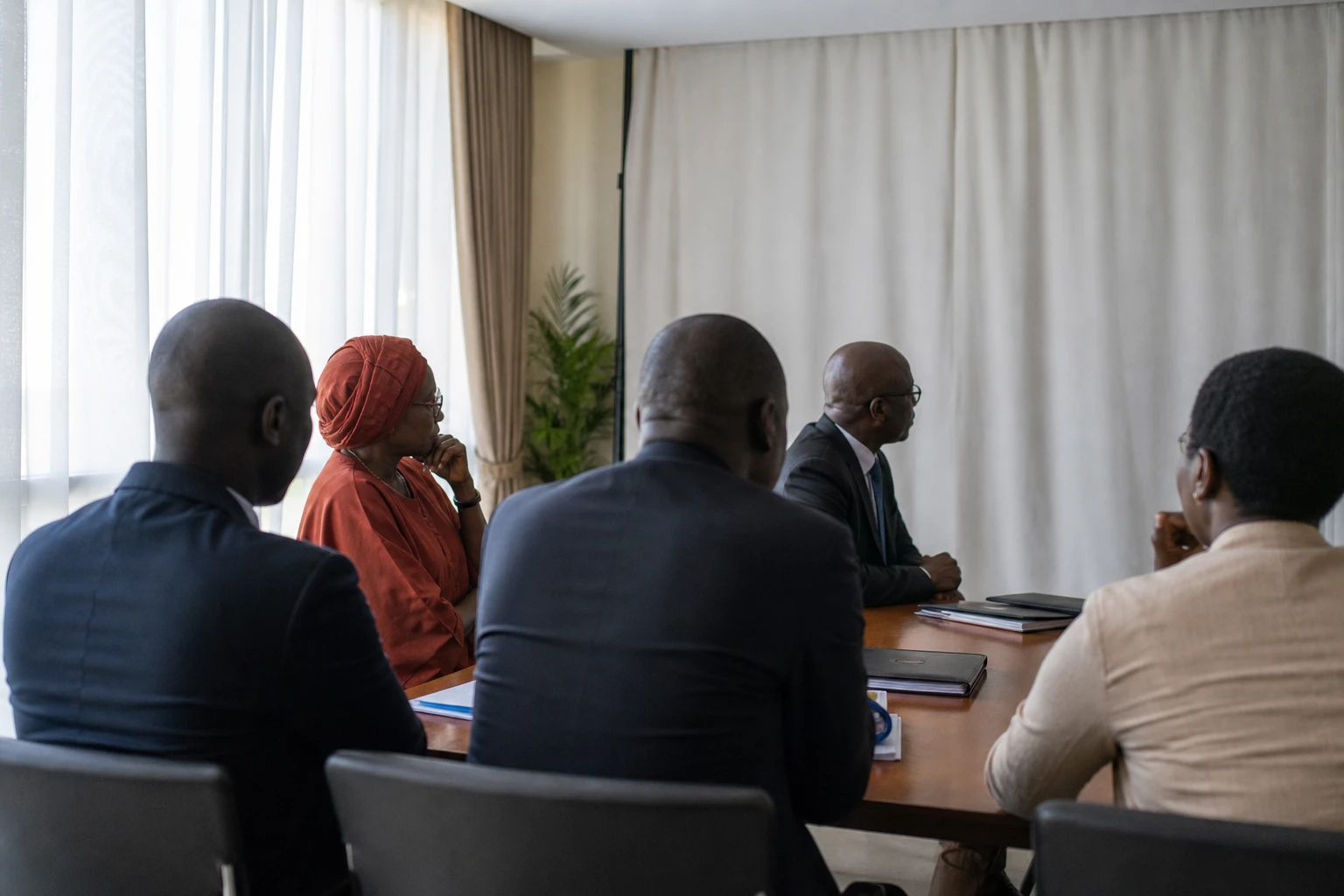
In Dakar, an international candidacy has reopened a national rift. By officially backing Macky Sall for the post of United Nations secretary-general, Bassirou Diomaye Faye has put Senegalese diplomacy up against a delicate question: can the country defend a former president abroad while continuing, at home, to debate his political and financial record ?
A change of position that goes beyond rivalry between two presidents
Senegal announced its support for Macky Sall’s candidacy on 20 July 2026, after a meeting between the former head of state and his successor at the Presidential Palace. The announcement came several months after the first discussions about the candidacy.
In March 2026, Dakar was among the African states that had not endorsed a common position in favour of Macky Sall. A note from the African Union Commission said that 20 countries had broken the silence procedure initiated around his candidacy. The continent has therefore yet to agree on collective support.
Macky Sall, president of Senegal from 2012 to 2024, is officially running to succeed António Guterres, whose term is due to end on 31 December 2026. His candidacy was put forward by Burundi. In his campaign document submitted to the United Nations, the former leader highlights his experience at the helm of the African Union, NEPAD and several international co-operation frameworks.
In an interview with RFI and France 24 on the sidelines of the United Nations General Assembly in New York, Bassirou Diomaye Faye defended the decision. He said Macky Sall could champion calls for stronger African representation in multilateral institutions. The Senegalese head of state said in particular : « Who better to defend a greater place for Africa than President Macky Sall ? »
The justification follows a familiar diplomatic logic: when a former leader runs for an international post, their country may consider it should support their candidacy, despite domestic political disagreements. But in Senegal, the decision is also viewed through the political crisis that marked the end of the previous administration.
Victims of political violence denounce a contradiction
Associations representing victims of violence between 2021 and 2024 have strongly criticised the president’s support. They accuse Macky Sall of presumed political responsibility for the way that period was handled, amid protests, arrests and deadly clashes.
These organisations point above all to the lack of a full judicial response. Their criticism is therefore not limited to the UN candidacy. It also concerns the risk that an international ambition could give the impression that domestic disputes have been settled, while families are still waiting for the truth, redress and, where appropriate, the identification of those responsible.
The issue is a sensitive one for the current administration. Bassirou Diomaye Faye was elected in March 2024 amid strong calls for change, led by Pastef and its leading figure, Ousmane Sonko. The new administration had promised to restore public accountability and shed light on the preceding years of tension.
Support for Macky Sall does not legally mean that any potential proceedings have been abandoned. However, it sends a political signal that is difficult for victims and their relatives to interpret. The government will therefore need to draw a clear distinction between its foreign policy and the judicial handling of the alleged acts, to avoid the appearance that one is neutralising the other.
Public debt fuels the backlash
The controversy extends to the economic record. Senegal’s new authorities inherited a more deteriorated financial situation than the figures officially presented before the change of government suggested.
In a report published in February 2025, the Court of Auditors put public debt at 99.67 % of gross domestic product at the end of 2023. It also estimated the budget deficit at 12.3 % of GDP. The figures were subsequently examined by the International Monetary Fund, which suspended its programme with Dakar after proceedings were opened over the reliability of financial statements.
The African Development Bank has also echoed the main findings of Senegal’s audit. It says the discrepancies between the reported figures and the revised position have reduced the country’s room for budgetary manoeuvre. For the state, this means fewer resources available for wages, investment, subsidies and public services.
Against this backdrop, Bassirou Diomaye Faye’s remarks about the difficulties faced by Macky Sall surprised some in his own majority. MPs from Pastef, the ruling party, continue to describe the revised debt figure as one of the previous administration’s principal legacies.
People experience this issue differently depending on their circumstances. Urban households feel the effects of decisions on prices and subsidies. Formal-sector businesses face delays in public payments and more expensive access to credit. In the regions and the informal economy, the impact is felt more through reduced public procurement, tax pressure and insecure incomes.
Local election timetable adds to uncertainty
Another issue is fuelling concern: municipal and departmental elections scheduled for January 2027. At the end of September 2026, the electorate had still not been called to the polls. Some preparatory steps, including the exceptional revision of voter lists, had also not officially begun.
Senegalese legal experts say the timetable is becoming tight. For a vote scheduled before 22 January 2027, the decree calling the election would need to be issued by early November 2026 at the latest, given administrative and electoral deadlines. The president has not, however, announced a postponement.
Bassirou Diomaye Faye has urged people not to make the election date an « obsession ». He says 2027 leaves room to organise the vote. The opposition and some civil society groups dispute this view, fearing a delay without sufficiently transparent justification.
The debate goes beyond the date of the vote. Local elections will determine control of municipalities and departments, and therefore shape part of the implementation of public policy. They will also test the government’s territorial reach after its 2024 presidential victory. A prolonged postponement could give the ruling party more time to build its local networks, while the opposition would see it as an undue institutional advantage.
Senegalese candidacy watched across West Africa
Dakar’s decision comes amid political realignments in the Economic Community of West African States (ECOWAS), the organisation that co-ordinates economic and political co-operation among its member states.
Senegal remains one of the region’s few centres of electoral stability, although its recent trajectory has shown how fragile that image can be. Its support for Macky Sall will therefore be watched on two levels: as an attempt to promote an African candidate at the UN, and as a choice that could reopen domestic tensions.
The next stage will be the diplomatic contest between the candidates, followed by a decision from the United Nations Security Council and General Assembly. Dakar’s challenge is now to defend its international position without muddying the commitments it has made to Senegalese people on justice, financial transparency and respect for the electoral timetable.



