Algeria
 Egypt
 Libya
 Morocco
 Sudan
 Tunisia
 Burkina Faso
 Cabo Verde
 Côte d'Ivoire
 Ghana
 Guinea
 Guinea-Bissau
 Liberia
 Mali
 Mauritania
 Niger
 Nigeria
 Senegal
 Sierra Leone
 The Gambia
 Togo
 Cameroon
 Central African Republic
 Chad
 DR Congo
 Equatorial Guinea
 Gabon
 Republic of the Congo
 São Tomé and Príncipe
 Burundi
 Comoros
 Djibouti
 Eritrea
 Ethiopia
 Kenya
 Madagascar
 Malawi
 Mauritius
 Mozambique
 Rwanda
 Seychelles
 Somalia
 South Sudan
 Tanzania
 Uganda
 Angola
 Botswana
 Eswatini
 Lesotho
 Namibia
 South Africa
 Zambia
 Zimbabwe
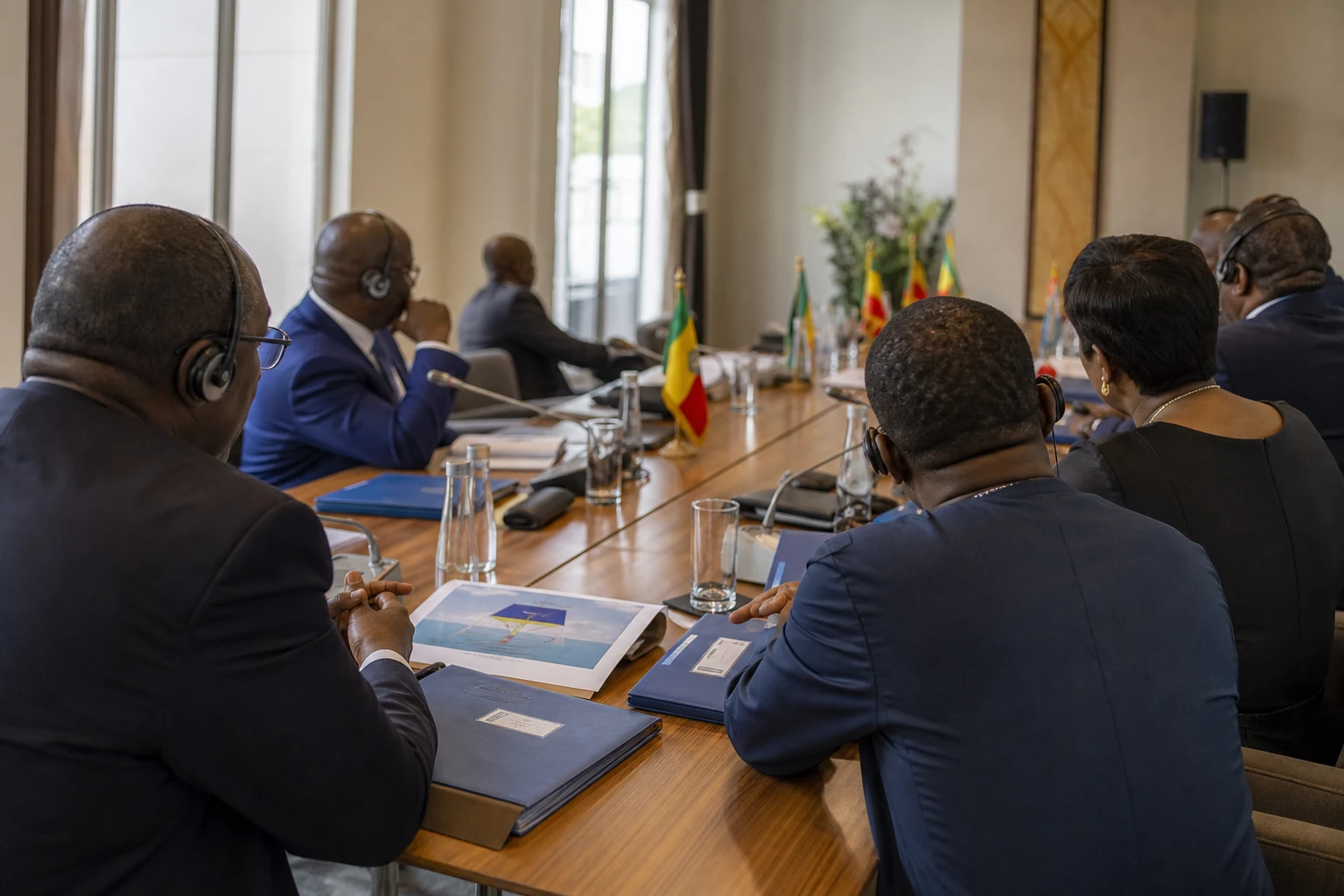
In Porto-Novo, the restart of oil production at Sèmè is about more than a cargo expected in October 2026. It raises a broader question for Benin: how can a resource known for decades be turned into a sustainable, profitable activity that benefits the national economy?
The Beninese field is a reminder of a reality that is often overlooked. In Africa, an oil discovery guarantees neither rapid production nor regular revenues. The quality of the crude, water depth, infrastructure, costs and market prospects can leave a deposit waiting for years.
Benin’s gradual return to the oil market
The Sèmè offshore field lies off south-eastern Benin, in Block 1. It produced about 22 million barrels between 1982 and 1998, before operations were halted. At the time, oil prices had fallen to around $14 a barrel, making production difficult to sustain.
Redevelopment is now being led by Akrake Petroleum Benin, a subsidiary of Singapore’s Rex International Holding. Production resumed in March 2026, following several technical steps. A first cargo of about 250,000 barrels is due to be marketed in October 2026, according to reports published by the Beninese press and corroborated by several specialist media outlets.
Current production is reportedly around 3,000 barrels a day. That is below the initial projections, which pointed to 5,000 to 6,000 barrels a day. The difference is a reminder that the shift from exploration to commercial production always involves a degree of uncertainty.
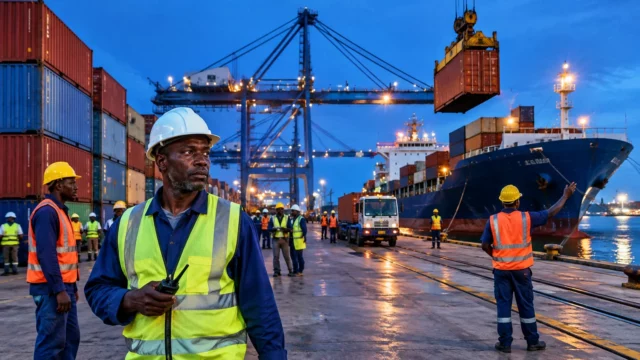
The project is based on a lighter approach than those envisaged in previous attempts. Two horizontal wells are expected to improve oil recovery. Leased floating units handle production, storage and crude loading. The field lies in an area where water depth ranges from only about 20 to 30 metres.
The contract provides for a 15% stake for the Beninese state. It also includes a 10% royalty on production and a share of the profit oil — the amount remaining after the project’s costs have been recovered. The government’s challenge will therefore be to turn these mechanisms into transparent and predictable revenues.
African resources held back by the economics
Sèmè’s trajectory resembles that of several African projects. Their existence is established, but their development depends on a delicate combination of costs, technology and market access. When that combination changes, an old field can become attractive again. Conversely, a major discovery can remain undeveloped if it requires too much capital.
In Mauritania, the Chinguetti field produced oil from 2006 to 2017. The country currently has no producing oil field, but it retains several offshore discoveries. Mauritania’s Ministry of Energy estimates the reserves at Walata, formerly known as Tiof, at about 280 million barrels. The Tevet field is estimated at nearly 40 million barrels.
Mauritanian authorities say the feasibility of redeveloping Walata is still under study. The project is part of a wider energy landscape, however. Mauritania is also advancing its gas resources, particularly around Banda and Tevet, with the aim of boosting electricity generation in Nouakchott.
In Madagascar, the main obstacle is the nature of the oil. The Tsimiroro deposit, in the Morondava Basin, contains heavy oil estimated at about 1.7 billion barrels by the Office of National Mines and Strategic Industries (OMNIS). This oil requires more heat, equipment and logistical resources than light crude.
Madagascar Oil has supplied heavy fuel oil to local businesses since September 2022. This activity is nevertheless different from oil production intended to supply a large refinery or an international market. The absence of domestic refining capacity limits the conversion of crude into fuel for vehicles.
Namibia shows that size is not enough
Namibia offers another example. Discoveries made on licence PEL 0039, in the Orange Basin, raised high expectations. Yet Shell recorded an impairment of about $400 million on the licence in 2025. The company cited, among other factors, the low permeability of some reservoirs and significant gas presence.
The Merlin-1X well, drilled in 2026, nevertheless delivered more favourable results. Shell says it encountered light oil in a higher-quality reservoir, with limited associated gas. This development does not yet amount to a final investment decision. It simply opens a new phase of assessment of the block’s commercial viability.
The Namibian case matters for West and Southern Africa. It shows that even a spectacular discovery must clear several hurdles: confirming recoverable volumes, measuring flow rates, building infrastructure and demonstrating that the project can withstand fluctuations in oil prices.
A global market torn between caution and demand
Oil companies are now making investment decisions more selectively. They are seeking competitive projects close to existing infrastructure and capable of producing quickly. Smaller fields can therefore become contenders again if their development requires little new equipment.
Forecasts for global demand nevertheless remain sharply divided. In its scenario based on announced policies, the International Energy Agency estimates that oil consumption could stabilise at around 102 million barrels a day by about 2030, before gradually declining. Under its scenario based on policies currently in force, it expects demand to reach 113 million barrels a day in 2050.
The Organisation of the Petroleum Exporting Countries (OPEC) takes a more bullish view. Its report published in 2025 forecasts demand of nearly 123 million barrels a day in 2050. These differences are not marginal. They influence investor decisions, asset values and the ability of African states to negotiate new contracts.
For Benin, the challenge begins after the first cargo
The sale expected in October 2026 will be an important signal for Benin. It will mark the country’s return to the international crude market after nearly three decades away. It will not, however, be enough to guarantee economic transformation.
The impact will depend on the regularity of production, revenue management and the integration of Beninese companies into the value chain. Port activities, maintenance, maritime services and training could benefit from the project. The gains will remain limited if most equipment, expertise and procurement come from abroad.
The issue also concerns the Economic Community of West African States (ECOWAS). In a region seeking to strengthen energy trade, each new source of production can contribute to security of supply. But it can also deepen reliance on raw-material exports if it is not accompanied by investment in electricity, transport and local industries.
Benin’s progress will therefore be watched on three fronts: actual production levels, publication of the revenues generated under the contract, and the project’s ability to continue beyond its first cargo. Sèmè may not be a turning point in terms of volume. It could, however, become a practical test of Benin’s ability to manage an old resource with new tools.