Algeria
 Egypt
 Libya
 Morocco
 Sudan
 Tunisia
 Benin
 Burkina Faso
 Cabo Verde
 Côte d'Ivoire
 Ghana
 Guinea
 Guinea-Bissau
 Liberia
 Mali
 Mauritania
 Niger
 Nigeria
 Senegal
 Sierra Leone
 The Gambia
 Togo
 Cameroon
 Central African Republic
 Chad
 DR Congo
 Equatorial Guinea
 Gabon
 Republic of the Congo
 São Tomé and Príncipe
 Burundi
 Comoros
 Djibouti
 Eritrea
 Ethiopia
 Madagascar
 Malawi
 Mauritius
 Mozambique
 Rwanda
 Seychelles
 Somalia
 South Sudan
 Tanzania
 Uganda
 Angola
 Botswana
 Eswatini
 Lesotho
 Namibia
 South Africa
 Zambia
 Zimbabwe
In Nairobi, the memory of Wangarĩ Maathai is not limited to the trees she helped plant. It also speaks to a way of linking ecology, women’s rights and political responsibility. Fifteen years after her death, a play is bringing her story back to the centre of public debate in Kenya.
A stage on which to revisit Kenya’s history
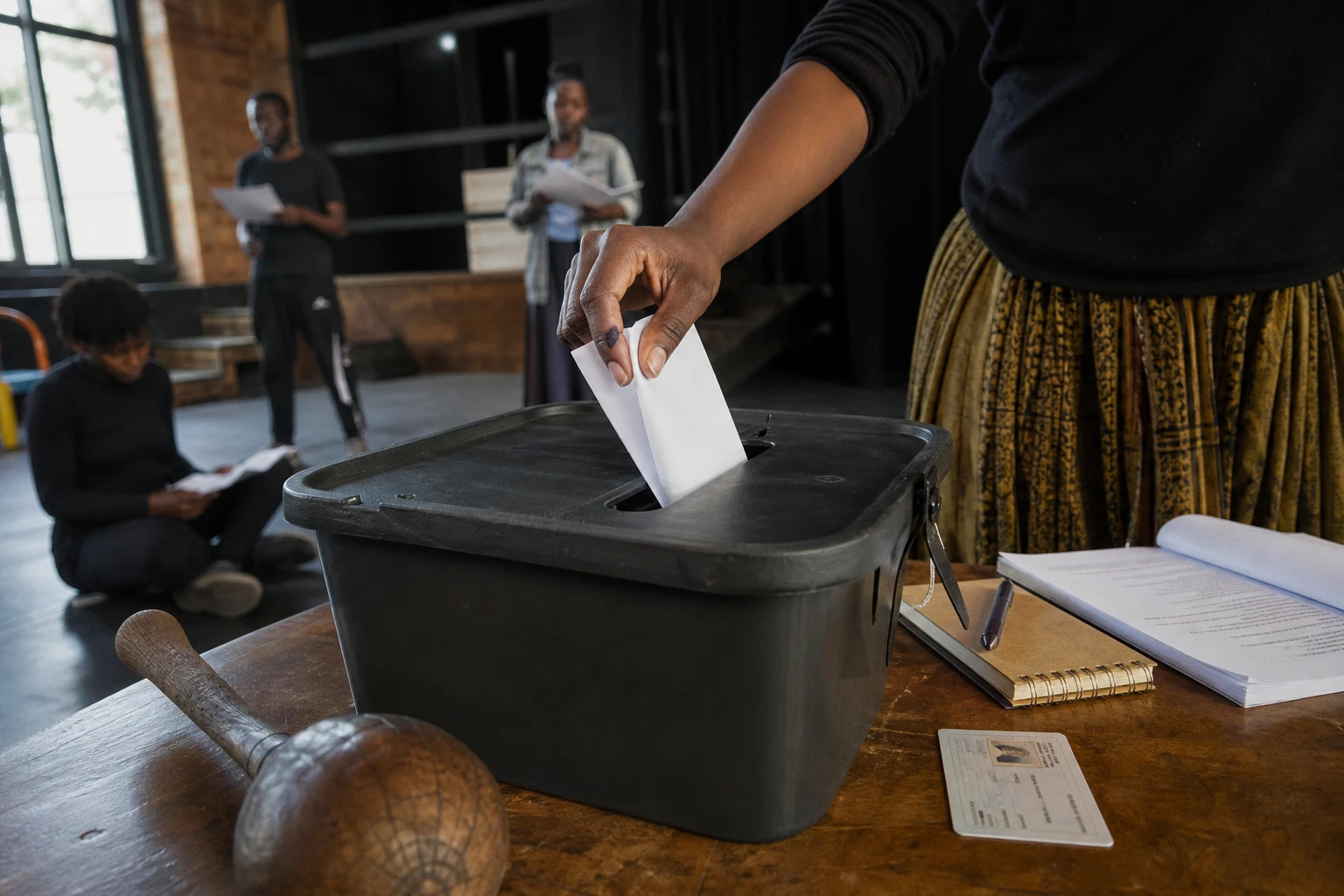
The Too Early For Birds collective is presenting a new version of its play about Wangarĩ Maathai in Nairobi. Performances are scheduled from Friday 25 to Sunday 27 September 2026 at C. U. Shah Jain Bhavan in the Kenyan capital. The revival comes 15 years after the activist’s death on 25 September 2011.
The production combines narration, dialogue, music and ensemble acting. Its aim is not simply to tell the life story of a celebrated figure. It seeks to show the lesser-known stages of a journey shaped in villages, universities, Nairobi’s parks and spaces of political dissent.
The play, described by its creators as a journey into the roots of a revolution, draws on historical research and Wangarĩ Maathai’s own writings. The artistic team has worked in particular from her autobiography Unbowed, her reflections on the future of the continent and academic studies of her life.
This approach forms part of Too Early For Birds’ mission: a theatre series created in Kenya to bring episodes and figures from the country’s history to life. Since 2017, the collective has devoted productions to figures such as trade unionist Tom Mboya and Mau Mau fighter Mũthoni wa Kirima. Theatre thus becomes a place of transmission, especially for audiences who do not always encounter these stories in school textbooks.
Trees, but also a battle for democracy
Wangarĩ Maathai is often presented as a pioneer of environmental protection. This is true, but incomplete. Her struggle brought together soil restoration, women’s economic independence and opposition to public decisions considered dangerous for communities.
In 1977, she founded the Green Belt Movement, with the support of the National Council of Women of Kenya. The organisation encouraged communities, particularly women, to plant trees and protect their resources. The movement now describes this approach as a way to strengthen both environmental conservation and livelihoods.
The figure generally cited for the movement’s achievements is more than 50 million trees planted since its founding. The number varies according to the period and counting methods. It nevertheless remains a symbol of a mobilisation that began with local initiatives before becoming a global model for community-based environmental action.
The play also revisits Maathai’s opposition to the redevelopment of Uhuru Park, in the heart of Nairobi. In the 1980s and 1990s, the park became a flashpoint between property development projects, the protection of public spaces and residents’ right to open spaces in a rapidly growing capital.
The park also hosted political protests. In 1992, Wangarĩ Maathai joined the mothers of political detainees demanding the release of their relatives. Their hunger strike at Freedom Corner helped bring prisoners’ families into the landscape of Kenyan dissent. Security forces broke up the gathering, but the protest left a lasting mark on the country’s democratic memory.
A Kenyan figure at the intersection of science, power and society
Wangarĩ Maathai’s story is not solely that of an activist. She was also an academic, professor, member of parliament and government minister. In 2004, she received the Nobel Peace Prize for her contribution to sustainable development, democracy and peace. She became the first African woman to receive the distinction.
International recognition sometimes reduced her story to a simple formula: a woman who plants trees. The Too Early For Birds collective seeks instead to restore the contradictions and difficulties of her journey. Maathai faced arrests, violence, smear campaigns and clashes with political leaders.
This reassessment matters in contemporary Kenya. The country has an active civil society, a vibrant cultural sector and a long tradition of public debate. Yet land issues, forest protection, access to resources and women’s role in decision-making remain sensitive.
Environmental challenges take a particular form in Nairobi. The capital concentrates government departments, businesses and a rapidly growing population. It is also home to essential green spaces with ecological and social functions. Urban pressure does not have the same effects on residents of central neighbourhoods as it does on those in outlying areas. Access to parks, water and a healthy environment remains highly unequal.
A legacy that extends beyond Kenya’s borders
Wangarĩ Maathai’s influence extends beyond the national context. Her methods have informed reforestation, land-protection and economic empowerment initiatives in several African countries. They also resonate with concerns across East Africa, a region where drought, soil degradation and population displacement weigh on rural and urban communities.
In this region, environmental action cannot be separated from food security and governance. Trees protect the soil, but they are not enough to resolve tensions over access to land, water or income. It is precisely this connection between ecology and social justice that gives Maathai’s legacy lasting relevance.
The play also raises a question of transmission. Who tells Kenya’s story? Which heroes feature in school curricula, archives and popular narratives? By placing a woman scientist and activist at the centre of the stage, Too Early For Birds proposes a shift in perspective. National history is no longer just a sequence of leaders and dates. It also becomes the story of communities, mobilised women and citizens defending a shared space.
In Nairobi, the production does not turn Wangarĩ Maathai into a frozen figure. It places her back in today’s debates. Her legacy is measured not only by the number of trees planted, but also by a society’s ability to link environmental protection, dignity and civic participation.