Algeria
 Egypt
 Libya
 Morocco
 Sudan
 Tunisia
 Benin
 Burkina Faso
 Cabo Verde
 Côte d'Ivoire
 Ghana
 Guinea
 Guinea-Bissau
 Liberia
 Mali
 Mauritania
 Niger
 Nigeria
 Senegal
 Sierra Leone
 The Gambia
 Togo
 Cameroon
 Central African Republic
 Chad
 DR Congo
 Equatorial Guinea
 Gabon
 Republic of the Congo
 São Tomé and Príncipe
 Burundi
 Comoros
 Djibouti
 Eritrea
 Kenya
 Madagascar
 Malawi
 Mauritius
 Mozambique
 Rwanda
 Seychelles
 Somalia
 South Sudan
 Tanzania
 Uganda
 Angola
 Botswana
 Eswatini
 Lesotho
 Namibia
 South Africa
 Zambia
 Zimbabwe
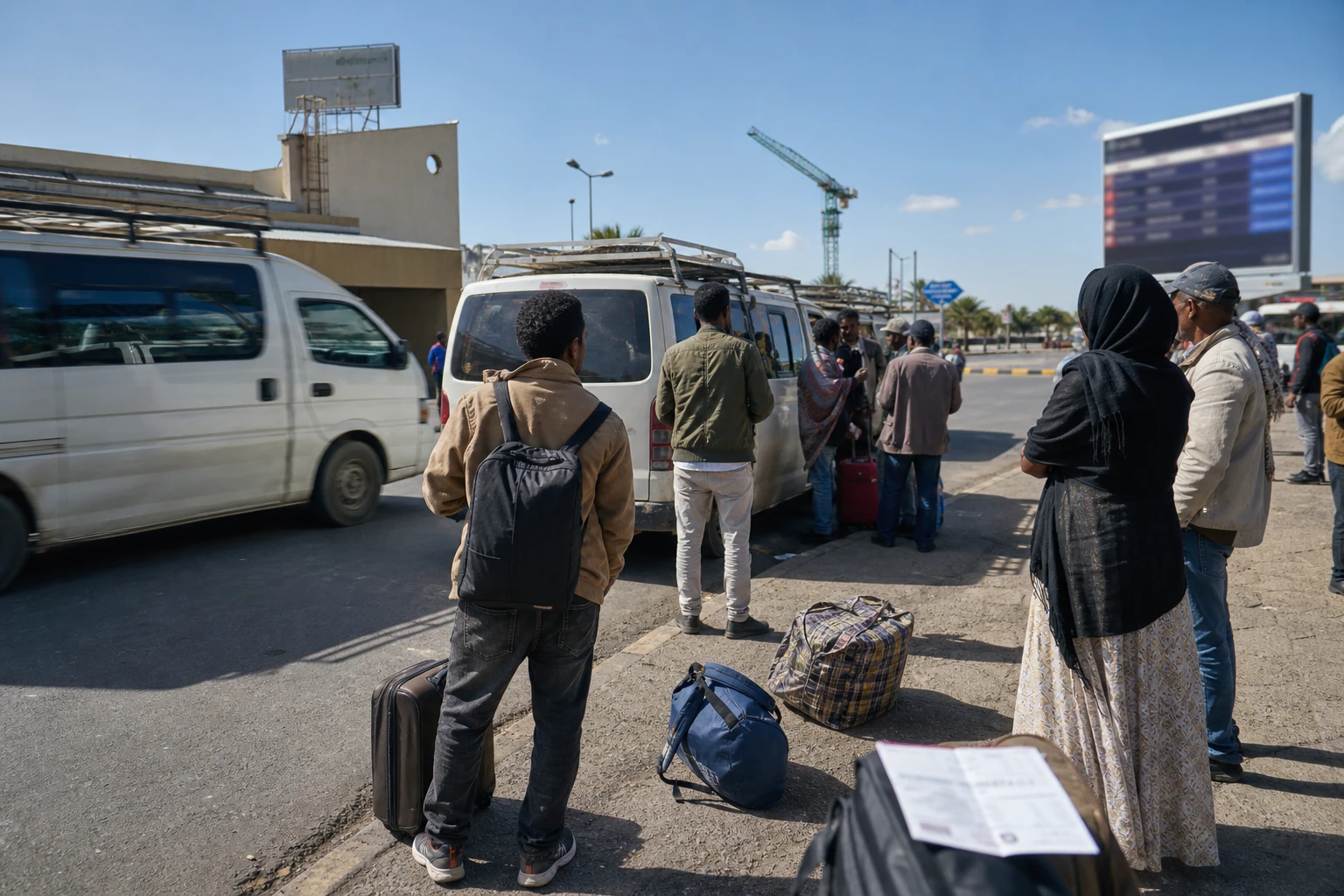
In Mekele, the breakdown is no longer measured only in political statements. It is now visible on the runways of Alula Aba Nega Airport, where air links have been suspended after Tigrayan forces seized the site. For the people of Tigray, this cut-off revives memories of a war that had already isolated the region from the rest of Ethiopia.
A strategic airport at the heart of a fresh escalation
On 23 September 2026, forces linked to the Tigray People’s Liberation Front, the TPLF, took control of Mekele airport, the regional capital of Tigray in northern Ethiopia. Several local sources also reported a Tigrayan presence at the airports in Aksum and Shire.
The reports were made by local witnesses and cross-checked by several international media outlets. Euronews reported the seizure of Mekele airport and clashes in neighbouring Afar. Spain’s EFE news agency also reported the seizure of several airport facilities in Tigray.
Ethiopian Airlines has suspended flights to Mekele, Aksum and Shire. The national carrier cited the security situation in the region, without announcing a date for their resumption. The move cuts an essential link with Addis Ababa, the federal capital, and complicates travel for civilians, traders, aid workers and families separated by the conflict.
Control of an airport is not merely a military gain. It makes it possible to monitor movements, secure a logistical entry point and reduce the visible presence of federal authorities. In Mekele, the development also confirms the weakening of the interim administration established after the Pretoria accord.
Clashes reported in Tigray, Afar and towards Amhara
The seizure of the airport comes after several weeks of tension between the federal government and the Tigrayan authorities. Clashes have been reported in neighbouring Afar, including around Abala and Erebti. These towns occupy a sensitive position on routes linking northern Ethiopia to the Red Sea’s commercial corridors.
Sources cited by Euronews also mentioned fighting around Berhale, Megale, Dalul and Konoba. The reports remain difficult to verify independently because of access restrictions and communications disruptions.
On 24 September, conflict analysis organisation ACLED reported continued clashes on the border between Tigray and Afar, as well as in the Amhara region. It said Tigray defence forces had taken control of the airports in Mekele, Aksum and Shire on 23 September.
The federal army, for its part, says it has killed more than 200 rebel fighters since Tuesday 22 September. This toll has not been confirmed by an independent source. It should therefore be treated as an army statement, not as an established death toll.
The TPLF says it is engaged in a “total war” against the federal government. The phrase reflects a sharp deterioration in political and military rhetoric. It does not, on its own, make it possible to determine the precise scale of operations or the level of control exercised by either side on the ground.
Pretoria accord under heavy pressure
The current crisis is part of the trajectory of the Tigray war, which began in November 2020 between Abiy Ahmed’s government and the TPLF, which had previously dominated Ethiopia’s ruling coalition. The conflict ended with the cessation of hostilities agreement signed in Pretoria, South Africa, on 2 November 2022, under the auspices of the African Union.
The accord silenced the guns and enabled a disarmament process to be organised. However, several issues remained unresolved. The return of displaced people, control of disputed territories, the reorganisation of Tigrayan forces and the TPLF’s political participation have not been settled on a lasting basis.
The extension of Tigray’s interim administration has also caused tensions. In May 2026, the TPLF announced the restoration of the former regional government after rejecting an extension of the interim administration’s mandate. The federal government challenged the decision, arguing that it undermined the constitutional authority of the Ethiopian state.
The situation became more complex after an alliance bringing together several armed or political opposition movements was formed in September 2026. According to Associated Press, the coalition includes the TPLF, the Fano movement active in Amhara and the Oromo Liberation Army. The groups say they intend to challenge Prime Minister Abiy Ahmed’s government.
A crisis extending beyond Tigray
For residents, access to essential services remains the priority. The suspension of flights reduces the options for travelling to Addis Ababa. It could also slow the arrival of medicines, cash and humanitarian workers. In rural areas, where roads are long and sometimes exposed to danger, the impact is likely to be even more direct.
Formal businesses are already grappling with uncertainty. Traders, transport operators and families relying on remittances from the capital must contend with disrupted links. In a region scarred by the destruction of the previous war, another closure of transport routes could quickly affect prices and supplies.
The stakes are regional too. Afar links northern Ethiopia to routes leading to Djibouti, the country’s main maritime outlet. An expansion of the fighting could disrupt trade flows and increase pressure on communities already weakened by displacement.
The crisis also concerns the Intergovernmental Authority on Development, IGAD, an East African cooperation organisation, as well as the African Union. Pretoria had shown that African mediation could help end a major war. The latest escalation is now testing these institutions’ ability to prevent the resumption of a national conflict with regional consequences.
Three factors will be decisive in the coming days: how control of the airports evolves, whether new fronts open in Afar and Amhara, and the African Union’s response. The resumption of flights to Mekele, Aksum and Shire will also provide a concrete indicator of the level of security. For now, the Pretoria accord remains in force on paper, but its political and security framework is facing its gravest test since it was signed.