Algeria
 Egypt
 Libya
 Morocco
 Sudan
 Tunisia
 Burkina Faso
 Cabo Verde
 Côte d'Ivoire
 Ghana
 Guinea
 Guinea-Bissau
 Liberia
 Mali
 Mauritania
 Niger
 Nigeria
 Senegal
 Sierra Leone
 The Gambia
 Togo
 Cameroon
 Central African Republic
 Chad
 DR Congo
 Equatorial Guinea
 Gabon
 Republic of the Congo
 São Tomé and Príncipe
 Burundi
 Comoros
 Djibouti
 Eritrea
 Ethiopia
 Kenya
 Madagascar
 Malawi
 Mauritius
 Mozambique
 Rwanda
 Seychelles
 Somalia
 South Sudan
 Tanzania
 Uganda
 Angola
 Botswana
 Eswatini
 Lesotho
 Namibia
 South Africa
 Zambia
 Zimbabwe
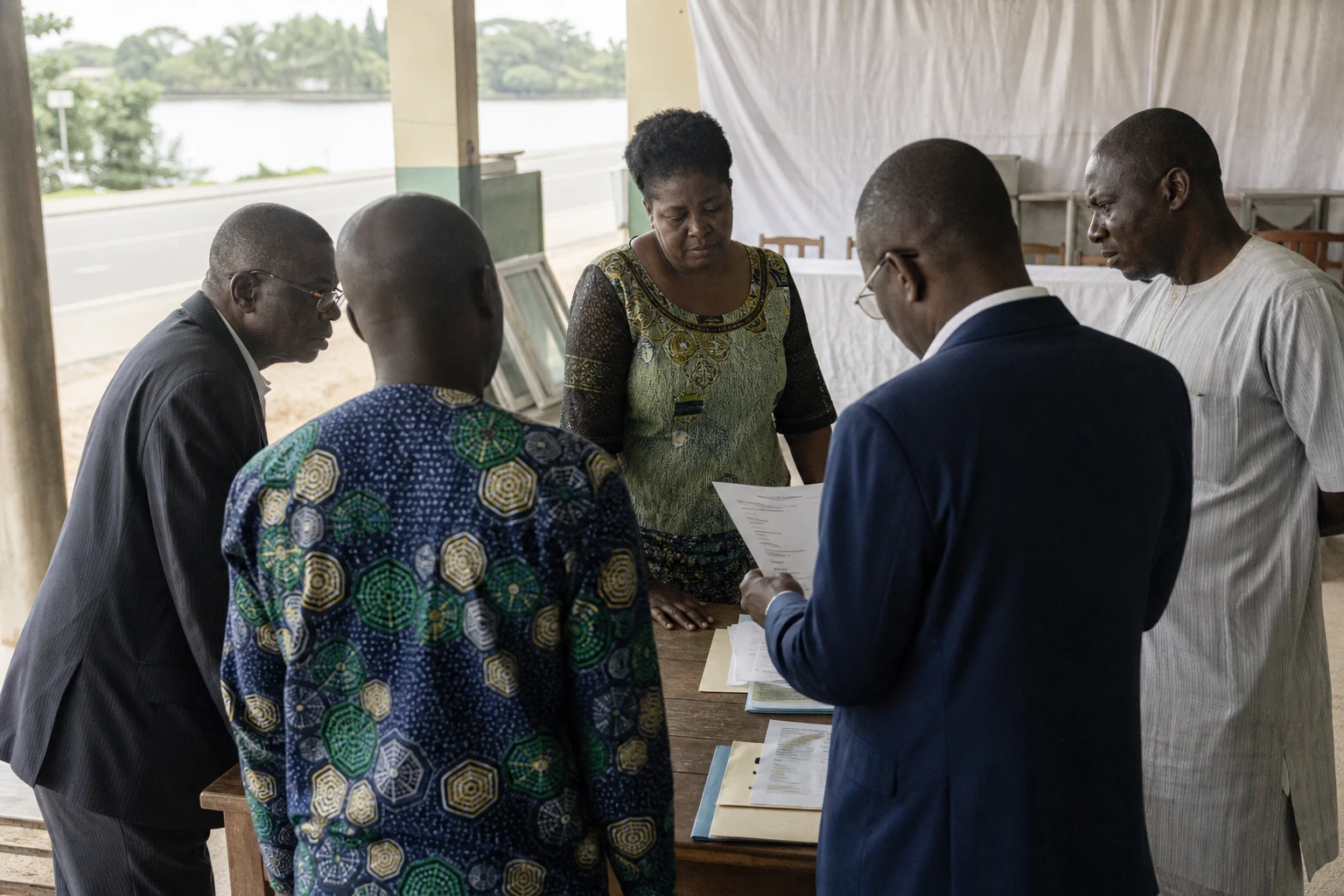
Along the road linking Cotonou to Ouidah, families are trying to dismantle their homes before the announced arrival of heavy machinery. At several properties, the words “to be demolished” have reportedly been marked on walls. Some residents have been given no more than seven days. Beyond the land dispute, the operation raises a simple question: how can lagoon areas be protected without further undermining the people who live there and have invested in them ?
An operation to protect the banks
The first markings were reportedly made during the week of 13 September 2026, in areas between Cotonou and Ouidah. The authorities are targeting buildings they consider to be within a protected strip extending 25 metres from the banks and bodies of water.
This rule is not an improvised measure. Benin’s law classifies certain shores and banks as part of the natural public domain. The law on the protection, development and enhancement of the coastal zone protects, in particular, the surroundings of rivers, lakes and lagoons. The Beninese regulatory framework for the coastal zone also highlights the particular vulnerability of the country’s southern river and lagoon areas.
Wetlands in this part of Benin serve several purposes. They absorb some rainwater, help it flow and support fishing, transport and trade. When natural outlets are blocked or built over, water remains for longer in low-lying neighbourhoods.
The government therefore presents the operation as a continuation of sanitation policies launched before Romuald Wadagni became president. For several years, Cotonou and neighbouring municipalities have invested in retention basins, improved roads and infrastructure designed to reduce flooding. The Cotonou Rainwater Drainage Programme covers several catchment areas in the economic capital.
Residents caught between land titles and administrative urgency
On the ground, those affected are less opposed to the principle of protecting the banks than to the way the operation is being carried out. Residents say they have received notices of partial demolition with very little time to act. Some are already taking down roofing sheets, doors, windows and bricks to salvage part of their property.
A Beninese property owner based in Paris says he bought land in the area about 20 years ago. He says he holds land titles and condemns the fact that he was notified without any meaningful period for dialogue. His case illustrates a recurring difficulty in Benin: possession of a land document does not always establish that a building can remain when the land is part of the public domain or a protected area.
The regularity of land ownership will nevertheless have to be assessed on a case-by-case basis. A title, an administrative permit or past official tolerance do not necessarily have the same legal effect. Conversely, the authorities must clearly explain the boundaries they have set, the legal grounds on which they are acting and the available appeal procedures.
Government spokesman Wilfried Léandre Houngbédji has defended the intervention as necessary. He says the uncontrolled occupation of banks and bodies of water blocks natural outlets, increases flood risks and disrupts ongoing development work. In his view, failure to act now could make the situation more difficult in the future.
The government also says it plans to provide support to people who settled in accordance with the law. Properties to be cleared could be bought out, subject to conditions set by the authorities. This clarification matters because clearing a right of way has different consequences for someone with no recognised rights, an owner with a valid title, or a household that built after receiving local authorisation.
The precedent of Cotonou’s lagoon banks
The current debate recalls other operations carried out under the presidency of Patrice Talon. In 2024, the Beninese government announced compensation payments to 638 households affected by the clearance and sanitation of the eastern bank of the Cotonou lagoon. The government said information and awareness-raising sessions had been held before the payments.
An official account of the operation on the Cotonou bank reports compensation or financial support, depending on each household’s circumstances. This precedent fuels two opposing interpretations. For the authorities, it shows that a compensation process is possible. For residents organising against the operation, it is a reminder above all that compensation must be known, calculated and guaranteed before any demolition.
Criticism therefore centres on the timetable. Seven days may be enough to remove items that can be dismantled. It seems far too little when people must challenge a decision, produce documents, negotiate compensation, find somewhere to live and protect an economic activity. Low-income households, artisans and small traders rarely have the savings needed to absorb a sudden move.
The situation also varies from one area to another. In neighbourhoods close to Cotonou, land values and urban pressure are high. Around Ouidah, residents may be more dependent on fishing, small-scale trade, lagoon transport or income from exploiting natural resources. A uniform measure can therefore have very different effects across municipalities and livelihoods.
A test for the start of Wadagni’s term
Having taken office on 24 May 2026 after a decade marked by Patrice Talon’s major construction projects and reforms, Romuald Wadagni must now establish his own approach. The launch of a clearance operation just months after he took office gives political weight to a case initially presented as technical.
The new president has an interest in ensuring that environmental protection is not seen as simply an extension of previous urban demolitions. The legality of the land being cleared, the transparency of the criteria, the information given to households and the reality of compensation will be closely scrutinised. The operation’s success will therefore depend as much on the quality of the work as on the trust built around its implementation.
The issue extends beyond Benin’s coastline. Cotonou, Porto-Novo and Ouidah are part of the same urban and lagoon area, which is facing population growth, intense rainfall, erosion and property development pressures. These challenges also concern West African regional cooperation, particularly within ECOWAS, the organisation bringing together West African states and facilitating coordination on mobility, environmental and development issues.
In the coming days, attention will focus on the actual timetable for demolitions, the publication of compensation criteria and the treatment of owners challenging their inclusion in the protected strip. The government will also have to show that the cleared areas will in fact be sanitised and protected. Otherwise, new buildings could replace the displaced families while the original problem remains unresolved.