Algeria
 Egypt
 Libya
 Morocco
 Sudan
 Tunisia
 Benin
 Burkina Faso
 Cabo Verde
 Côte d'Ivoire
 Ghana
 Guinea
 Guinea-Bissau
 Liberia
 Mali
 Mauritania
 Niger
 Nigeria
 Senegal
 Sierra Leone
 The Gambia
 Togo
 Cameroon
 Central African Republic
 Chad
 DR Congo
 Equatorial Guinea
 Gabon
 Republic of the Congo
 São Tomé and Príncipe
 Burundi
 Comoros
 Djibouti
 Eritrea
 Ethiopia
 Kenya
 Madagascar
 Malawi
 Mauritius
 Mozambique
 Rwanda
 Seychelles
 Somalia
 Tanzania
 Uganda
 Angola
 Botswana
 Eswatini
 Lesotho
 Namibia
 South Africa
 Zambia
 Zimbabwe
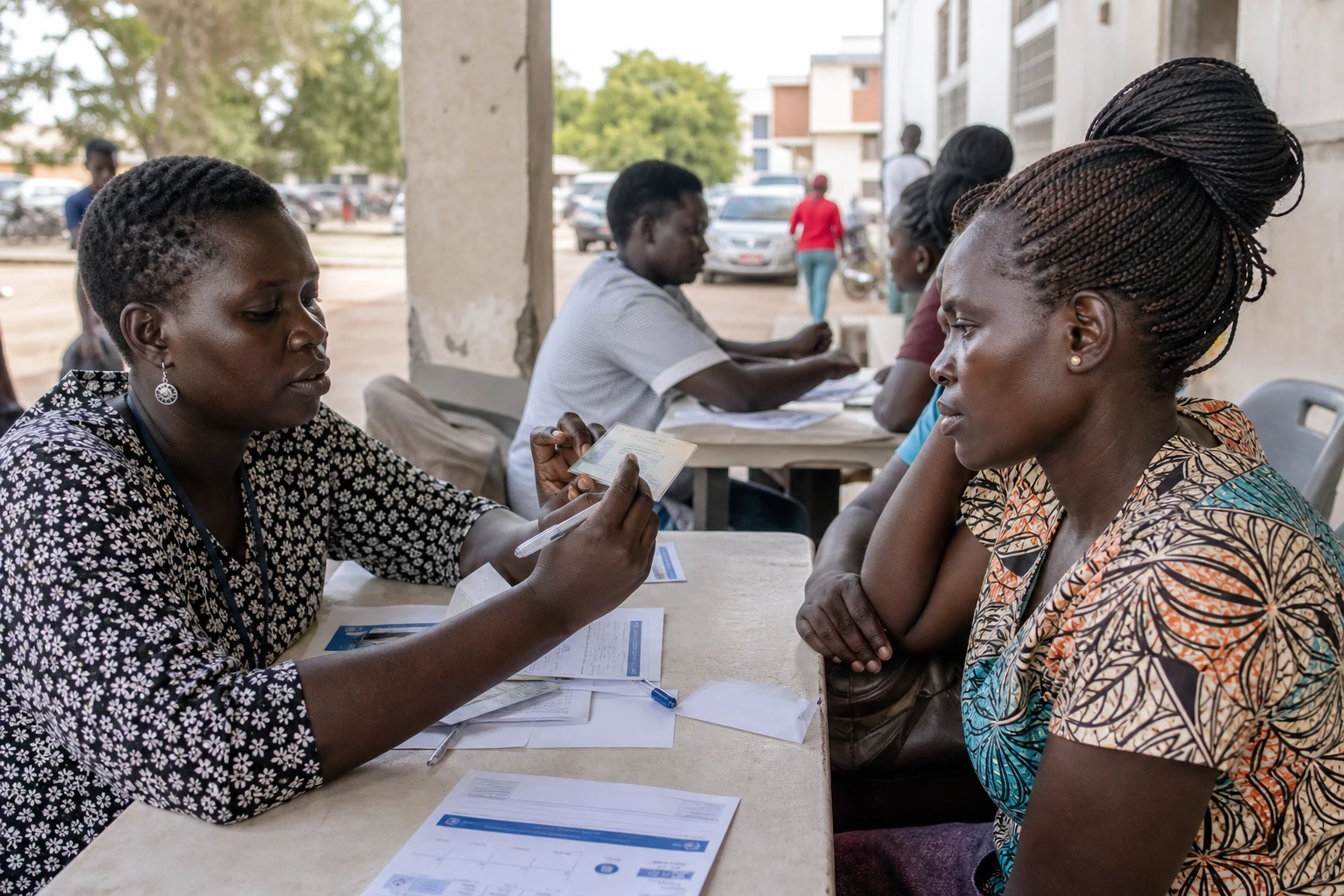
In Juba, the election countdown is entering its practical phase. Less than three months before the poll scheduled for 22 December 2026, South Sudan’s National Elections Commission has unveiled the tools that will be used to register voters and issue them with voter cards.
The process may appear technical. Yet it addresses a central political question: can the continent’s youngest state hold its first national general election since independence without reigniting the divisions of the transition and civil war?
An election timetable still marked by delays
South Sudan declared independence in July 2011. Since then, its citizens have never been called on to choose their leaders directly in a national general election. The poll has been postponed several times, notably because of violence, disagreements among leading figures and delays in implementing the 2018 peace agreement.
The date currently set is 22 December 2026. It follows on from the Revitalised Agreement on the Resolution of the Conflict in South Sudan, which governs the transitional period and provides for the development of lasting electoral institutions.
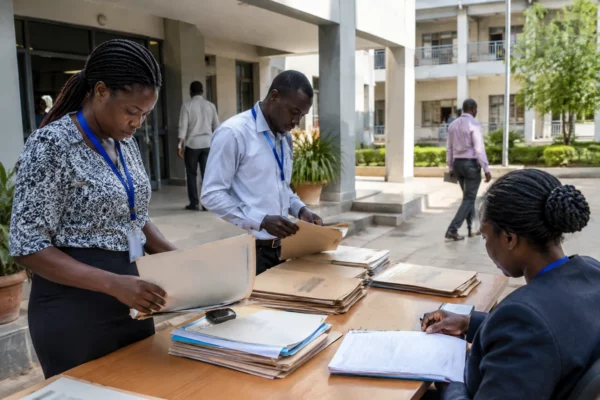
The National Elections Commission says its mandate covers the entire process. It is responsible for registering voters, preparing polling stations, overseeing candidates, training election staff and contributing to civic education. Its official website also states that it must act impartially and enable citizens to exercise their political rights without discrimination.
This is a considerable responsibility in a country where government administration is unevenly established. There are significant disparities between Juba, state capitals and rural or hard-to-reach areas. Population displacement also complicates voter identification and the delivery of materials.
Commission urges parties to avoid another crisis
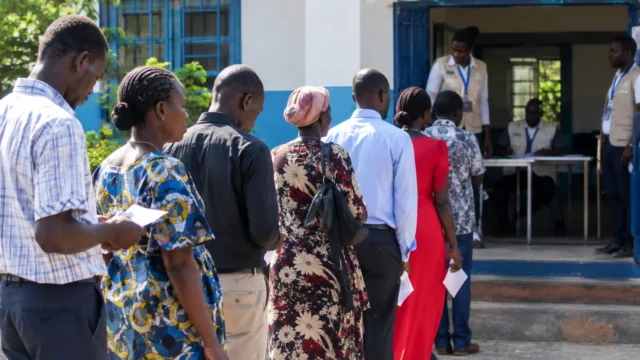
At a press conference in Juba on 22 September 2026, the Commission presented the voter registration register and cards. According to South Sudanese media, these documents are intended to accompany the operational launch of citizen registration.
Above all, the Commission urged political leaders and parties to respect the electoral rules. It called on them to help ensure a peaceful process rather than turn registration into another test of strength.
The appeal is directed first at the government and parties that emerged from the peace agreements. It also concerns opposition parties, local authorities, signatory and non-signatory armed groups, and civil society organisations. In such a fragile context, a poorly managed dispute can quickly spill beyond institutional debate.
The Commission, however, lacks the means to secure the entire country or resolve political disputes on its own. It depends on public funding, cooperation from the authorities and an environment open enough to allow travel, political meetings and election observation.
Poll must go beyond the presidency
Voters will not be asked to decide on the presidency alone. The programme also provides for the renewal of the National Assembly, the election of state governors and local legislative assemblies. Several representatives are also to be appointed at administrative and local levels.
This framework gives the poll a wider scope than a straightforward contest between national political figures. It is intended to test the country’s ability to make representative institutions function at several levels, at a time when power remains heavily concentrated in the capital.
For urban residents, the issues will include access to electoral rolls, information about candidates and protection of the vote. In rural areas, priorities may differ: the distance to polling stations, safety on roads, availability of identity documents and understanding of the procedures.
Women, young people, displaced people and communities living in areas affected by fighting risk facing specific obstacles. Formal registration alone will therefore not be enough to guarantee participation. Electoral operations will also need to be effectively present in areas far from Juba.
Many obstacles remain before 22 December
The Commission has already identified funding, the legal framework and logistics as major challenges. In a document published by the institution, it said that available resources were insufficient to meet all the needs involved in organising the poll.
In 2024, the Commission had considered postponing the elections originally scheduled for 22 December that year. It cited a lack of funds, unfinished preparatory work and the need to clarify several legal provisions. The timetable was subsequently extended to December 2026.
The challenge is also political. President Salva Kiir and his former rival Riek Machar remain at the heart of the institutional balance established by the peace agreement. The sidelining of several transitional commitments, tensions between rival forces and persistent local violence have fuelled questions about the conditions for a genuinely open contest.
The Associated Press reported that opposition figures and observers have pointed to legal shortcomings and logistical difficulties. These concerns do not prove that the poll will be impossible. They do, however, show that the process’s credibility will depend as much on practical preparations as on political safeguards.
A test for East Africa
The South Sudanese poll will be closely watched by the Intergovernmental Authority on Development, IGAD, which brings together several countries in the Horn of Africa and East Africa. The organisation played a central role in the negotiations that led to the Revitalised Peace Agreement.
The question therefore extends beyond South Sudan’s borders. An election held within an inclusive framework could consolidate the transition and lend greater legitimacy to national institutions. Conversely, a disputed poll or one limited to certain areas could prolong the political crisis and undermine regional stability.
The next step will be the effective registration of voters. Attention will then turn to the publication of a detailed timetable, party registration, candidates’ access to the media, the presence of observers and mechanisms for resolving appeals.
For the National Elections Commission, the challenge is therefore not simply to meet a date. It is to demonstrate that South Sudan can move from an extended transition to a regulated political contest without electoral disagreement turning once again into armed conflict.