Algeria
 Egypt
 Libya
 Morocco
 Sudan
 Tunisia
 Benin
 Burkina Faso
 Cabo Verde
 Côte d'Ivoire
 Ghana
 Guinea
 Guinea-Bissau
 Liberia
 Mali
 Mauritania
 Niger
 Senegal
 Sierra Leone
 The Gambia
 Togo
 Cameroon
 Central African Republic
 Chad
 DR Congo
 Equatorial Guinea
 Gabon
 Republic of the Congo
 São Tomé and Príncipe
 Burundi
 Comoros
 Djibouti
 Eritrea
 Ethiopia
 Kenya
 Madagascar
 Malawi
 Mauritius
 Mozambique
 Rwanda
 Seychelles
 Somalia
 South Sudan
 Tanzania
 Uganda
 Angola
 Botswana
 Eswatini
 Lesotho
 Namibia
 South Africa
 Zambia
 Zimbabwe
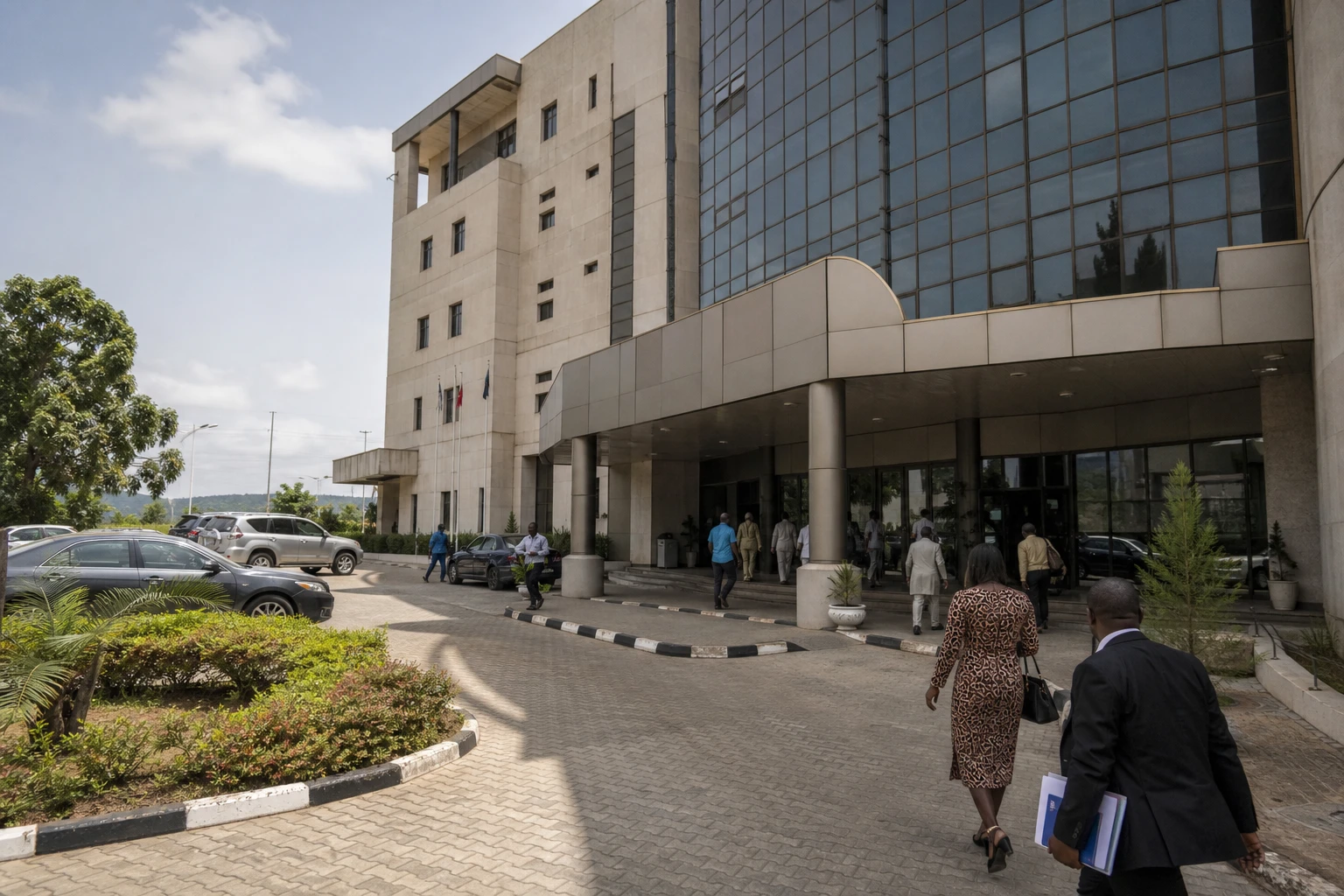
Nigeria is seeking capital capable of quickly bringing barrels back to market. Indonesia, for its part, wants to secure its supply and boost production beyond its borders. This convergence puts Abuja at the centre of a new phase in relations between African producers and Asian national oil companies.
A rapprochement that goes beyond crude purchases
On 20 September 2026, the Nigerian Upstream Petroleum Regulatory Commission (NUPRC), Nigeria’s upstream sector regulator, reported discussions with Pertamina. The Indonesian delegation included Toriq Abdat, vice-president for upstream business development, and Arif Havas Oegroseno, deputy foreign minister.
The talks are not limited to oil cargoes. Pertamina is also considering the possibility of acquiring assets in Nigeria that are either producing or close to a final investment decision. This is the point at which a company formally approves a project’s financing and launch.
The Indonesian state-owned company is exploring several routes to gain access. It could take part in an open tender. It could also negotiate directly with the Nigerian authorities under a bilateral agreement, depending on the arrangements Abuja adopts.
This strategy is part of the international expansion mandate given to Pertamina. The company already has operations in North Africa. In Algeria, its subsidiary PT Pertamina Algeria Eksplorasi Produksi holds, among other interests, a 65% stake in the Menzel Lejmat Nord area, according to official Algerian documents and information published by Sonatrach on the contract concluded with Pertamina.
Two production targets that will be difficult to meet
The rapprochement between Jakarta and Abuja addresses two distinct constraints. In Indonesia, domestic production remains insufficient to meet domestic demand. The Indonesian government has set a target of one million barrels of oil a day by 2030. Data from Indonesia’s energy ministry nevertheless show the scale of the challenge, with production at around 600,000 barrels a day in recent years.
In this context, Pertamina is seeking reserves and revenue overseas. Its international assets are meant to contribute to Indonesia’s energy security. Depending on the quality of the blends produced and logistical conditions, they could also supply crude to its refineries.
Nigeria is pursuing the opposite course. The country has substantial resources, but production remains below its potential. The NUPRC estimates current crude and condensate production at about 1.6 or 1.7 million barrels a day. In August 2026, the regulator recorded 1,677,777 barrels a day of crude and condensates, a slight increase on the previous month. The figures are available in the NUPRC’s monthly production bulletin.
Abuja is nevertheless targeting three million barrels a day by 2030. To achieve this, the government must attract new operators, accelerate investment and improve the consistency of existing production. Security at facilities, disruption in the Niger Delta, contractual delays and difficulties transporting output continue to weigh on volumes.
Nigeria opens up more of its acreage
The Petroleum Industry Act, adopted in 2021, reorganised the governance of Nigeria’s oil sector. Among other things, the law strengthened the NUPRC’s role in administering upstream assets and created a clearer framework for investors.
Since then, Abuja has been trying to organise more regular licensing rounds. The latest process covered 50 blocks in onshore areas, shallow and deep waters, and several frontier basins. According to the NUPRC, 37 blocks received bids. The remaining 13 attracted no bids and are to be put back on the market.
The next campaign is due to begin by the start of October 2026 at the latest. The NUPRC confirmed this deadline in statements reported by several Nigerian media outlets, including TheCable on the timetable for the next tender and Premium Times on the 13 blocks’ return to the state’s portfolio.
The regulator wants to create a steady flow of opportunities. The principle is simple: offer licences regularly, reduce administrative delays and give companies visibility over several years. This approach is intended to avoid long periods in which assets remain allocated but undeveloped.
The federal government has also eased some financial terms. Signature bonuses, paid when a block is awarded, have been brought within an announced range of between $3m and $7m for certain assets. The measure is aimed above all at making licences more accessible to new operators and national oil companies with substantial, but more limited, resources than the majors.
A test for Abuja’s strategy
Pertamina’s interest gives Nigeria additional visibility. It does not, however, guarantee either the signing of a contract or a rapid start to production. The company will have to assess reserves, development costs, taxation, operational risks and the conditions for transporting crude.
For Abuja, the challenge is to turn an expression of interest into real investment. The authorities will therefore need to maintain stable rules, publish reliable information on blocks and ensure fair competition between foreign companies and Nigerian operators.
The effects will not be the same for all stakeholders. Public revenue could rise if projects go ahead. Local businesses could win service and subcontracting contracts. In producing areas, communities will be looking above all for jobs, infrastructure and better environmental protection.
Conversely, higher production will not be enough to resolve the country’s social difficulties. Oil revenues depend on international prices, operating costs and the state’s ability to turn receipts into public services. For households, the impact will therefore remain indirect until issues around energy prices, employment and purchasing power are addressed separately.
A new map of energy partnerships
The Pertamina case illustrates a broader shift. Asian national oil companies are increasingly seeking assets in Africa. They are no longer limiting themselves to occasional cargo purchases. They want to take part in exploration and production, and sometimes to control part of the energy chain.
For Nigeria, this trend diversifies its partners as the country seeks to consolidate its place in the global oil industry. It also strengthens economic ties between West Africa and South-East Asia, two regions separated by maritime routes but facing energy security imperatives.
What happens next will depend on the effective launch of the tender announced for October 2026. The blocks targeted by Pertamina, the financial terms proposed and the Nigerian authorities’ ability to conclude agreements quickly will then need to be assessed. The outcome will offer a concrete indication of whether Nigeria’s oil acreage has regained its attractiveness.