Algeria
 Egypt
 Libya
 Morocco
 Sudan
 Tunisia
 Benin
 Burkina Faso
 Cabo Verde
 Côte d'Ivoire
 Ghana
 Guinea
 Guinea-Bissau
 Liberia
 Mali
 Mauritania
 Niger
 Nigeria
 Senegal
 Sierra Leone
 The Gambia
 Togo
 Cameroon
 Central African Republic
 Chad
 DR Congo
 Equatorial Guinea
 Republic of the Congo
 São Tomé and Príncipe
 Burundi
 Comoros
 Djibouti
 Eritrea
 Ethiopia
 Kenya
 Madagascar
 Malawi
 Mauritius
 Mozambique
 Rwanda
 Seychelles
 Somalia
 South Sudan
 Tanzania
 Uganda
 Angola
 Botswana
 Eswatini
 Lesotho
 Namibia
 South Africa
 Zambia
 Zimbabwe
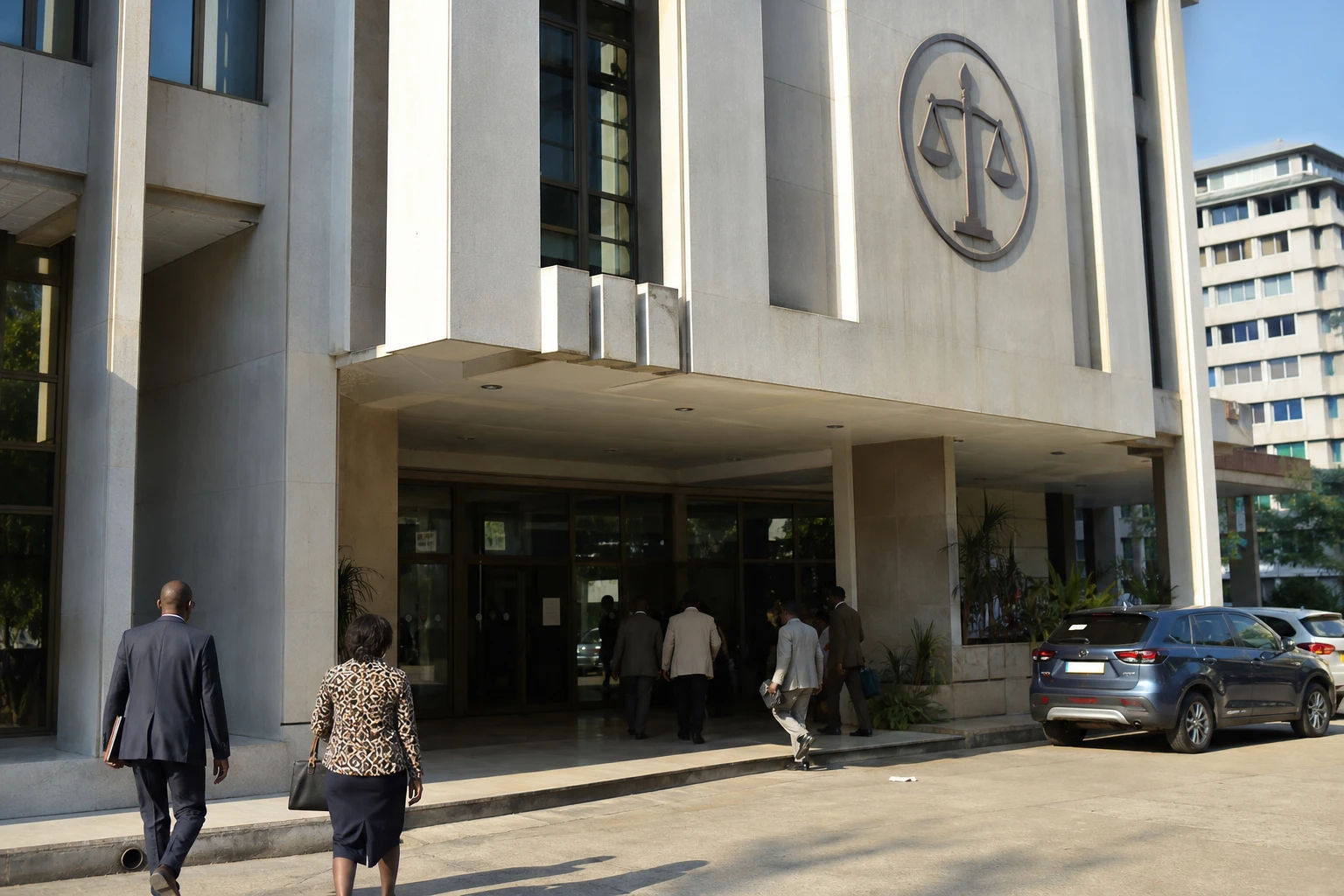
An old case that remains explosive
In Gabon, legal cases involving the Bongo legacy never remain confined to the courtroom. They weigh on the country’s political memory, on the way the state tells its story from Libreville, and on the very concrete question of property, assets and public money. In a case opened in France nearly 20 years ago, the courts are still trying to disentangle what belongs to private wealth and what may have come from misappropriated public funds.
The Gabonese context gives the case particular significance. Since the coup on 30 August 2023, the country has entered a new political phase, marking a clear break with the era of Ali Bongo Ondimba, who was ousted after more than 14 years in power and after a dynasty had been at the helm of the state since 1967. This period has reopened debates on governance, public finances and the traceability of assets held in Gabon and abroad.
What the French proceedings say
In late July 2026, France’s National Financial Prosecutor’s Office sought to send 18 people and five companies to trial in the so-called ill-gotten assets case linked to Gabon. According to information reported in the press, the French courts suspect that assets worth an estimated €85 million were acquired with public money. Ali Bongo, for his part, spoke for the first time about this legal case as the proceedings reached a decisive stage.
The request for a trial does not amount to a conviction. It does, however, mean that the investigating judges believe they have gathered sufficient evidence for a court to hear the case against those involved. In French legal terms, this is an important milestone: the case moves beyond the investigative phase towards the prospect of a public trial. This step is all the more significant in the Gabon case because it involves both individuals and several companies, and therefore potentially complex asset-holding structures.
The ill-gotten assets case, launched after a complaint was filed in 2007, concerns wealth allegedly accumulated in France using misappropriated public funds. It has already affected several ruling families in central Africa, including those of Gabon, Congo-Brazzaville and Equatorial Guinea. The Gabonese strand has also drawn on seizures, confiscations and legal disputes involving properties in France.
A legal case, but also a political one
For Gabonese people, the issue goes beyond the image of a former head of state facing justice in France. It touches on a sensitive question: what happens to public resources when the state has not always been seen as the foremost guardian of the public interest? The case also points to the sometimes blurred boundary between power, family business and the management of national wealth in highly personalised systems of ownership.
The timing is particularly delicate, as Libreville has sought since the transition began in 2023 to show that the Gabonese state intends to regain control of its assets and accounts, and restore its institutional credibility. Gabonese media have noted that the state intends to monitor closely legal disputes involving seized assets, in order to defend its property interests and, eventually, see the proceeds of any confiscations returned to the Gabonese Treasury. This national perspective does not always align with the approach taken in France, where the proceedings remain first and foremost a criminal case.
The case also speaks to the real economy. When the debate focuses on villas, buildings or holding companies, it inevitably leads back to everyday needs: water, roads, healthcare, schools and urban jobs. In Libreville and other urban centres, many citizens do not see the case as a mere legal saga. They see it as a test of the state’s ability to recover what may have been taken from it, and then turn it into visible public policies.
What Gabon is watching, and what central Africa is taking away
Across central Africa, the case is being closely followed because it concerns a political family that long influenced regional balances of power. Gabon belongs to CEMAC, the economic and monetary community of six central African countries, where good governance, capital mobility and the credibility of financial institutions remain central issues. A trial in France does not erase national responsibilities, but it can revive debate on the restitution of assets and international judicial cooperation.
The continental significance is clear: the case is a reminder that public money does not stop moving at Africa’s borders. Property deals, shell companies and overseas investments lie at the heart of many similar legal disputes. Gabon therefore faces a twofold challenge. First, to allow justice to take its course without political manipulation. Second, to turn this period into a lever for transparency, so that allegedly ill-gotten assets do not remain an abstract symbol, but become a matter of public accountability.
What happens next will depend on the French judicial timetable and any challenges from the defence. But in Libreville, as across the rest of central Africa, one thing is already clear: this case is no longer just about a former president. It raises questions about how a state, after a political rupture, views its past, its assets and its institutional future.