Algeria
 Egypt
 Libya
 Morocco
 Sudan
 Tunisia
 Benin
 Burkina Faso
 Cabo Verde
 Côte d'Ivoire
 Ghana
 Guinea
 Guinea-Bissau
 Liberia
 Mauritania
 Niger
 Nigeria
 Senegal
 Sierra Leone
 The Gambia
 Togo
 Cameroon
 Central African Republic
 Chad
 DR Congo
 Equatorial Guinea
 Gabon
 Republic of the Congo
 São Tomé and Príncipe
 Burundi
 Comoros
 Djibouti
 Eritrea
 Ethiopia
 Kenya
 Madagascar
 Malawi
 Mauritius
 Mozambique
 Rwanda
 Seychelles
 Somalia
 South Sudan
 Tanzania
 Uganda
 Angola
 Botswana
 Eswatini
 Lesotho
 Namibia
 South Africa
 Zambia
 Zimbabwe
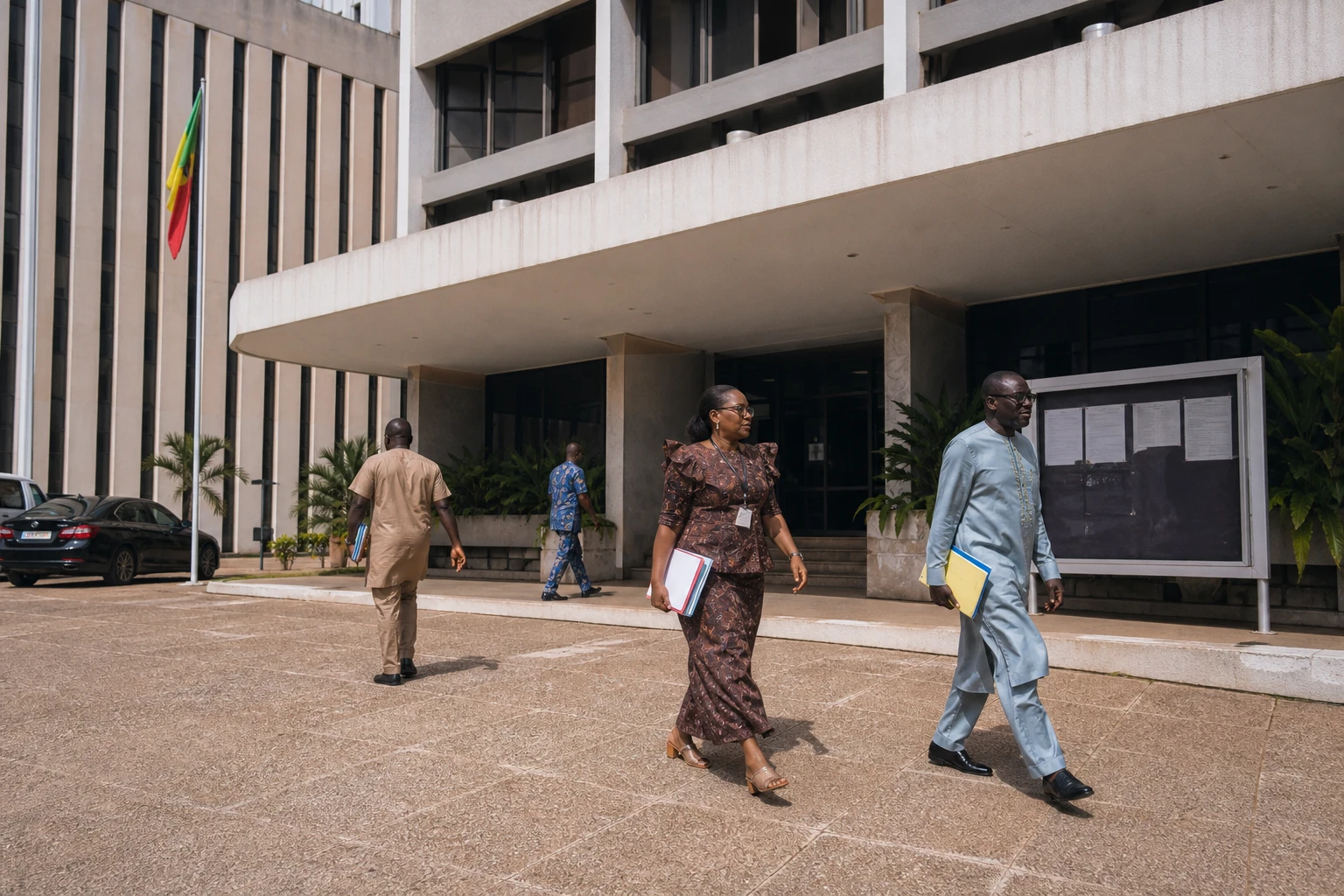
In Bamako, a national celebration under pressure
In Mali, 22 September is more than a commemorative date. It is also a political, military and symbolic test. On the 66th anniversary of independence, the transitional authorities chose to speak of unity, sovereignty and reconciliation at a time when the country’s centre remains shaken by attacks by armed groups. This coincidence says much about the moment in Mali: celebrating the state while seeking to contain the forces challenging it.
The regional landscape has also changed. Mali is no longer part of ECOWAS as it once was, with the country’s withdrawal taking effect on 29 January 2025, according to the West African organisation. Bamako is now placing greater emphasis on the Alliance of Sahel States, established with Burkina Faso and Niger. This realignment affects diplomacy, security and regional movement.
The government’s message: persevere, engage, fight
In his address to the nation, published on 22 September 2026, Assimi Goïta linked the anniversary of independence to what he calls “year five of the Rectification of the Transition”. He said he wanted to remain “open to dialogue and reconciliation among Malian brothers”, while keeping the defence of territorial integrity and national unity as absolute priorities. He also announced a tougher fight against insecurity and terrorist armed groups.
Mali’s state news agency confirmed the same political line: openness to reconciliation, but no easing of the military effort. The head of state also presented engagement within the AES as a means of promoting Sahelian cooperation, emphasising the mobilisation of domestic resources and economic sovereignty.
The speech was not limited to words. The day before, the president inaugurated an artificial intelligence and robotics centre in Kati, a sign that the government wants to associate the national celebration with an image of modernisation, not just security. The authorities also highlighted the Mali 2063 vision and the decision to dedicate 2026 and 2027 to education and culture.
Dioura, the country’s centre and the importance of military intelligence
But conditions on the ground remain severe. On 10 September, an attack on the Dioura barracks in the Mopti region was claimed by the Group for the Support of Islam and Muslims, or JNIM, the al-Qaeda-affiliated jihadist coalition in the Sahel. The pan-African news agency APA reported that the assault targeted a position held by the Malian Armed Forces, while the army said a counter-operation was under way.
The exact death toll remains disputed. Reuters reported on 21 September that more than 100 soldiers were said to have been killed in the Dioura attack, according to two sources, with no independent confirmation. The Associated Press also said the armed group claimed to have killed more than 100 soldiers and captured dozens more, while noting that it could not verify those figures. Caution is essential in such incidents: figures spread quickly, but only some can be publicly corroborated.
The Malian army, for its part, described a large-scale operation, including the evacuation of two companies still holding the garrison and targeted strikes against the attackers. This account highlights a key point: in the Sahel, the battle is fought not only through casualty figures, but also through each side’s ability to control the narrative of the confrontation.
National reconciliation, but within what framework?
The call for reconciliation did not emerge in a vacuum. It comes after several months in which the junta has strengthened its rhetoric of sovereignty while confronting persistent insecurity in the country’s centre and west. It also follows a period of restructuring within the Malian armed forces, with appointments, reorganisations and a more explicit reliance on Bamako’s strategic partners, notably Russia and the AES cooperation frameworks.
For the population, the stakes are tangible. In cities such as Bamako, the national celebration remains a moment of cohesion and a visible expression of the state. In the centre, particularly in Mopti and Ségou, the urgent concerns are more often security-related: movement, access to markets, confidence in the public presence, protection for displaced families and continuity of services. A message of unity will have a lasting effect only if it leads to safer roads, open schools and an administration that is closer to people.
For the authorities, reconciliation also has political significance. It keeps the door open to certain Malian actors, as the state seeks to prevent the national fabric from tearing apart. But this openness is bound by a red line: territorial sovereignty is non-negotiable, according to the official position. That is where the current tension lies: talking to Malians while continuing the war against armed groups.
What 22 September says about Mali and the Sahel
The events in Mali reach beyond Bamako. They show that military-led transitions in the Sahel must manage three fronts at once: security, domestic legitimacy and regional positioning. Withdrawal from ECOWAS, alignment with the AES and the rise of sovereignty-focused rhetoric are reshaping West African power dynamics. This shift also affects neighbouring countries, as armed groups move across borders, adapt and exploit political divisions.
The next phase will unfold over two time horizons. In the short term, attention remains focused on securing central Mali and the army’s ability to respond to attacks such as the one at Dioura. In the medium term, the country will have to prove that its stated sovereignty can deliver tangible results: national cohesion, the revival of public services and lasting control of insecurity. Only then can Independence Day carry more weight than a symbol.