Algeria
 Egypt
 Libya
 Morocco
 Sudan
 Tunisia
 Benin
 Burkina Faso
 Cabo Verde
 Côte d'Ivoire
 Ghana
 Guinea
 Guinea-Bissau
 Liberia
 Mali
 Mauritania
 Niger
 Nigeria
 Senegal
 Sierra Leone
 The Gambia
 Togo
 Cameroon
 Central African Republic
 Chad
 DR Congo
 Equatorial Guinea
 Gabon
 São Tomé and Príncipe
 Burundi
 Comoros
 Djibouti
 Eritrea
 Ethiopia
 Kenya
 Madagascar
 Malawi
 Mauritius
 Mozambique
 Rwanda
 Seychelles
 Somalia
 South Sudan
 Tanzania
 Uganda
 Angola
 Botswana
 Eswatini
 Lesotho
 Namibia
 South Africa
 Zambia
 Zimbabwe
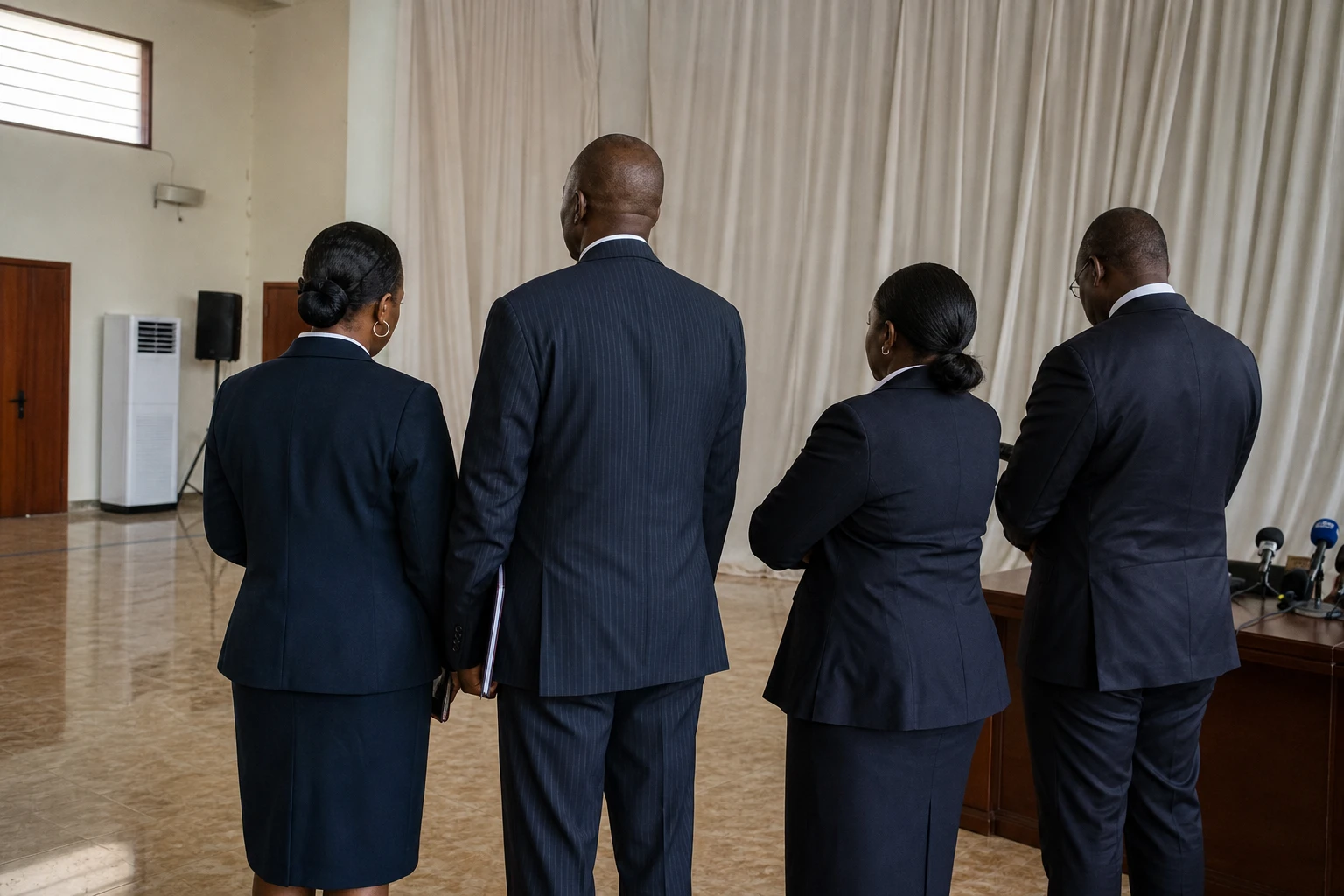
When security moves beyond the judicial framework
In Brazzaville, the fight against urban gangs is no longer simply a debate about public order. It now raises questions about the place of the law, the chain of command and the fate of hundreds of families who say they have heard nothing about their relatives.
In Congo, the issue touches on a sensitive point: the security of cities, but also the boundary between the police, the army and the justice system. The country belongs to CEMAC, the Economic and Monetary Community of Central Africa, and the African Union, placing human rights and the rule of law at the heart of its regional and continental commitments.
What the OCDH investigation documents
The Congolese Observatory for Human Rights presented the findings on Tuesday 22 September of a year-long investigation into the “Zero Kuluna” operation. According to the organisation, 561 young people have disappeared in four major cities in the country: Brazzaville, Pointe-Noire, Dolisie and Nkayi. The NGO says they were arrested and then made inaccessible to their families.
The operation was entrusted to the General Directorate of Presidential Security, the DGSP, following a decision publicly acknowledged by the head of state. On 24 October 2025, Denis Sassou Nguesso confirmed that he had ordered the unit’s involvement in the pursuit of “bébés noirs”, the local name for groups of young urban offenders. He also described the action as a lasting one.
In its report, the OCDH does not dispute the legitimacy of the fight against urban crime. The organisation argues, however, that the method used poses a serious problem: it is calling for those arrested to be handed over to the public prosecutor’s office, their place of detention to be made public, and cases of death to be established by the courts. This demand echoes warnings made over the past several months by other Congolese civil society groups.
A security operation blurring institutional boundaries
That is the crux of the matter. The DGSP is primarily a body responsible for presidential security. Its deployment against urban crime has fuelled debate about its actual remit and how the Congolese state deals with street violence. One view from Congolese civil society, reflected in local reports and analysis, identifies a clear risk: when an exceptional measure becomes a routine response, the line between law enforcement and arbitrariness quickly disappears.
For families, the urgency is not theoretical. It is human, immediate and tangible. They want to know where those arrested are, whether they are still alive and whether they will ever be able to defend themselves before a judge. For the authorities, the issue is different: they want to show that they are taking control again in the face of urban banditry that is fuelling insecurity in several working-class neighbourhoods. Between these two positions, the justice system remains the decisive link.
The Congolese context makes the issue even more complex. Brazzaville is the centre of political decision-making, but the effects of security operations are also felt in Pointe-Noire, Dolisie and Nkayi, where transport, informal trade and young people’s mobility are directly affected. When a security campaign targets neighbourhoods, it first affects low-income households, street vendors, motorbike riders and young people without a stable social safety net.
What this case says about Congo and Central Africa
This case goes beyond Congo alone. Across the region, several Central African states face rising urban violence, swift security responses and recurring tensions between proclaimed effectiveness and judicial oversight. Congo, a member of CEMAC and the African Union, thus finds itself caught between two expectations: protecting the population and respecting the fundamental safeguards attached to every arrest.
The continental significance is clear. Across Africa, this kind of case feeds into a question that is now familiar but remains crucial: how can urban insecurity be tackled without making the exception the rule? The debate extends beyond the borders of the Republic of the Congo because it goes to the heart of security governance in Central Africa, where the state’s effectiveness is often judged by its ability to protect without retreating behind arbitrariness.
What happens next will depend on the institutional response to the report. If the authorities open clear judicial proceedings, they can still take the initiative on the rule of law. If they do not, the “Zero Kuluna” operation will remain not only a security test, but also a political test for the Congolese state.