Algeria
 Egypt
 Libya
 Morocco
 Sudan
 Tunisia
 Benin
 Burkina Faso
 Cabo Verde
 Côte d'Ivoire
 Ghana
 Guinea
 Guinea-Bissau
 Liberia
 Mali
 Mauritania
 Niger
 Nigeria
 Senegal
 Sierra Leone
 The Gambia
 Togo
 Cameroon
 Central African Republic
 Chad
 DR Congo
 Equatorial Guinea
 Gabon
 Republic of the Congo
 São Tomé and Príncipe
 Burundi
 Comoros
 Djibouti
 Eritrea
 Ethiopia
 Madagascar
 Malawi
 Mauritius
 Mozambique
 Rwanda
 Seychelles
 Somalia
 South Sudan
 Tanzania
 Uganda
 Angola
 Botswana
 Eswatini
 Lesotho
 Namibia
 South Africa
 Zambia
 Zimbabwe
When sludge becomes an industrial resource
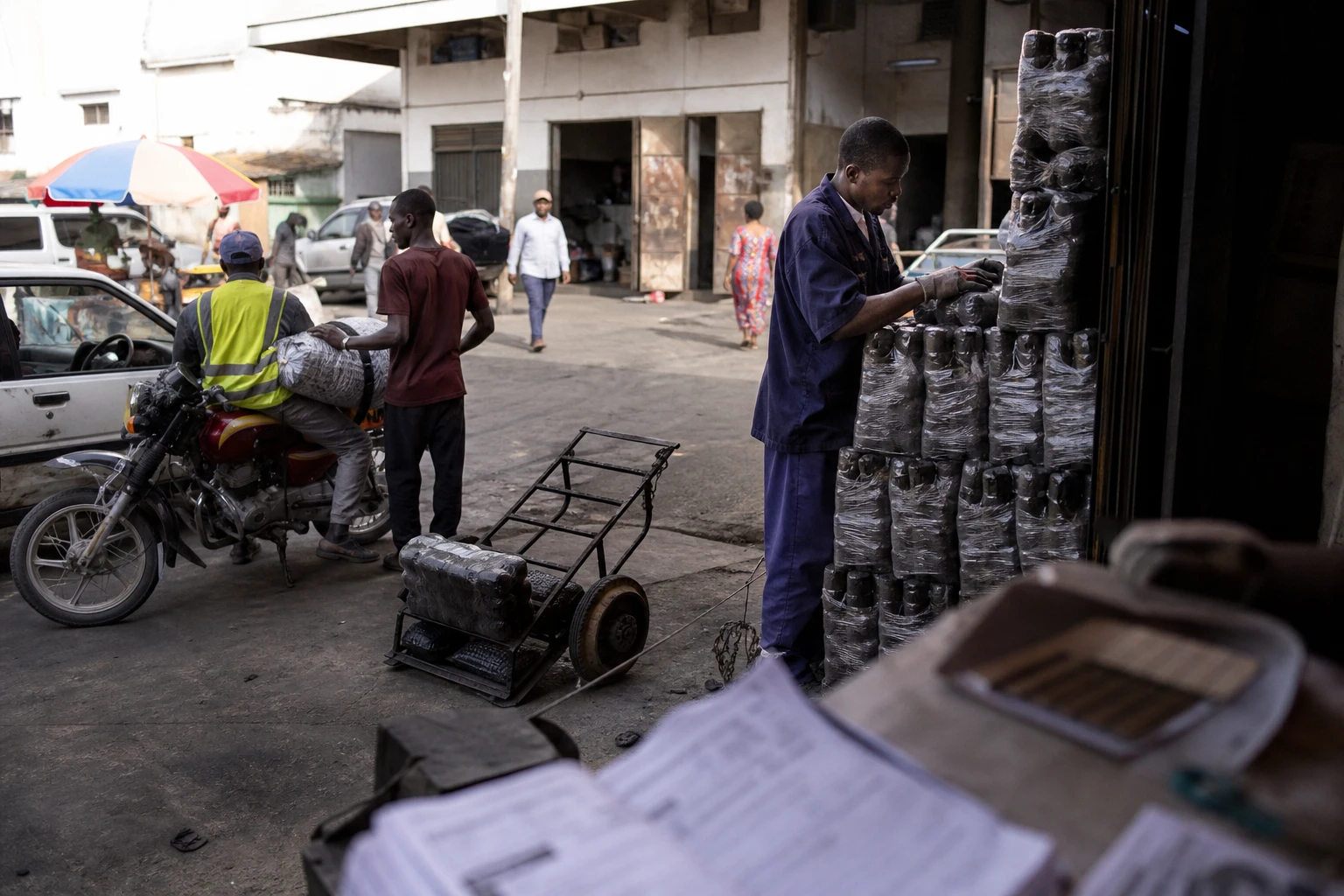
In Naivasha, in the heart of Nakuru County, waste long seen as a public health cost is taking on a new value: as fuel for industrial boilers. In a town where sanitation still relies largely on systems not connected to the sewer network, the question is no longer just how to collect sludge. It is also how to give it a useful second life in a Kenyan economy seeking to secure its heat supply without increasing its carbon bill.
This shift is part of a broader trajectory. Kenya wants to strengthen its industrial base while diversifying its energy sources, particularly for the heat used in food processing and other manufacturing activities. The government has already signalled its intention to accelerate cogeneration — the simultaneous production of electricity and useful heat — as well as the use of biomass. Nairobi, the capital, is thus promoting a strategy intended to meet both growing production needs and climate constraints.
An expansion designed to scale up
The project embodying this ambition is the expansion of Sanivation’s treatment plant in Naivasha. The company wants to increase its monthly production of fuel briquettes to 2,000 tonnes, from around 350 tonnes today. The expanded facility, known as NTPx, is expected to treat up to 4,000 tonnes of faecal sludge a month, mixed with other residues, to produce fuel mainly for industrial boilers. It is scheduled to begin operating in 2027.
The investment has been structured with support from the Private Infrastructure Development Group, which announced $3.3 million in equity and $500,000 in technical assistance. The project’s total cost is estimated at $5.3 million. PIDG describes this expansion as a step towards scaling up, with potential demand from 10 to 20 Kenyan companies. Under this projection, industrial customers could cut their monthly fuel expenditure by 10 to 15%.
In practice, the equation depends on more than technology. It also depends on the market. Producing more briquettes makes sense only if industrial companies agree to buy the fuel over the long term. Sanivation’s bet is therefore to turn a local sanitation service into an energy value chain, generating revenue from collection, treatment and the sale of a standardised product. This shift is what makes the model more robust than simple waste management.
Sanitation, industry and jobs: the tangible effects
The first impact is on health and the environment. In Naivasha, most of the population still relies on systems not connected to the sewer network, such as septic tanks and pit latrines. The expanded plant is therefore expected to handle a significant amount of sludge that, without proper treatment, could pollute the soil and water around Lake Naivasha. The logic is simple: what is collected and treated properly does not end up in the environment.
The second impact is industrial. Kenya remains highly dependent on conventional fuels for process heat, while biomass already accounts for a notable share of industrial energy. The International Energy Agency says bioenergy accounted for 15 petajoules of the 87 petajoules consumed by Kenyan industry in 2023, up from 10 petajoules in 2020. This growth shows that a market already exists. NTPx aims to capture part of that demand with a product that is more consistent than firewood and potentially less exposed to certain supply pressures.
The third impact is economic. For businesses, the promise is not just environmental; it is also financial. Replacing some fuel with waste-derived briquettes could reduce energy bills, a decisive consideration at a time when industrial margins remain under pressure. For the local population, the effect may be more indirect but real: jobs in collection, sorting, processing, logistics and maintenance, as well as better sludge management in a fast-growing area.
A useful signal for East Africa
This case goes beyond Naivasha. Across the East African Community, several cities are seeking to turn urban pressures into industrial opportunities. The Kenyan example is notable because it connects three issues often treated separately: sanitation, energy and business competitiveness. This approach also resonates with local authorities, water operators and industrial companies in the region, which face similar needs for waste treatment and affordable heat.
It also highlights a broader continental reality. Many African cities are growing faster than their sanitation networks. In this context, the recovery of sludge and organic waste can become an infrastructure lever, not just an environmental solution. In the coming years, the challenge will be to see whether projects such as NTPx remain pilot cases or become replicable models in other cities across the region. Timing matters: construction is under way, and the planned start of operations in 2027 will provide a full-scale test of the model’s economic viability.