Algeria
 Egypt
 Libya
 Morocco
 Sudan
 Tunisia
 Benin
 Burkina Faso
 Cabo Verde
 Côte d'Ivoire
 Ghana
 Guinea
 Guinea-Bissau
 Liberia
 Mali
 Mauritania
 Niger
 Nigeria
 Senegal
 Sierra Leone
 The Gambia
 Togo
 Cameroon
 Central African Republic
 Chad
 DR Congo
 Equatorial Guinea
 Republic of the Congo
 São Tomé and Príncipe
 Burundi
 Comoros
 Djibouti
 Eritrea
 Ethiopia
 Kenya
 Madagascar
 Malawi
 Mauritius
 Mozambique
 Rwanda
 Seychelles
 Somalia
 South Sudan
 Tanzania
 Uganda
 Angola
 Botswana
 Eswatini
 Lesotho
 Namibia
 South Africa
 Zambia
 Zimbabwe
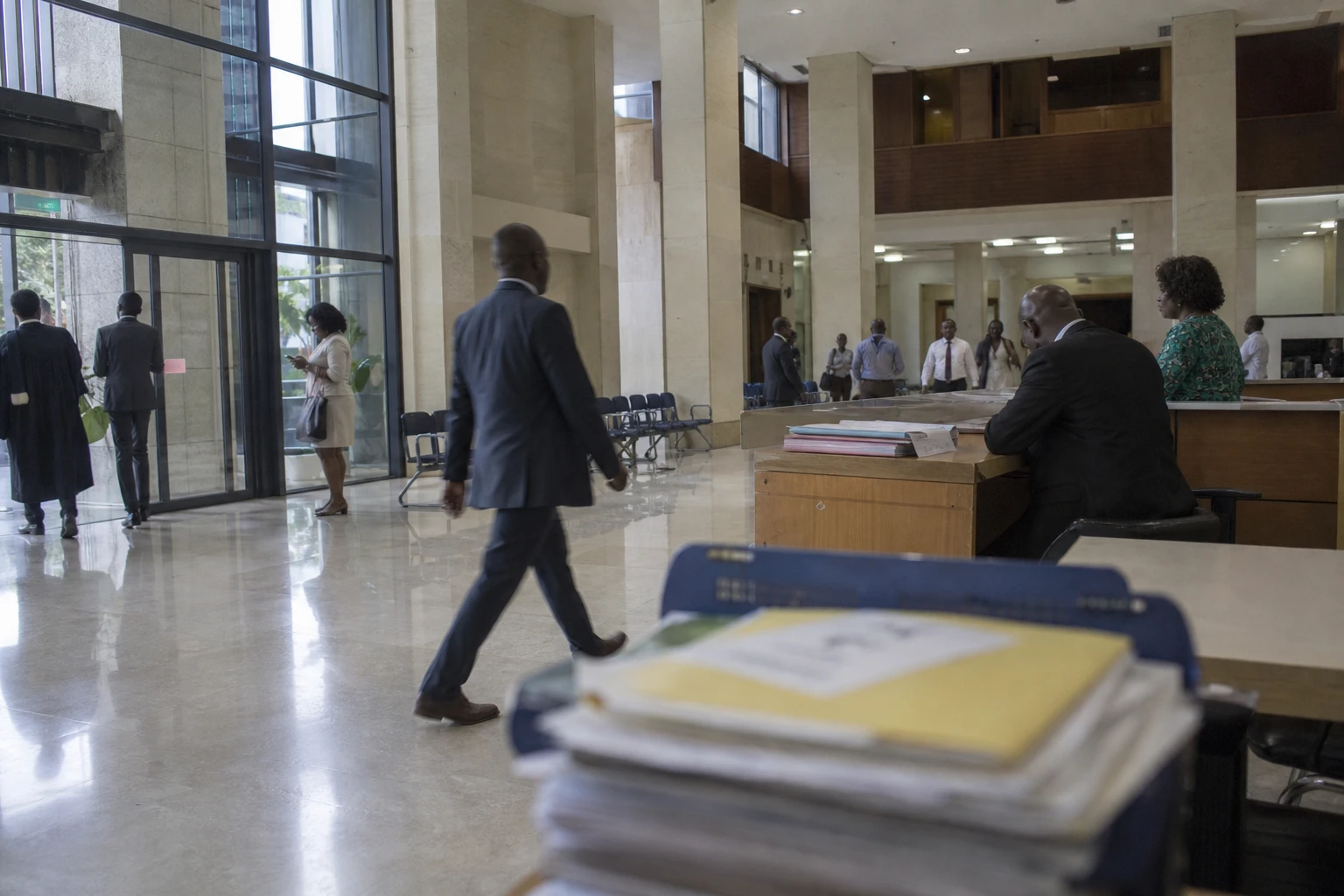
An old legal case, but a prominent issue in Libreville
In Gabon, the ‘ill-gotten gains’ case is about more than villas, bank accounts and proceedings opened in Paris. It also raises a broader question: who benefited from public money, and who can still be held to account as the country seeks to turn the page on the Bongo years? In cases of this kind, justice moves slowly, but the political memory remains vivid.
Former president Ali Bongo spoke in a video on Saturday 19 September 2026 to defend his father Omar Bongo’s legacy in connection with the case. In Libreville, his intervention immediately reopened a sensitive debate: can the Gabonese state, which has joined the French proceedings as a civil party, speak on its own behalf without blurring the Bongo family’s account of events?
The regional context: a Gabonese case, but not only a Gabonese one
Gabon belongs to CEMAC, the Economic and Monetary Community of Central Africa, which brings together six states: Cameroon, Congo, Gabon, Equatorial Guinea, the Central African Republic and Chad. This membership matters because financial flows, cross-border assets and political alliances often extend beyond national borders. Libreville is also a diplomatic centre for Central Africa, giving every high-profile symbolic legal case an immediate regional dimension.
The ‘ill-gotten gains’ case quickly went beyond Gabon alone. It also implicated Congolese and Equatoguinean officials, making it a reflection of the movement of capital and power in Central Africa. In France, magistrates have been seeking since 2007 to determine whether some assets were acquired using misappropriated public funds.
What the proceedings say, and what politics says
Judicially, the French investigation was closed in April 2025, ahead of the National Financial Prosecutor’s Office making its submissions. French legal media later reported the prospect of a trial, while in July 2026 prosecutors asked for several people and companies to be sent to the Paris criminal court. They include members of the Bongo family.
It is in this context that Marc Ona, now vice-president of Gabon’s Senate, has responded. A former civil society activist, he disputes Ali Bongo’s interpretation and argues that his intervention changes nothing about the substance of the case, which, in his view, falls under the jurisdiction of the French courts. His message is clear: the political debate can take place, but the legal decision belongs to the judges.
This position also reflects a change in the climate in Libreville. Since the transition began in August 2023, the authorities have sought to show that they intend to restore order in public administration, land ownership and transparency in state finances. In this new environment, the ill-gotten gains case is no longer merely an old family affair. It has become a test of the Gabonese state’s credibility in relation to its own public assets.
The stakes for Gabon and the wider continental significance
For Gabonese people, the stakes go beyond a dispute between a former head of state and part of the political class. They concern the return of potentially misappropriated assets, trust in the state and perceptions of impunity. For the public, especially in a country where social expectations remain high, the question is simple: if assets were acquired with public money, what becomes of that money, and what could it be used for in future?
For Paris and Libreville, the case also weighs on bilateral relations. It exposes an old tension: judicial co-operation on one side, political sensitivities on the other. But it also has broader African significance. In Central Africa, where ruling families, economic networks and institutional protections are often intertwined, every judicial development is watched as a possible precedent, from Congo to Equatorial Guinea.
That is why the significance of this case extends beyond the Bongo name alone. It concerns the fight against the private appropriation of public wealth, the movement of assets through foreign financial centres and the ability of African states to regain control of their assets. Across the continent, the case is a reminder that credible financial justice can become an instrument of sovereignty, not merely punishment.