
 Algeria
 Egypt
 Libya
 Morocco
 Sudan
 Tunisia
 Benin
 Burkina Faso
 Cabo Verde
 Côte d'Ivoire
 Ghana
 Guinea
 Guinea-Bissau
 Liberia
 Mali
 Mauritania
 Niger
 Nigeria
 Senegal
 Sierra Leone
 The Gambia
 Togo
 Central African Republic
 Chad
 DR Congo
 Equatorial Guinea
 Gabon
 Republic of the Congo
 São Tomé and Príncipe
 Burundi
 Comoros
 Djibouti
 Eritrea
 Ethiopia
 Kenya
 Madagascar
 Malawi
 Mauritius
 Mozambique
 Rwanda
 Seychelles
 Somalia
 South Sudan
 Tanzania
 Uganda
 Angola
 Botswana
 Eswatini
 Lesotho
 Namibia
 South Africa
 Zambia
 Zimbabwe
When insecurity drives families to hospitals
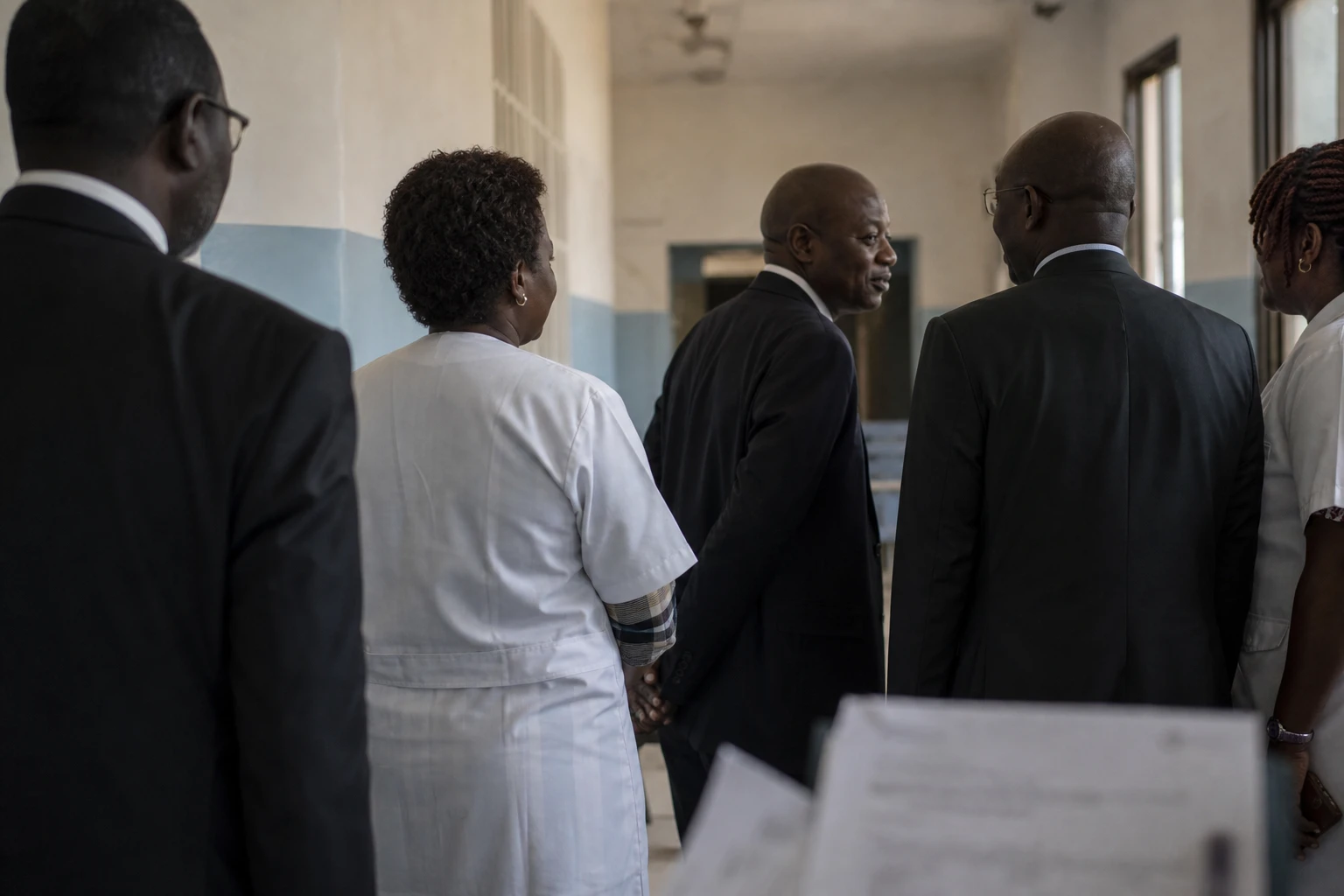
In Cameroon’s Far North, fear does not end in the villages under attack. It continues in waiting rooms, on paediatric beds and even in operating theatres. In Mora, a border town in the Mayo-Sava department, each new episode of violence adds patients to a health system already stretched by population displacement and everyday needs.
The phenomenon is not new. Mora lies at the heart of the Lake Chad Basin, where armed group incursions, internal displacement and irregular access to healthcare have intersected for years. Humanitarian organisations describe a protracted situation, marked by health, nutrition and protection needs, with even greater constraints in communities close to the Nigerian border.
In Mora, health facilities absorb the shock
On 17 September, an attack in Madegoua, near Makary, left at least 15 people dead, according to several consistent sources, after an earlier, lower estimate was reported during the day. In the same period of insecurity, families left affected areas for safer communities, including Kousseri, in search of shelter, family support or an accessible health centre.
This movement is having an impact in Mora. The district hospital already treats the routine cases of a crossroads town, as well as emergencies linked to insecurity. The pressure is clear in paediatrics, where the stated capacity of 18 beds has been exceeded, with 31 patients, forcing staff to add mattresses on the floor to cope with the influx. In the operating theatre, staff say they are treating emergency caesarean cases, road accidents and cases requiring urgent intervention.
The strain is also evident at local level. A municipal document consulted for Mora cites a population of 244,330 in 2013, based on the 2005 census, and lists one health district, 14 functioning health centres, two sub-divisional medical centres and one district hospital. Estimates for the urban area vary by source, but all point to the same conclusion: Mora is a service hub for a large hinterland.
Health centres in nearby villages, meanwhile, are operating under constraints. Local health officials say they are sometimes in areas affected by insecurity, where activities are interrupted or severely reduced. The result is simple: patients turn to Mora, which becomes a reception point, triage centre and last resort.
Improved facilities, but still not enough
Mora district hospital has, however, recently received support. In May 2024, its operating theatre, refurbished and equipped with support from Médecins Sans Frontières, was handed back to the Cameroonian state. The work modernised the surgical department, adding inpatient rooms and a recovery room, while humanitarian teams continued to support the facility in an area where they have been present since 2015.
But the additional support does not make up for everything. MSF says it further strengthened emergency surgery in Mora in 2024, in a region where insecurity limits access to healthcare and peripheral facilities remain vulnerable. The organisation also says it has carried out thousands of surgical procedures since 2021, a sign that demand remains high despite improvements to the hospital’s technical facilities.
The challenge is not limited to the war-wounded or surgical emergencies. In the Far North, health services must also deal with malaria, malnutrition, polio, measles and other preventable diseases, amid displacement and difficulties accessing care. UNICEF says the most exposed districts, including Kousseri, Maroua, Mora and Mokolo, need mobile and community-based approaches to ensure children are not left without vaccination or treatment.
There is also a major social problem: many displaced people arrive with no money or personal belongings. In this context, free healthcare for children aged 0 to 15 during the malaria peak, or the admission of vulnerable patients, becomes an essential safety net. But a safety net is not a lasting solution when the influx exceeds initial capacity.
Beyond Mora, a warning for the whole Far North
Mora’s situation says something broader about northern Cameroon. In this part of the country, violence linked to the Lake Chad Basin compounds structural vulnerabilities: poor roads, unevenly distributed basic services, rural poverty, family mobility and dependence on a handful of urban centres for specialist care. This is precisely the kind of situation that turns a district hospital into a frontline social shield.
Cameroon is not alone in this equation. The Far North is tied to the security fortunes of the Lake Chad Basin, which also concerns Nigeria, Chad and Niger. Responses therefore require regional cooperation, notably through the Multinational Joint Task Force, as well as civilian investment in health, water, nutrition and support for displaced people. Without these services, every attack shifts the problem a little further, from outlying areas to health centres.
In Yaoundé, the challenge is clear: protecting the people of the Far North means more than securing communities. It also means keeping health facilities open, available and accessible. In Mora, pressure on paediatric beds is a reminder that a security crisis often ends up, in very concrete terms, becoming a public health crisis.



