Algeria
 Egypt
 Libya
 Morocco
 Sudan
 Tunisia
 Benin
 Burkina Faso
 Cabo Verde
 Côte d'Ivoire
 Ghana
 Guinea
 Guinea-Bissau
 Liberia
 Mali
 Mauritania
 Niger
 Nigeria
 Senegal
 Sierra Leone
 The Gambia
 Togo
 Cameroon
 Central African Republic
 Chad
 DR Congo
 Equatorial Guinea
 Gabon
 São Tomé and Príncipe
 Burundi
 Comoros
 Djibouti
 Eritrea
 Ethiopia
 Kenya
 Madagascar
 Malawi
 Mauritius
 Mozambique
 Rwanda
 Seychelles
 Somalia
 South Sudan
 Tanzania
 Uganda
 Angola
 Botswana
 Eswatini
 Lesotho
 Namibia
 South Africa
 Zambia
 Zimbabwe
A bicycle, a cause and a void in Congolese sport
In the Democratic Republic of the Congo, some sporting gestures go beyond competition. They become public messages, sometimes more powerful than a speech. That was the case with Miguel Masaisai, whose Pedals for Peace project turned a cycling journey into an appeal for peace, at a time when the east of the country continues to bear the weight of violence and social divisions.
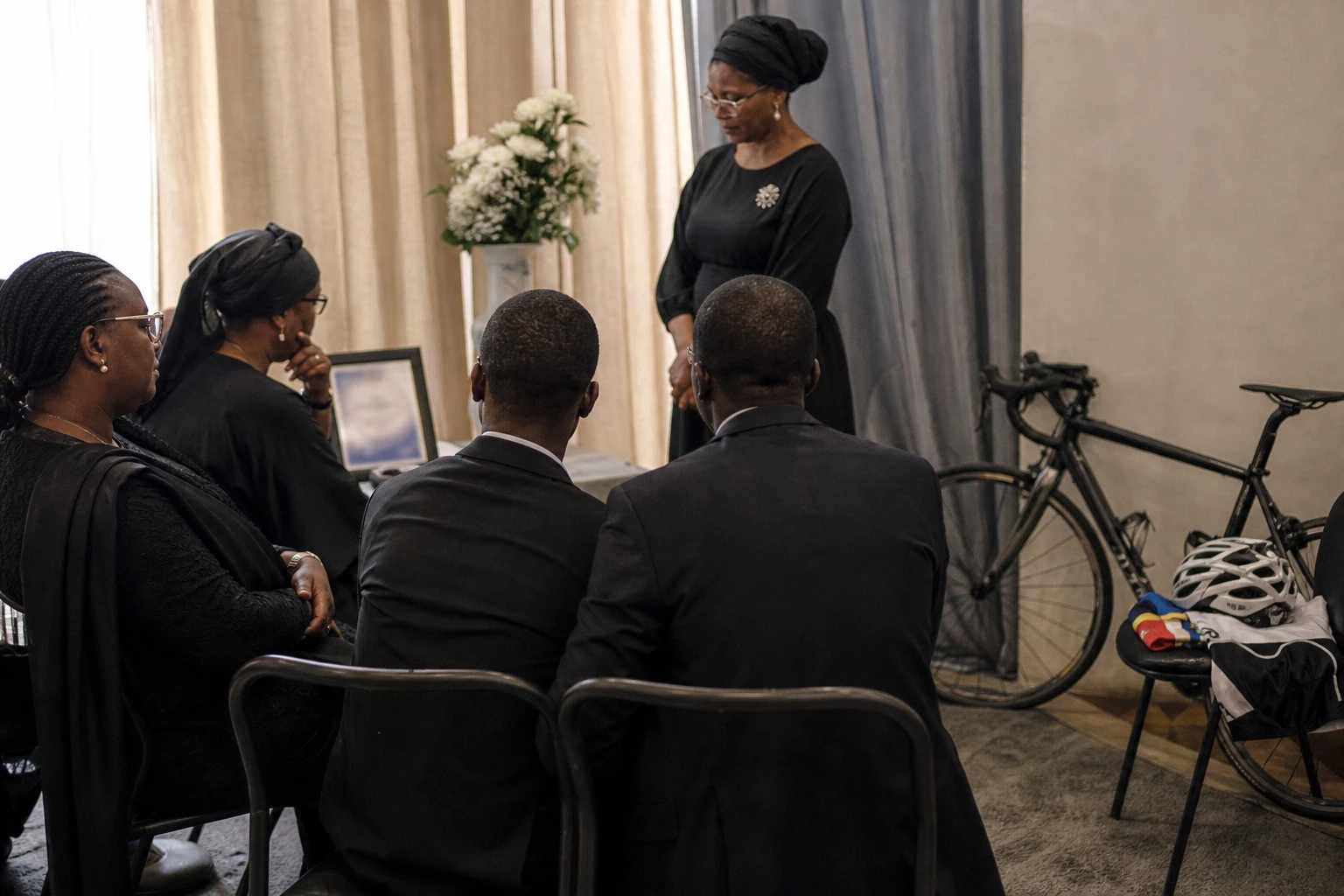
On Sunday 20 September, that commitment resonated visibly in Goma and Kinshasa. In the Congolese capital, cyclists gathered on the forecourt of the Palais du Peuple, the seat of parliament, to ride in memory of the young athlete, who had died two days earlier in a road accident in the Republic of the Congo. In Goma, his starting point, family, friends and fellow club members also organised an emotional tribute, determined to carry his initiative forward.
In Goma and Kinshasa, memory took the form of a peloton
The Kinshasa tribute centred on a highly symbolic location. The Palais du Peuple forecourt is not just a meeting point; it is also a place of national visibility. The peloton set off from there and rode along several of the city’s main roads in a simple gesture: cycling together to show that an interrupted journey does not silence its message.
In Goma, the same day confirmed that Miguel Masaisai’s initiative had reached beyond the circle of cycling enthusiasts. According to accounts gathered at the scene, family members and members of the local club paid tribute to a young man who carried peace as others carry a flag. Their mourning took concrete forms: a family gathering, banners, bicycles lined up, and a call for his commitment to be officially recognised.
The cyclist’s death was confirmed as the result of an accident on Friday 18 September in Kabos, near Ouesso, in the north of the Republic of the Congo, close to the Cameroon border. Local sources cited by several media outlets said he was then on his way to Rabat, Morocco, after crossing the DRC from east to west and then crossing the Congo River to continue his journey on the other bank.
What his death and the tributes tell us
Miguel Masaisai’s story says something about the DRC today. First, it speaks of the energy of a young generation seeking new forms of public expression. It also speaks of the continuing need for peace in the east of the country, where the scars of conflict remain present in daily life, in families and in people’s imagination. The cyclist’s initiative was rooted in this reality: using sport as a vehicle for dialogue, rather than as a mere individual feat.
The reactions of sports and youth leaders point in the same direction. In Kinshasa, some called for his bicycle, helmet and jersey to be preserved as testaments to a remarkable commitment. Others called for posthumous official recognition. These calls are about more than paying tribute. They raise a broader question: how does the country honour those who mobilise society through civic initiatives outside traditional political frameworks?
The debate also touches on road safety. According to accounts published after the accident, the cyclist was riding with worn equipment and without a suitable escort. These details, reported by a local source, were not described in the same way by all other publications, but they underscore an essential point: in long-distance cycling, equipment, support and road conditions are critical. This reality affects athletes and ordinary road users alike, in cities and on interurban routes.
A Congolese story with regional and African reach
Miguel Masaisai’s route crossed more than geographical borders. It also linked several political and symbolic spaces: Goma, Kinshasa, Brazzaville, and then the prospect of a continental journey to Morocco. Such a route is a reminder that in Central Africa, human, sporting and activist mobility often runs up against complex administrative borders, even as populations share common realities.
The DRC is part of several regional frameworks, including SADC and the African Union. The latter is closely following the situation in eastern Congo, while SADC has recently reiterated the DRC’s place in regional peace and security dynamics. In this context, the tribute to a young cyclist is not merely a sporting news item. It joins a broader conversation about how African societies tell their own stories, beyond accounts focused solely on crisis.
In the short term, attention will focus on what happens to the cyclist’s body and on the official gestures that follow, particularly in Kinshasa. Over the longer term, his story could prompt reflection on the role of sport in national cohesion, support for young civic initiatives and the public remembrance of figures who seek, through effort and symbolism, to connect territories often divided by violence, distance or indifference.