Algeria
 Egypt
 Libya
 Morocco
 Sudan
 Tunisia
 Benin
 Burkina Faso
 Cabo Verde
 Côte d'Ivoire
 Ghana
 Guinea
 Guinea-Bissau
 Liberia
 Mali
 Mauritania
 Niger
 Nigeria
 Senegal
 Sierra Leone
 The Gambia
 Togo
 Cameroon
 Central African Republic
 Chad
 DR Congo
 Equatorial Guinea
 Republic of the Congo
 São Tomé and Príncipe
 Burundi
 Comoros
 Djibouti
 Eritrea
 Ethiopia
 Kenya
 Madagascar
 Malawi
 Mauritius
 Mozambique
 Rwanda
 Seychelles
 Somalia
 South Sudan
 Tanzania
 Uganda
 Angola
 Botswana
 Eswatini
 Lesotho
 Namibia
 South Africa
 Zambia
 Zimbabwe
A bigger budget, but one more dependent on borrowing
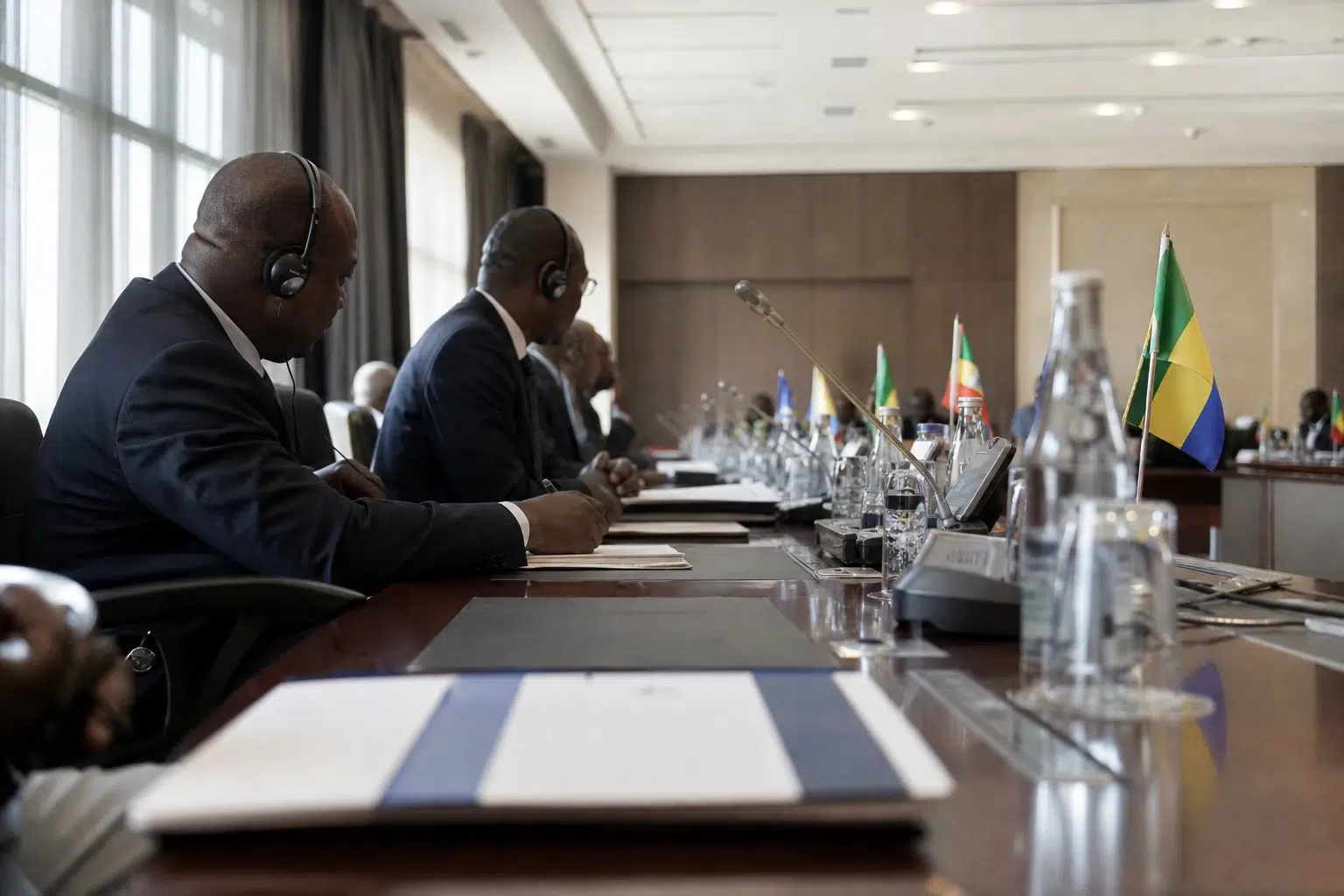
In Port-Gentil, Gabon’s government chose to unveil the budget where part of the country’s wealth is generated. The symbolism is strong. The country’s economic capital did more than host a government meeting. It provided the setting for a clear political message: Gabon wants to present a path to recovery while its public finances remain under strain. At its meeting on 18 September 2026, the Council of Ministers therefore adopted the draft 2027 Finance Bill, as Libreville seeks to fund its priorities without slowing economic activity.
The bill approved by the executive sets the state budget at 6,223.1 billion CFA francs for 2027, compared with 5,495.2 billion in the 2026 supplementary finance law. The executive is therefore citing an increase of 727.9 billion CFA francs. But most of this rise depends less on domestic revenue collection than on external and market financing. State resources are estimated at 3,291.7 billion CFA francs, while budget expenditure reaches 4,200.7 billion. The need for cash and financing therefore remains substantial, explaining the planned 129.7 million euro loan from the International Bank for Reconstruction and Development, equivalent to 85.1 billion CFA francs.
The document also formalises a growth forecast of 4.5% in 2027, after an expected 4% in 2026. This scenario assumes stronger performance from extractive industries and state revenues. The government is banking on oil, but also on manganese, supported by a price increase put at 45%, and the start of iron ore production at 1.5 million tonnes. Meanwhile, the projected inflation rate is 2.6%, compared with 1.4% in 2026.
Port-Gentil, a political showcase and a reminder of the country’s balances
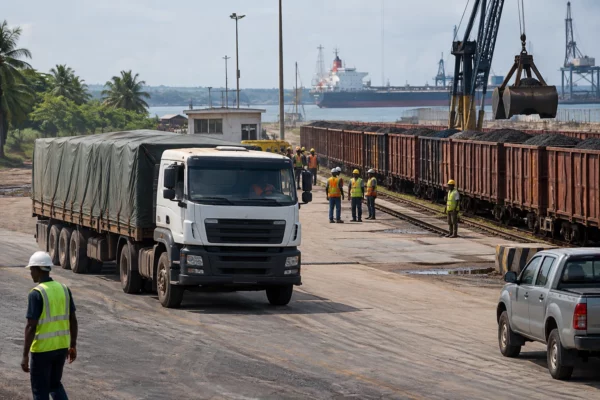
The choice of Port-Gentil is no accident. The city accounts for part of Gabon’s oil revenues and remains a place where the state wants to make its presence felt. A few days before this decentralised Council of Ministers meeting, the head of state had already inspected several major projects there. He had also met representatives of civil society and economic life in Ogooué-Maritime, signalling a political drive intended to be visible on the ground, not just in Libreville. The government is thus seeking to link major budget decisions to the realities of the producing provinces.
This political staging comes as pressure on public services remains acute. In recent weeks, water shortages and power cuts in Port-Gentil have again fuelled local debate. The executive wants to address these problems through investment, but the figures point to persistent tension between infrastructure pledges and actual financing capacity. The 2027 budget keeps the state wage bill almost unchanged at 964 billion CFA francs, while showing a fall in capital expenditure and an increase in debt servicing. In other words, fiscal room remains tight between current spending, debt repayments and development projects.
This matters to households and businesses alike. In an economy where formal activity depends heavily on hydrocarbons, mining and public contracts, the level of capital expenditure shapes employment, construction projects and activity among subcontractors. Conversely, a heavier debt burden can reduce the state’s room for manoeuvre in the years ahead. The World Bank notes that Gabon is facing liquidity and debt pressures, with the budget balance deteriorating as a result of high public spending and costly debt servicing.
What the projections say—and what they leave unresolved
The official forecasts are set against an economic environment that remains fragile. The IMF estimates Gabon’s real GDP growth at 2.7% in 2026, below the ambitions set by the government for 2027. The World Bank points in the same direction: it describes growth as slowed by the ageing of some oil fields and difficulties in the timber and manganese industries, two key export sectors. In other words, Libreville’s chosen path depends on several growth drivers improving at the same time. That is possible. But it is demanding.
The government is not acting without a regional safety net. Gabon belongs to CEMAC, the Economic and Monetary Community of Central Africa, whose members share, among other things, a common currency, the CFA franc, and a central bank, BEAC. In this bloc, governments’ financing needs are closely monitored because they affect public securities auctions, bank liquidity and fiscal credibility. BEAC continues to support the regional public securities market, including recent Gabonese issues. This matters in understanding why a national budget in Libreville is never viewed in isolation.
Gabon also requested a programme from the International Monetary Fund in March 2026, amid cash-flow and debt pressures. This request places the 2027 budget under two constraints: demonstrating development ambitions while reassuring financial partners and markets. The government speaks of budget transparency and public finance reform. The challenge will be to turn that promise into effective implementation without further increasing debt or delaying projects awaited in the provinces.
A Gabonese political moment that reaches beyond Port-Gentil
Ultimately, this decentralised Council of Ministers meeting tells a story that goes beyond a protocol visit. It shows a government seeking to govern through proximity while advancing a new economic narrative: developing mineral resources, supporting infrastructure, protecting public-sector wages and continuing to finance the state. But it also reveals the limits of the model. When expected growth depends on oil, manganese, iron ore and borrowing all at once, stability remains conditional. Every favourable assumption must hold true at the same time.
For Central Africa, the stakes are regional. Gabon matters to CEMAC’s economic balances through its resources, financing needs and position in the public securities market. For Gabon’s authorities, the next step will therefore be less about rhetoric than the parliamentary examination of the draft budget, followed by its implementation. That is where the credibility of the course set in Port-Gentil will be tested.