Algeria
 Egypt
 Libya
 Morocco
 Sudan
 Tunisia
 Benin
 Burkina Faso
 Cabo Verde
 Côte d'Ivoire
 Ghana
 Guinea
 Guinea-Bissau
 Liberia
 Mali
 Mauritania
 Niger
 Nigeria
 Senegal
 Sierra Leone
 The Gambia
 Togo
 Central African Republic
 Chad
 DR Congo
 Equatorial Guinea
 Gabon
 Republic of the Congo
 São Tomé and Príncipe
 Burundi
 Comoros
 Djibouti
 Eritrea
 Ethiopia
 Kenya
 Madagascar
 Malawi
 Mauritius
 Mozambique
 Rwanda
 Seychelles
 Somalia
 South Sudan
 Tanzania
 Uganda
 Angola
 Botswana
 Eswatini
 Lesotho
 Namibia
 South Africa
 Zambia
 Zimbabwe
When violence kills behind closed doors, an entire country is shaken
In Cameroon, family tragedies are no longer confined to the home. They are now reaching public debate, social media and the National Assembly. In just a few days, several women have lost their lives in cases described as femicides, while associations are calling for faster, firmer responses. The issue is no longer solely a judicial one. It is also a public health, social and political issue.
This sudden accumulation also points to something deeper. In a country of more than 29 million people, where the family remains a central place of protection but also of silence, intimate partner violence often precedes the worst without being stopped in time. The ministry responsible for women and the family has acknowledged the scale of the problem, alongside an alert and referral system introduced in 2026.
Cameroon faces a protection crisis, not just a series of isolated incidents
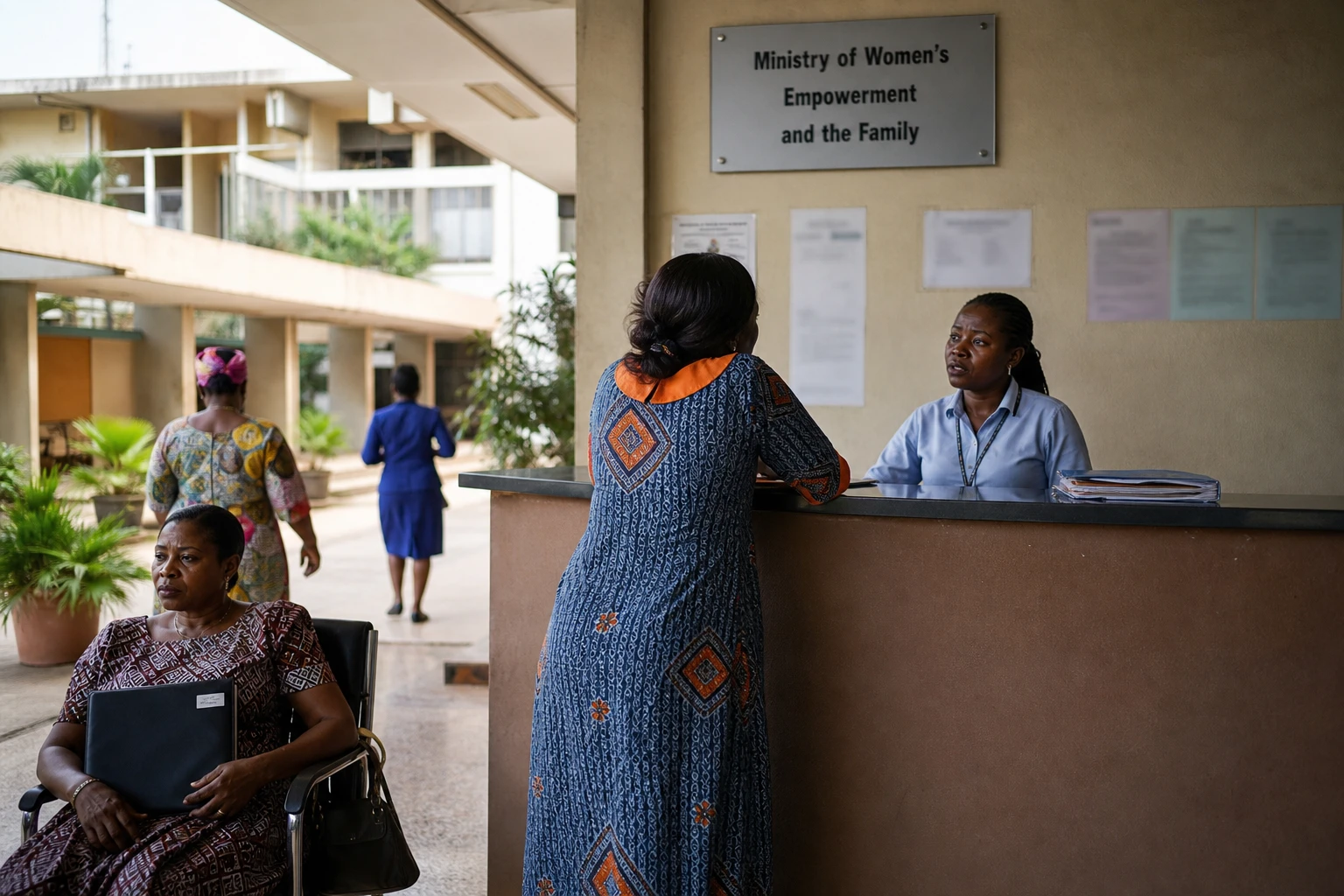
Cameroon is experiencing a period in which gender-based violence—that is, violence directed at someone because of their sex or disproportionately affecting women—has moved beyond the realm of quiet warnings. In June 2026, the Ministry of Women’s Empowerment and the Family, MINPROFF, presented figures that drew the attention of MPs: 50 femicides recorded between January and April, according to its own data cited during questions to the government. Organisations and observers, meanwhile, cite more than 60 cases since the start of the year.
The gap between the officially announced figure and field estimates is significant. It points both to persistent under-reporting and to incomplete recording of violence. The ministry itself notes that femicides are often only the visible part of a wider pattern of intimate partner, sexual and intrafamilial violence. Its 2025 documents on gender-based violence describe a longstanding problem, with a high prevalence of physical, sexual and intimate partner violence.
The institutional context matters. In Yaoundé, the capital, the authorities issued a series of announcements in 2026 on prevention, victim support and awareness-raising. On 1 June, a government press briefing announced protection measures and judicial responses following several shocking cases that had circulated around the country. On 19 June, the minister responsible for the issue set out the situation before MPs in the National Assembly. Then, as the summer progressed, mobilisation shifted towards associations, legal experts and victim support networks.
What the figures say, and what they still do not tell us
The figure of 8 femicides in 8 days caught the public’s attention because it captures a sharp escalation. But it is not enough on its own. The real questions lie elsewhere: how many complaints were filed before the killings? How many women had already reported threats, beatings, humiliation or financial control? On this point, the authorities say an early-warning system is now in place, with helplines and local services. But victims must know about them, be able to call safely and receive real protection afterwards.
The main challenge lies in the response chain. An alert is worthless if the police, justice system, social services and medical services do not work together. In practice, many women live with the risk in areas where distance, financial dependence and family pressure delay the filing of complaints. The ministry says it has stepped up prevention. Associations, for their part, are chiefly calling for cases to be resolved more quickly, so that intimate partner violence is no longer treated as a private matter but as a serious offence.
This struggle also affects everyday economic life. When a woman cannot speak, travel or leave, she may lose her job, her independence or access to healthcare. In poorer neighbourhoods and smaller cities alike, dependence on a partner or in-laws weighs heavily. In Yaoundé, Douala, Kribi and Bertoua, recently documented cases show that violence cuts across all social backgrounds. It is not confined to any one region, social group or age bracket.
A Cameroonian issue, but a signal for all of Central Africa
The issue goes beyond Cameroon. In the CEMAC region, where countries share challenges around justice, social protection and the flow of information, femicides expose a common blind spot: the difficulty of documenting, classifying and preventing violence against women. When a country puts its own figures on the table, however imperfect, it paves the way for a more honest regional comparison. It is also a test of African public protection policies, which are often stronger on paper than in practice.
At continental level, the situation in Cameroon is a reminder that tackling violence against women is not a side issue among Africa’s major priorities. It affects public health, education, justice and social stability. The publication of the national report on gender-based violence, MINPROFF’s announcements and the parliamentary discussions of June 2026 show that a framework exists. The real question now is one of implementation, monitoring and effective convictions. The credibility of Cameroon’s response will be decided there in the coming weeks.