Algeria
 Egypt
 Libya
 Morocco
 Sudan
 Tunisia
 Benin
 Burkina Faso
 Cabo Verde
 Côte d'Ivoire
 Ghana
 Guinea
 Guinea-Bissau
 Liberia
 Mali
 Mauritania
 Niger
 Nigeria
 Senegal
 Sierra Leone
 The Gambia
 Cameroon
 Central African Republic
 Chad
 DR Congo
 Equatorial Guinea
 Gabon
 Republic of the Congo
 São Tomé and Príncipe
 Burundi
 Comoros
 Djibouti
 Eritrea
 Ethiopia
 Kenya
 Madagascar
 Malawi
 Mauritius
 Mozambique
 Rwanda
 Seychelles
 Somalia
 South Sudan
 Tanzania
 Uganda
 Angola
 Botswana
 Eswatini
 Lesotho
 Namibia
 South Africa
 Zambia
 Zimbabwe
A new university hub reshapes the equation in the Plateaux
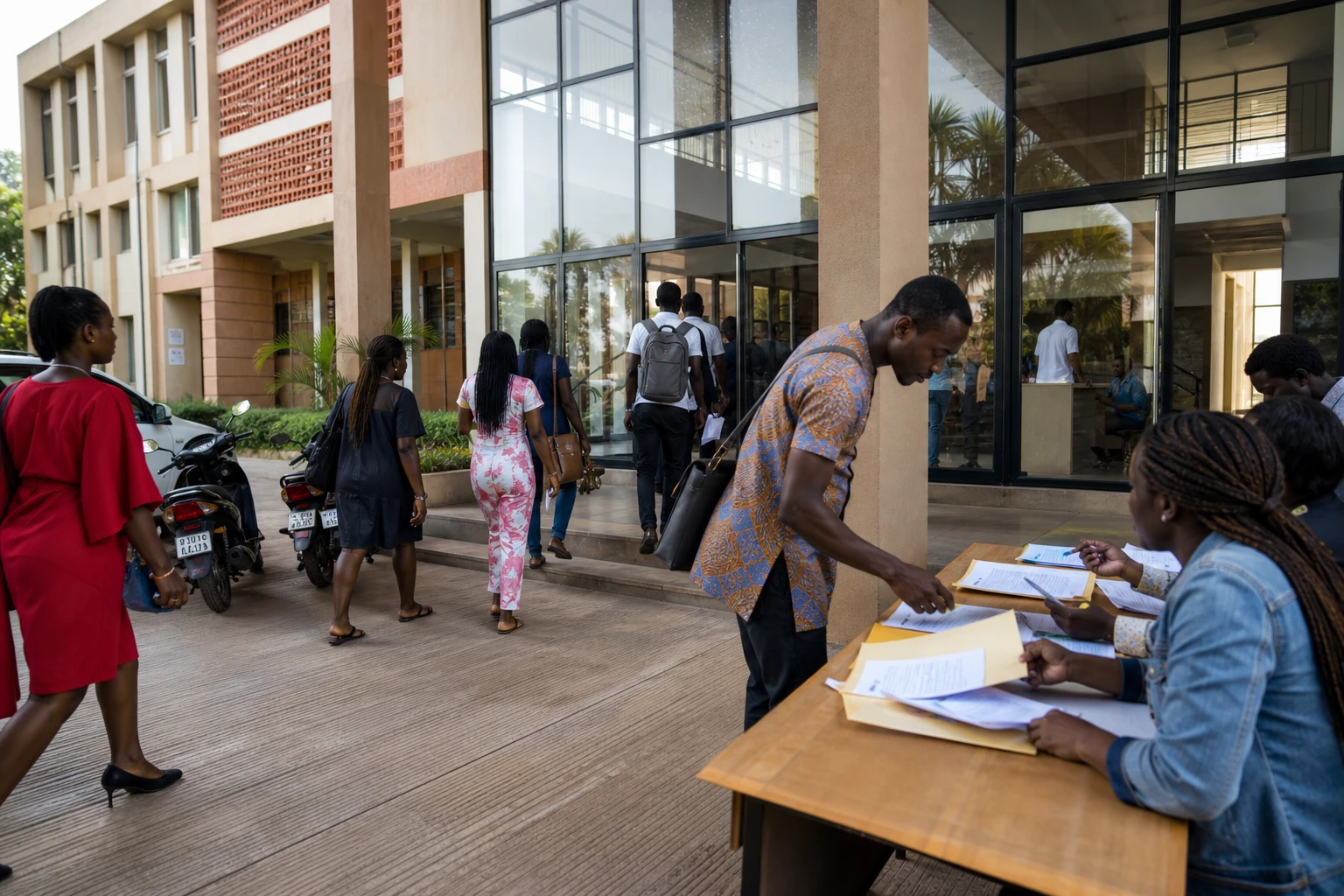
For thousands of Togolese school-leavers, the choice of higher education often comes down to a more practical question: should they move far from home, bear the cost of accommodation in Lomé or give up on certain courses? Datcha University was designed to ease this predicament. It is intended to provide a public offer closer to local communities, in a region where access to higher education still depends too heavily on major urban centres.
The project is part of a broader national strategy. Togo has long concentrated its public higher education provision around the University of Lomé and the University of Kara. The creation of a third hub in the Plateaux region addresses the need for territorial equity, as well as an economic imperative: to train more people with skills relevant to agriculture, the environment, technology and local public administration. In a country where demographic pressure on university places remains high, the question is no longer simply how to open more places. Training opportunities must also be distributed more evenly.
Student selection begins ahead of the campus’s full opening
The presidency of the future university launched calls for applications for its first cohort on Monday 14 September 2026. The process is for the 2026-27 academic year. New school-leavers are invited to apply for undergraduate degrees in programmes presented as aligned with the country’s needs.
The initial offer is organised around three schools. The Faculty of Economic, Social and Territorial Sciences offers, among others, programmes in economic analysis and strategic monitoring, strategic management and monitoring and evaluation, health facility management, land governance and security, as well as territorial intelligence and geodata. The Institute of Agronomic and Environmental Sciences is focusing on agroecology, sustainable pasture management, agricultural mechanisation, agribusiness and forestry. Finally, the Institute of Technological Sciences and Innovation is opening programmes in biomedical instrumentation and maintenance, agricultural equipment and eco-technologies, as well as nuclear science and technology.
This ramp-up follows the appointment of Essohanam Batchana to head the institution in July 2026. It also confirms a decision already taken by the Togolese authorities: to make Datcha a public university with a more applied than theoretical focus, designed to bring education closer to regional economic activity. The site is in the Plateaux region, near Atakpamé, an important administrative and commercial hub in the centre of the country.
A public-private project to diversify skills
The Datcha project is based on a public-private partnership between the Togolese state and Envol Partenariats Togo. Under the arrangement, the private operator is responsible for financing, design, construction, equipment and maintenance of the infrastructure. This type of model allows the state to fast-track a major investment project, but also calls for close scrutiny of the timetable, costs and actual quality of services provided to students.
The government presents the university as an instrument of transformation rather than simply another building. Eventually, the campus is expected to accommodate up to 30,000 students by 2040. Nine faculties have been announced. The political message is clear: Togo wants to widen access to higher education while aligning courses more closely with the needs of the real economy. This applies as much to young people in the Plateaux as to those who have until now had to move to Lomé to continue their studies.
The choice of courses sheds light on this strategy. Agricultural programmes address a central issue in a country where agriculture remains a major employer. Courses in the environment and technology speak to a generation facing both dwindling resources and the modernisation of occupations, as well as the growing use of digital tools. Health options, meanwhile, establish a direct link between the university and local public services. In other words, Datcha is not intended merely to produce graduates. It is also expected to supply sectors under pressure with skilled workers.
What the opening says about Togo and the region
The Datcha initiative is part of a broader trend seen in several West African countries: growing demand for training, pressure on established universities, and efforts to achieve a better balance between capitals and inland regions. For Togo, the issue also concerns territorial governance. A public university outside Lomé boosts the appeal of the Plateaux, creates local demand for housing, services, transport and catering, and could keep some young people within regional economic networks.
At national level, the challenge is also budgetary and institutional. Opening another institution requires lecturers, laboratories, libraries, halls of residence, equipment and stable administration. The authorities will therefore have to turn an emblematic project into a durable institution. Otherwise, the announcement of a first cohort would remain a political signal rather than a genuine structural change.
The significance extends beyond Togo. Across the ECOWAS region, where student mobility has a long history but is funded unevenly, countries are increasingly seeking to build centres of expertise suited to their economies. Togo is sending a message of educational sovereignty: to train more professionals locally in fields deemed strategic. What happens next will depend on the actual pace of enrolment, whether construction stays on schedule and whether the first cohort is effectively accommodated at the start of the 2026-27 academic year.