Algeria
 Egypt
 Libya
 Morocco
 Sudan
 Tunisia
 Benin
 Burkina Faso
 Cabo Verde
 Côte d'Ivoire
 Ghana
 Guinea
 Guinea-Bissau
 Liberia
 Mauritania
 Niger
 Nigeria
 Senegal
 Sierra Leone
 The Gambia
 Togo
 Cameroon
 Central African Republic
 Chad
 DR Congo
 Equatorial Guinea
 Gabon
 Republic of the Congo
 São Tomé and Príncipe
 Burundi
 Comoros
 Djibouti
 Eritrea
 Ethiopia
 Kenya
 Madagascar
 Malawi
 Mauritius
 Mozambique
 Rwanda
 Seychelles
 Somalia
 South Sudan
 Tanzania
 Uganda
 Angola
 Botswana
 Eswatini
 Lesotho
 Namibia
 South Africa
 Zambia
 Zimbabwe
When air power becomes a test of sovereignty
In Mali, the war is no longer being fought only on the ground. It is also visible in the skies, where drones have become a central instrument in the military response to armed groups. But as strikes multiply, a simple question is increasingly being asked in Bamako: who decides, who pays and who answers when civilians are hit?
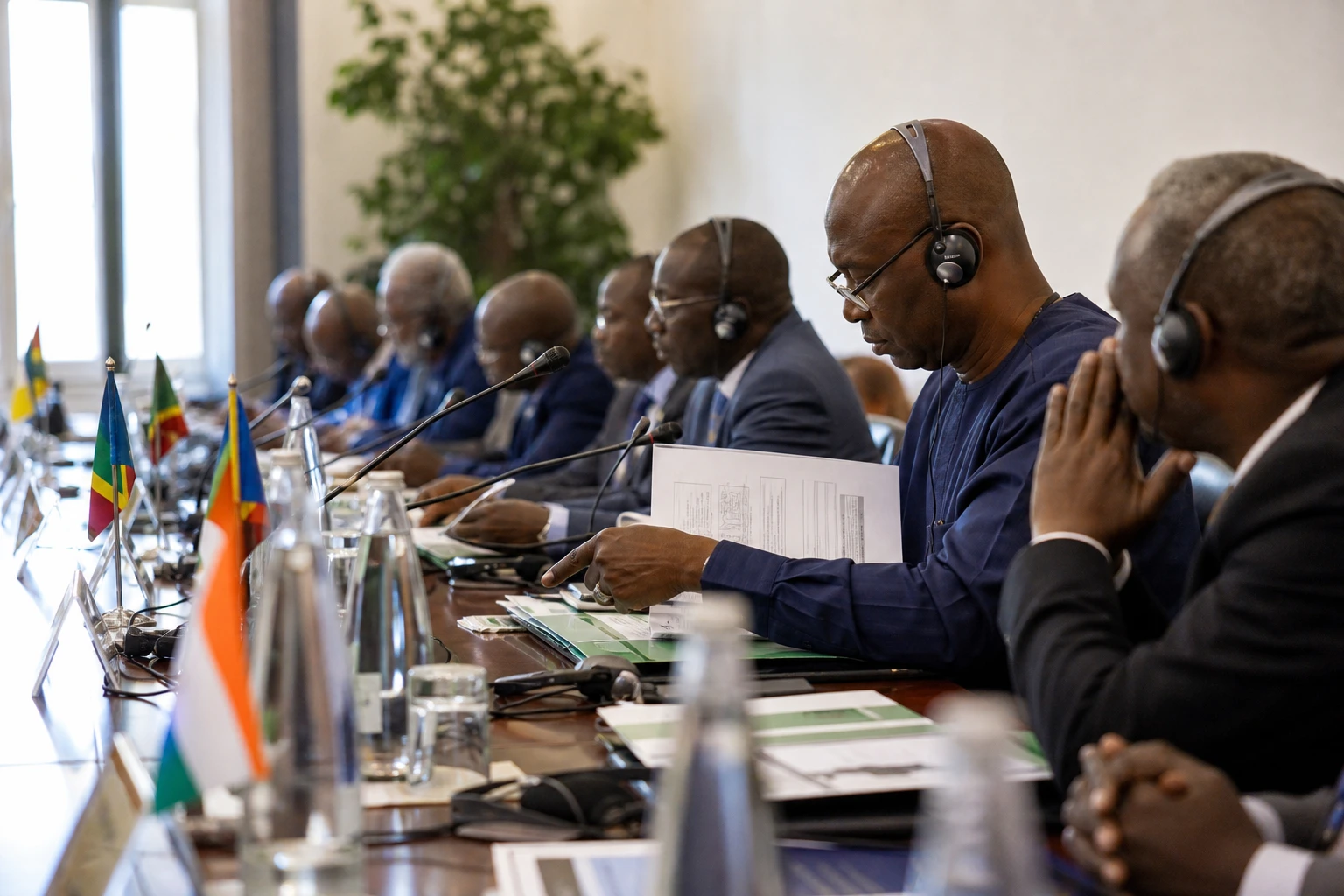
This question extends beyond Mali alone. The country belongs to the Alliance of Sahel States, alongside Burkina Faso and Niger, three military-led regimes that have made security sovereignty a major political marker. At the same time, Mali has broken with ECOWAS, the West African organisation for economic and political cooperation, further shrinking the regional space for oversight and mediation.
An opaque contract and fragmented chains of command
The case brought to light by an investigation published on 16 September 2026 centres on a contract signed on 15 August 2024 for the purchase of six Akıncı combat drones from Turkish manufacturer Baykar. The stated value is $210 million, or about €183 million. According to the information made public, the document was not signed by Mali’s Ministry of Defence, but by Colonel Modibo Koné, director-general of the National State Security Agency, a service that reports directly to the transitional presidency.
The sensitive issue is not just the amount. According to the investigation, the contract would allow the seller to withdraw if an export licence could not be obtained for even one component, while obliging Mali to make payments even in the event of a coup, war, embargo or domestic unrest. In a country where sovereignty is the government’s political compass, this contractual imbalance tells another story: technological dependence remains strong, even when official rhetoric speaks of autonomy.
Malian authorities have already highlighted their partnerships with Turkey. In September 2024, the Ministry of Security presented a military equipment demonstration in Bamako, organised with Turkish counterparts and attended by senior Malian officials. This confirms the intensity of the bilateral security relationship, even though the precise scale of purchases and their financial terms remain very poorly documented publicly.
Malian strikes, but authorisation reportedly coming from Russians
The second part of the case concerns the conduct of strikes. The investigation claims that the drones are operated by Malian forces, but that authorisation to fire may come from Russian commanders in the Africa Corps. This organisation, successor to the Russian presence in Mali after Wagner, has been described by several investigations and organisations as an increasingly integrated actor in Bamako’s military strategy.
This shared command structure changes everything. In the event of a wrongful strike, it blurs the chain of responsibility. Who makes the tactical decision? Who approves the attack? Who provides the intelligence? Who bears political responsibility? In a counter-insurgency context, these grey areas are not a technical detail. They determine whether a credible investigation is even possible after a contested strike.
The issue is not theoretical. In July 2026, Human Rights Watch documented a strike carried out in central Mali on 15 June 2026, which the organisation attributed to the Africa Corps and which reportedly killed eight civilians, including three children. The NGO also said witnesses had seen a drone flying over the village the previous day, a probable sign of prior surveillance. The Russian organisation, for its part, presented the operation as an attack on a gathering of “terrorist groups”. Two accounts are therefore in conflict, showing just how essential independent verification remains.
Mali is not alone in this kind of air war. Since 2024, armed drones have played an increasingly prominent role in the Sahel, from Mali to Burkina Faso, with real military effects but also increased risks for civilians. International media and African institutions have already reported strikes wrongly attributed, civilian casualties and growing use of equipment from Turkey or Russia in Sahelian theatres.
What this means for Malians, the AES and the region
On the ground, the spread of drones is changing daily life far beyond military bases. For the state, they project an image of control and modernity. For rural populations, they often mean more surveillance, more frequent alerts and a pervasive fear of poorly targeted strikes. In areas where the administration is weak, the line between protection and coercion becomes more blurred.
Politically, the Malian government’s rhetoric of sovereignty runs up against a more complex reality. Security agencies rely on Turkish suppliers for drones, Russian partners for operational support, and a decision-making structure that does not always appear in the usual channels of the Ministry of Defence. This does not negate the sovereignty claimed by Bamako. Rather, it shows that it is exercised in an environment of overlapping dependencies, as in many African capitals rapidly diversifying their security partners.
For the Alliance of Sahel States, the issue is also institutional. The AES was formed to present a common response to armed threats and the break with ECOWAS. But closer military cooperation does not, on its own, resolve questions of civilian oversight, budget transparency and accountability when civilians are killed. If these issues remain unanswered, the alliance risks strengthening states’ strike capabilities without also strengthening the safeguards owed to citizens.
The continental implications are clear. Mali is now a testing ground for a new security playbook in West Africa: armed drones, foreign contractors, parallel regional alliances and hybrid chains of command. The model is already attracting interest from other African capitals seeking rapid solutions to protracted insurgencies. The decisive question remains: how can military capability be strengthened without losing democratic accountability or the protection of civilians? This is now one of the Sahel’s central issues, but also one for all of Africa as it confronts the rapid militarisation of its crises.