Algeria
 Egypt
 Libya
 Morocco
 Sudan
 Tunisia
 Burkina Faso
 Cabo Verde
 Côte d'Ivoire
 Ghana
 Guinea
 Guinea-Bissau
 Liberia
 Mali
 Mauritania
 Niger
 Nigeria
 Senegal
 Sierra Leone
 The Gambia
 Togo
 Cameroon
 Central African Republic
 Chad
 DR Congo
 Equatorial Guinea
 Gabon
 Republic of the Congo
 São Tomé and Príncipe
 Burundi
 Comoros
 Djibouti
 Eritrea
 Ethiopia
 Kenya
 Madagascar
 Malawi
 Mauritius
 Mozambique
 Rwanda
 Seychelles
 Somalia
 South Sudan
 Tanzania
 Uganda
 Angola
 Botswana
 Eswatini
 Lesotho
 Namibia
 South Africa
 Zambia
 Zimbabwe
A protocol gesture, but more than that
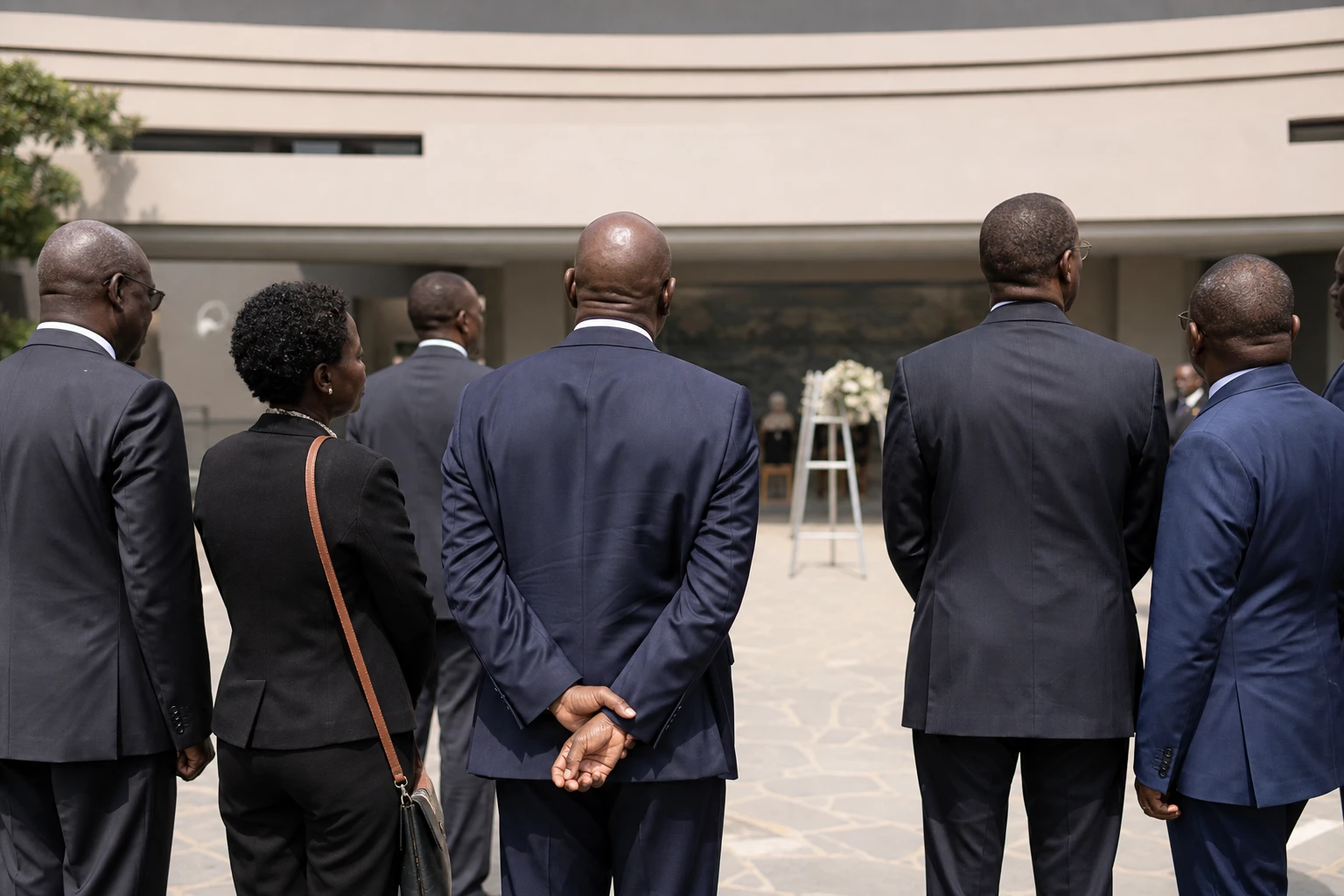
In Kigali, official visits are not limited to meetings and courtesy photographs. They also say something about the place a state wants to take in the region, and how it chooses to honour the memory of a neighbouring country. In this context, Beninese President Romuald Wadagni’s visit to Rwanda forms part of a sequence in which diplomacy, memory and economic interests move forward together. Rwanda, for its part, continues to make remembrance of the genocide against the Tutsi a central marker of public life and its international profile.
The visit also comes amid a bilateral relationship already shaped by agreements and recent political exchanges. Rwanda and Benin have notably signed a double taxation agreement, and the two capitals have sent increasingly frequent signals of closer ties in recent years, making their cooperation a recurring subject in official discussions. The groundwork has therefore been laid for deeper ties beyond the ceremony itself.
Kigali, political capital and capital of remembrance
The symbolic heart of the visit is the Kigali Genocide Memorial in Gisozi. Rwandan authorities describe it as the resting place of more than 250,000 victims of the 1994 genocide perpetrated against the Tutsi. The site was inaugurated in 2004, is listed as a UNESCO World Heritage Site and brings together graves, archives, educational exhibitions and a memorial garden. In other words, it is not simply a place of reflection; it is also a vehicle for national remembrance.
In Rwandan diplomatic practice, a visit to Gisozi is more than a moral detour. It expresses a political reading of recent history and reminds every visitor that the country’s reconstruction also depends on acknowledging its founding trauma. The importance given to memory accompanies Rwanda’s international outreach, with foreign delegations regularly received at the site as part of official visits.
What Cotonou and Kigali are seeking to build
In practical terms, closer ties between Cotonou and Kigali serve very concrete objectives. The two countries have already worked on taxation, air services, investment and technical cooperation. The Rwanda Development Board and Benin’s investment promotion agency even concluded a memorandum of understanding in May 2026 to structure exchanges on investment and exports. This kind of document matters because it paves the way for projects that are easier for the private sector to understand.
For Benin, the stakes are twofold. On the one hand, it wants to broaden its partnerships in East Africa. On the other, it wants to show that its economic diplomacy is not limited to its usual frameworks in West Africa, within ECOWAS. Kigali’s interest is similar: to build more links with African states that can serve as commercial, political and logistical gateways to other sub-regions of the continent. This kind of bilateral relationship illustrates an Africa increasingly connected through networks, not just geographical proximity.
The regional context gives this sequence even greater significance. Rwanda hosted the Africa Food Systems Forum in early September 2026, a major continental gathering on food systems, followed by several other high-level sectoral meetings in Kigali. This confirms a clear strategy: to make the Rwandan capital an African centre for negotiations, investment and political visibility. In this landscape, every state or working visit fits into a broader regional positioning agenda.
A significance beyond the bilateral relationship
Beyond the Benin-Rwanda axis, the visit is a reminder that African capitals are increasingly using memory diplomacy as a shared language. Going to Gisozi means recognising a history, but it also signals a desire to place cooperation within a framework of trust, stability and respect. On a continent where inter-state relations are often viewed through the lens of crises, this kind of visit shows that there is also a diplomacy of consolidation, founded on institutions, symbols and projects.
The continental significance is also political. Rwanda continues to maintain close ties with several African countries through technical agreements, joint commissions and high-level visits. Benin, for its part, is seeking to diversify its partnerships in a West African environment marked by security tensions and diplomatic realignments. In this context, cooperation with Kigali could serve as a testing ground for more flexible arrangements between African states, at a time when the African Union and regional communities are encouraging greater economic integration and business mobility.
It remains to be seen whether the visit will lead to specific announcements. In relations between African countries, the value of a visit is often measured less by protocol than by what follows: signed agreements, an implementation timetable, ministerial exchanges and private-sector involvement. That is where the difference between a diplomatic signal and lasting cooperation will be determined.