Algeria
 Egypt
 Libya
 Morocco
 Sudan
 Tunisia
 Benin
 Burkina Faso
 Cabo Verde
 Côte d'Ivoire
 Ghana
 Guinea
 Guinea-Bissau
 Liberia
 Mali
 Mauritania
 Niger
 Nigeria
 Senegal
 Sierra Leone
 The Gambia
 Togo
 Cameroon
 Central African Republic
 Chad
 DR Congo
 Equatorial Guinea
 Gabon
 Republic of the Congo
 São Tomé and Príncipe
 Burundi
 Comoros
 Djibouti
 Eritrea
 Ethiopia
 Madagascar
 Malawi
 Mauritius
 Mozambique
 Rwanda
 Seychelles
 Somalia
 South Sudan
 Tanzania
 Uganda
 Angola
 Botswana
 Eswatini
 Lesotho
 Namibia
 South Africa
 Zambia
 Zimbabwe
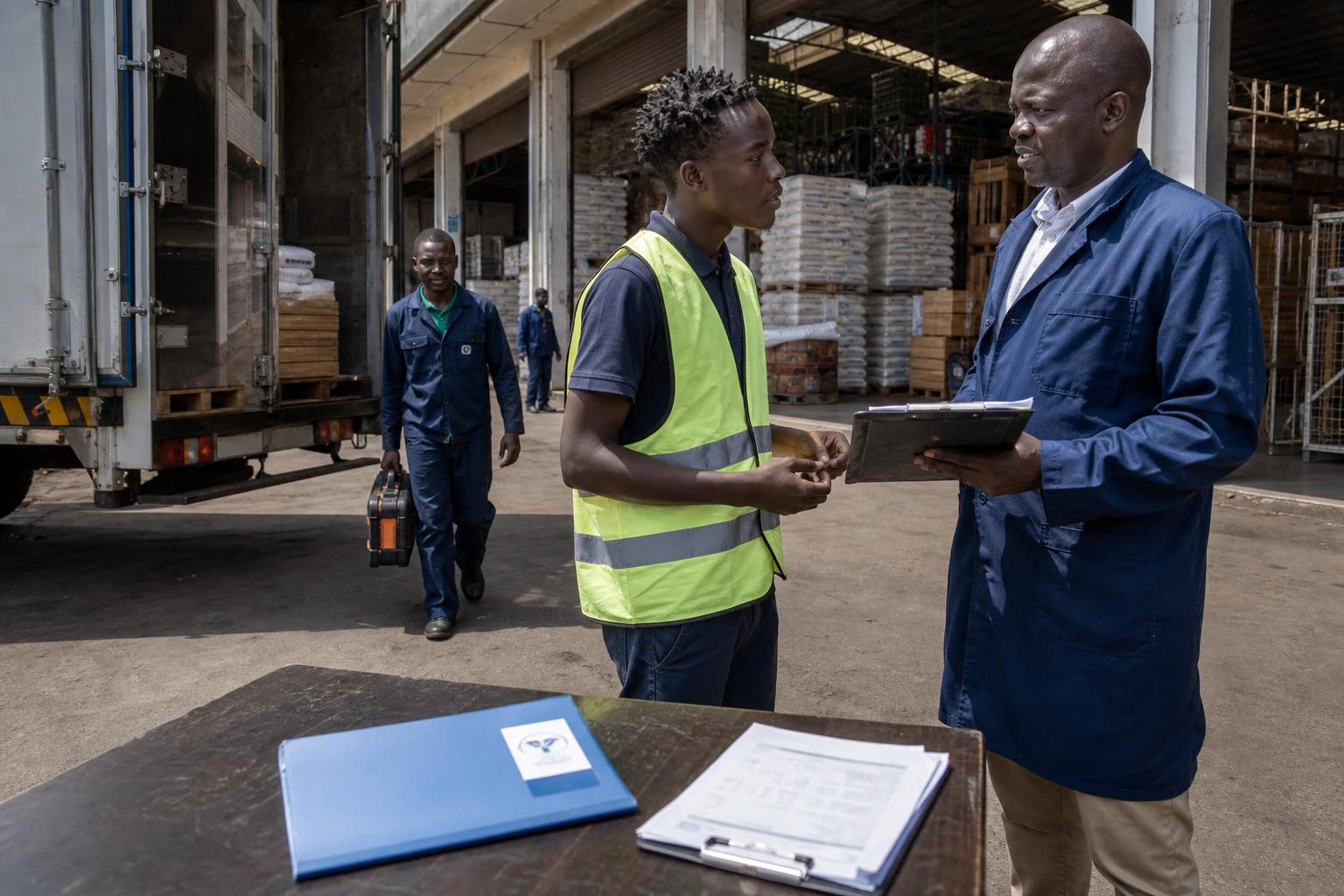
When the classroom is no longer enough
Across Kenyan businesses, training centres and families, the same question keeps arising: how can qualifications be turned into first pay cheques without leaving young people waiting too long between education and employment? In Nairobi, this question has taken a very practical form with the expansion of dual vocational training, designed to bring learning closer to the real needs of the market. The issue has become all the more pressing as the Kenyan economy changes rapidly, with sectors such as construction, light manufacturing, digital services and logistics demanding workers who are ready to contribute from day one.
Kenya will not make progress on this front alone. Skills are part of a broader national strategy, linked to Vision 2030 and the government’s economic transformation agenda, as well as to the East African region, where value chains and labour mobility are becoming increasingly important. In this context, Kenyan public institutions have sent growing signals in favour of TVET that is closer to industry: technical and vocational education and training better aligned with employers’ needs. Official documents even refer to mechanisms for joint training, joint assessment and shared certification with businesses.
A policy to bring schools and businesses together
From 9 to 11 September, Nairobi hosted the International Conference on Technical and Vocational Education and Training. The event was organised by Kenya’s Ministry of Education, through its department responsible for TVET, with technical support from GIZ and backing from the governments of Germany, Finland and South Korea. The conference’s official website says it was held at the Mövenpick Hotel & Residences in Nairobi and built around a straightforward goal: to make industry-training dialogue a tool for competitiveness and sustainable employment.
At the heart of the discussions, dual training was presented as one of the most advanced models. Introduced in Kenya in 2019 and subsequently reinforced by the Dual TVET Policy 2025, the scheme divides learning time between the training institution and the business. The rule is clear: learners spend part of their course in a workshop, on a construction site or in production, rather than solely in a classroom. The ministry also highlighted the scale of the change: more than 2,500 businesses involved, more than 15,000 young people having completed dual training, according to official statements made during the conference, and financial support of about €28 million from German, Finnish and South Korean partners to strengthen the sector.
Closer ties with businesses are not starting from scratch. The PropelA programme, launched in 2022 with Swisscontact and the Hilti Foundation, served as a testing ground. Its first phase, between 2022 and 2025, supported 430 apprentices, involved 69 businesses and enabled 146 young people to obtain nationally recognised certification. Swisscontact also says that 79% of participants are said to have found a job and that partner businesses are reported to have seen a return on investment of between 28% and 30%. These results should be treated with caution, as they come from the programme itself, but they confirm a trend already identified by public research: when training is developed with employers, the transition to work becomes smoother.
What this means for young Kenyans
The stakes go beyond teaching methods alone. According to Kenya’s Ministry of Education, enrolment at public TVET institutions rose from 345,387 in 2022-2023 to 565,842 in 2024-2025, an increase of 63.8%. This surge shows that technical training is attracting more Kenyan families. But it also requires the state to answer another question: how can it ensure that growth in numbers does not outpace relevance? The challenge is no longer just to open up places. It is to make every course useful, clear and linked to real employment prospects.
On the ground, the effects are not the same for everyone. For young people in urban neighbourhoods as well as peri-urban and rural areas, dual training can reduce the time spent between completing training and finding a first job. For small and medium-sized businesses, it makes it possible to recruit earlier, train people to meet their needs and sometimes retain technicians already familiar with their methods. For the informal sector, which is widespread in Kenya, the approach is different but just as important: it can offer a clearer path towards recognition of skills already acquired through daily work. The government has also incorporated this into its thinking on qualifications, micro-credentials and the recognition of prior learning.
At regional level, Kenya is also seeking to position itself as a support hub for East Africa. The country is involved in EASTRIP projects, which aim to build skills centres in several countries in the region, and is part of a wider drive for Africa to produce more technicians, skilled craftspeople and mid-level professionals to support industrialisation. The continental implications are clear: if Nairobi succeeds in better aligning training and business, the model could inspire other African capitals facing the same equation: a large youth population, too few jobs and an economy that needs skills which can be put to use immediately. The coming months will show above all whether dual training remains a showcase policy or becomes a lasting standard in Kenya’s education system.