Algeria
 Egypt
 Libya
 Morocco
 Sudan
 Tunisia
 Benin
 Burkina Faso
 Cabo Verde
 Côte d'Ivoire
 Ghana
 Guinea
 Guinea-Bissau
 Liberia
 Mali
 Mauritania
 Niger
 Nigeria
 Senegal
 Sierra Leone
 The Gambia
 Togo
 Cameroon
 Central African Republic
 Chad
 DR Congo
 Equatorial Guinea
 Gabon
 Republic of the Congo
 São Tomé and Príncipe
 Burundi
 Comoros
 Djibouti
 Eritrea
 Ethiopia
 Kenya
 Madagascar
 Malawi
 Mauritius
 Mozambique
 Rwanda
 Seychelles
 Somalia
 South Sudan
 Uganda
 Angola
 Botswana
 Eswatini
 Lesotho
 Namibia
 South Africa
 Zambia
 Zimbabwe
Tanzania wants a clearer picture of what lies beneath
In a country where gold has long taken centre stage, the next battle is being fought not only at the mine but also on the map. Tanzania is now seeking a more detailed picture of its subsoil to attract capital, reduce exploration risks and identify more quickly the critical minerals that underpin global industry. The country has already reached a symbolic milestone: the mining sector accounted for 10.1% of GDP in 2024, according to the Extractive Industries Transparency Initiative.
This drive forms part of the national strategy known as “Mining Vision 2030”, led from Dodoma, Tanzania’s capital, with a clear goal: to increase coverage of high-resolution airborne geophysical surveys from 16% today to 50% by 2030. The Ministry of Minerals has reiterated this target several times, linking it to investment in the Geological Survey of Tanzania’s capacity and in new measurement equipment.
Expanding mining cooperation, from Tianjin to Dodoma
It was in this context that Tanzania’s Minister of Minerals, Anthony Mavunde, held a series of discussions in Tianjin, China, during the China Mining Conference and Exhibition, held from 10 to 12 September 2026. The conference, organised in Tianjin under the auspices of the Chinese authorities and the China Mining Association, brought together companies, geological surveys and foreign delegations to discuss mining cooperation and innovation.
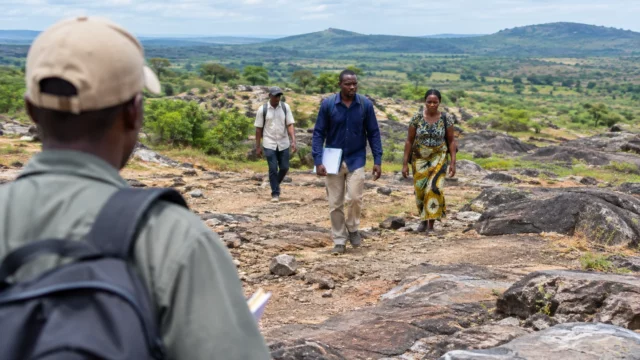
Tanzanian authorities said Beijing is expected to support a new subsoil survey campaign through grants. The funding has not been made public, but the aim is specific: to launch high-resolution airborne geophysical surveys in several areas in the centre and west of the country, including Dodoma, Tabora, Singida and Shinyanga. These operations involve flying aircraft or helicopters equipped with sensors over the territory to measure variations in the magnetic field and other signals useful for geological interpretation. Tanzania’s Ministry of Minerals has not disclosed the value of the grants, but has presented the operation as a way to better identify structures that could host deposits.
The exchange is not limited to a transfer of money. It also includes training and skills development. Tanzanian experts are expected to benefit from China Geological Survey programmes to improve the interpretation of exploration data. The Ministry of Minerals has also placed this cooperation within a broader network already established with Finland’s geological survey, GTK, and South Korea’s institute KIGAM. These partnerships show that Dodoma is seeking not so much a patron as a range of technical expertise, in an area where data are almost as valuable as licences.
Why mapping the subsoil changes the economic equation
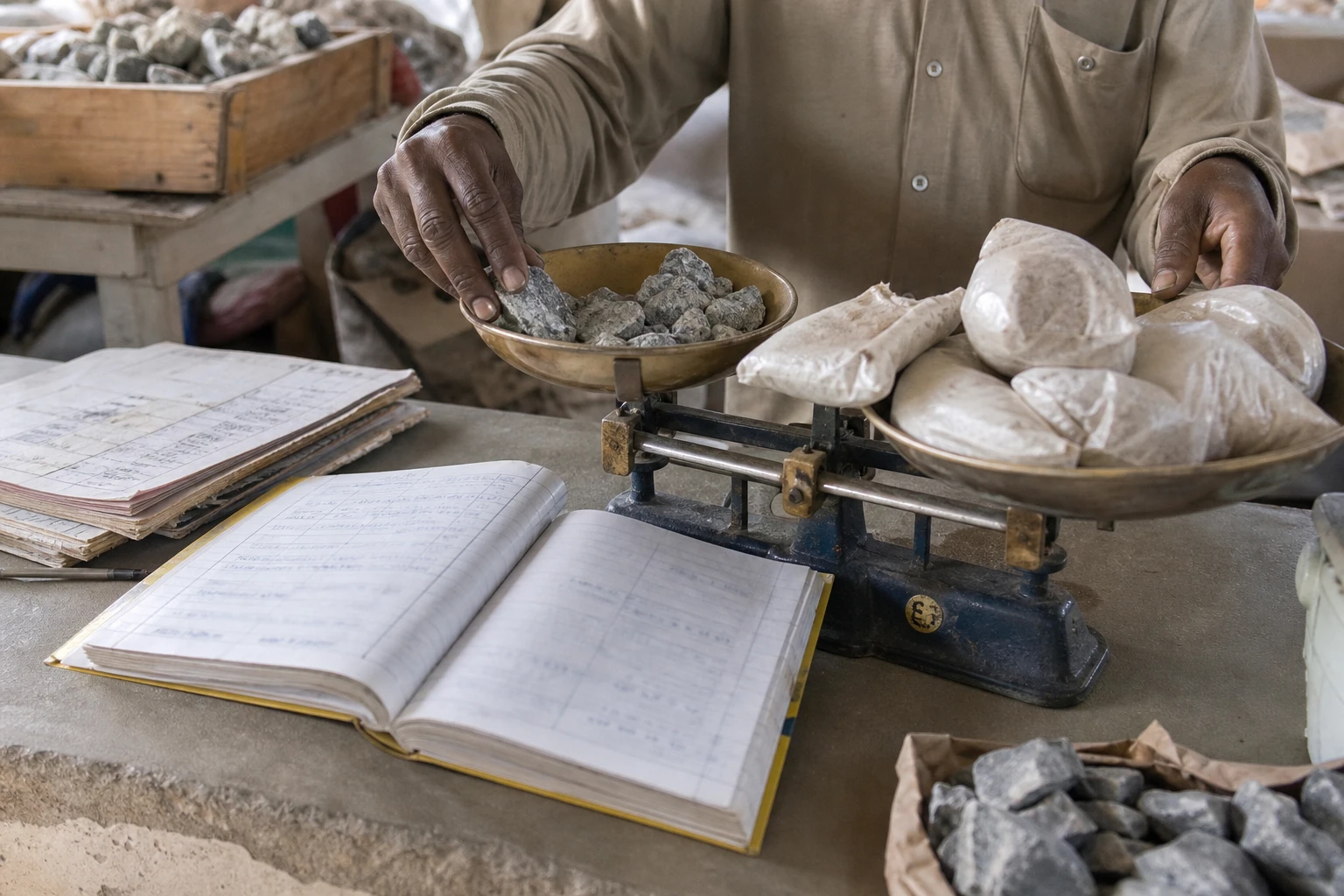
For a mining country, the quality of geological mapping has a direct bearing on the pace of investment. When data are scarce, explorers have to fund more preliminary work, facing greater uncertainty and longer delays. Better data allow capital to move more quickly. This is one of the central aims of Tanzania’s strategy: to make the territory easier for operators to assess while retaining control over resource sovereignty.
This priority is all the more important as Tanzania’s mining profile expands beyond gold. The country also produces nickel, graphite, copper, heavy minerals and several critical minerals sought after in the battery, steel and digital technology value chains. In its budget and planning documents, the Ministry of Minerals has also outlined licences and programmes targeting nickel, cobalt, lithium, rare earths and other strategic substances.
For major mining cities and administrative centres, the expected impact is an influx of new studies, skilled jobs and better oversight of projects. In rural areas, where high-resolution surveys may reveal terrain that has so far been poorly documented, the stakes are twofold: the prospect of more investment, but also the need for better land, environmental and community management. The mining map does not merely reshape financial flows; it also redraws relations between the state, companies and residents.
Tanzania has already begun incorporating this approach into its mining policy. The government has announced plans to raise detailed geophysical coverage to 34% during the 2026/2027 financial year, before aiming for 50% by 2030. This trajectory shows that the campaign launched with foreign partners is not a one-off initiative, but a medium-term programme.
What this development says about East Africa
At regional level, this approach is part of a broader East African trend, as states seek to capture more value from their resources while attracting more advanced prospecting technologies. The East African Community, of which Tanzania is a member, has for several years encouraged states to strengthen regional value chains, harmonise investment frameworks and better connect extraction with processing and logistics. In this equation, improving knowledge of the subsoil is an industrial tool as much as a geopolitical one.
The message from Tianjin is therefore clear: Tanzania wants to move from being a country rich in geological promise to becoming a better-documented mining destination, with stronger negotiating power and greater predictability for investors. The decisive question is what happens next. Grants, training and airborne surveys will deliver their full value only if they produce usable data, followed by advanced exploration projects capable of confirming or disproving the potential identified. It is at that level, and only at that level, that Dodoma’s strategy can be assessed.