Algeria
 Egypt
 Libya
 Morocco
 Sudan
 Tunisia
 Benin
 Cabo Verde
 Côte d'Ivoire
 Ghana
 Guinea
 Guinea-Bissau
 Liberia
 Mali
 Mauritania
 Niger
 Nigeria
 Senegal
 Sierra Leone
 The Gambia
 Togo
 Cameroon
 Central African Republic
 Chad
 DR Congo
 Equatorial Guinea
 Gabon
 Republic of the Congo
 São Tomé and Príncipe
 Burundi
 Comoros
 Djibouti
 Eritrea
 Ethiopia
 Kenya
 Madagascar
 Malawi
 Mauritius
 Mozambique
 Rwanda
 Seychelles
 Somalia
 South Sudan
 Tanzania
 Uganda
 Angola
 Botswana
 Eswatini
 Lesotho
 Namibia
 South Africa
 Zambia
 Zimbabwe
An energy bill weighing on Burkina Faso’s economy
In a country where electricity remains a direct driver of jobs, local processing and everyday life, every gain in access to power has a tangible effect. In Burkina Faso, the debate is not merely technical. It affects the ability of workshops, SMEs, public services and rural areas to operate without outages or extra costs. It is against this backdrop that Ouagadougou is putting the issue back at the centre of the economic agenda, with a clear priority: generate, transmit and distribute more electricity, while also embedding it more firmly across the country.
The country is moving forward in a regional environment where energy also shapes the economic integration of ECOWAS, the Economic Community of West African States. Electricity interconnections, cross-border purchases and complementarity between grids have become decisive for Sahelian states, which often face fragile systems and high dependence on imports. Burkina Faso is part of this dynamic, but faces a particular constraint: the grid remains insufficiently developed and the divide between cities and rural areas remains stark.
What the new funding provides
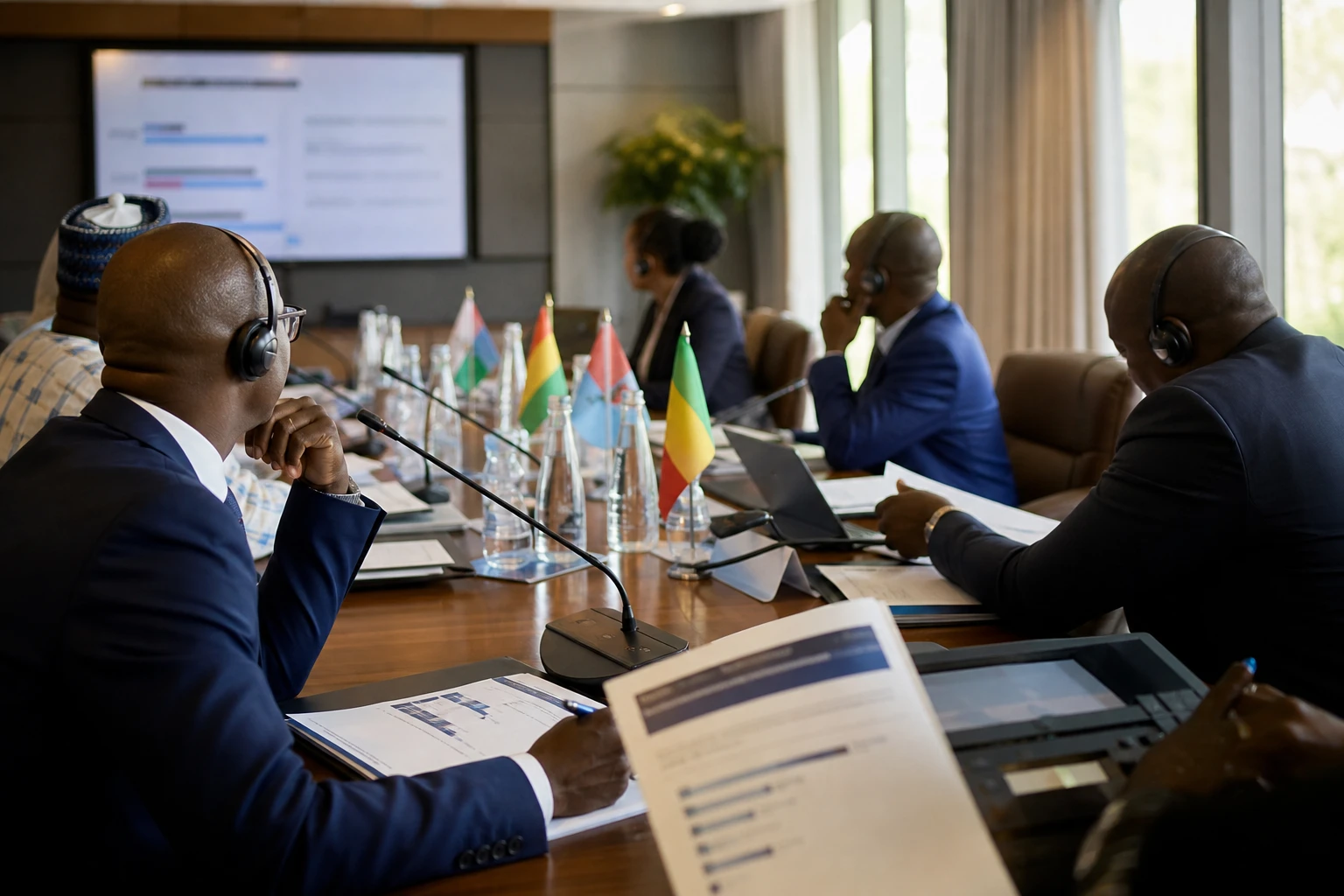
The Council of Ministers meeting held in Bobo-Dioulasso on 10 September 2026 adopted a financing plan worth more than FCFA 104 billion, or about $184 million, to strengthen the operational capacity of SONABEL, the national electricity company, and the new Faso Vêenem Agency. The stated goal is to achieve an electrification rate of 70% by 2030 and reduce the country’s energy dependence. The government intends to use this funding to reinforce transmission and distribution infrastructure, where losses, outages and connection delays often occur.
The figure is part of a broader programme already set out in the 2026-2030 National Energy Pact. This strategic document, linked to Mission 300 led by the World Bank and the African Development Bank, sets a much wider course: 17.9 million additional people connected to electricity, including 11.1 million in rural areas, and an increase in the rural electrification rate from 10.21% in 2024 to 70.73% in 2030. The pact also aims to increase installed solar capacity, improve the regulatory framework and expand the role of the private sector.
The government is not starting from zero. Burkina Faso’s pact notes that the national electrification rate stood at 34.20% in 2024, with 87.83% in urban areas and just 10.21% in rural areas. The same document also reports installed thermal capacity of 415.95 MW, supplemented by 34.6 MW of hydropower, 228.03 MWp of solar and 214 MW of electricity imports. In other words, Burkina Faso does not merely lack generation; it also lacks networks capable of delivering and securing supply to remote localities.
Why the grid matters as much as power plants
The central point of this reform comes down to a simple reality: generating more is not enough if electricity does not reach households and businesses. The 2026-2030 pact therefore emphasises transmission lines, distribution, substations, local connections and decentralised electrification. It is a pragmatic choice. In a large country marked by regional disparities, the grid determines the real value of every megawatt generated. Without it, growth remains concentrated in a few urban centres, while rural areas continue to rely on costly or intermittent solutions.
Figures published by financial institutions also show the scale of the pressure. The IMF says electricity demand in Burkina Faso has risen by an average of 8.1% a year since 2020 and that imports cover about 60% of national consumption. This situation exposes the country to international prices, supply pressures and high fiscal costs. For the state, reducing this dependence is not just a matter of energy sovereignty. It is also a way to contain subsidies, stabilise supply and make electricity more compatible with an economy seeking to process more of its raw materials locally.
The economic context makes this direction all the more urgent. The World Bank noted in 2025 that access to electricity remained well below the regional average and was holding back inclusive growth, particularly in rural areas. The report also says an ambitious sector reform combining tariffs, expanded off-grid access and improved governance is needed to reduce the country’s vulnerability. In this context, the new Faso Vêenem Agency will have to do more than coordinate projects; it will need to help make electrification clear, manageable and financeable.
Regional reach and continental horizon
Beyond Burkina Faso, this development is part of a broader continental trend. Mission 300, backed by the World Bank and the AfDB, aims to connect 300 million Africans to electricity by 2030. Burkina Faso is contributing through a national pact that combines reforms, public investment, private capital and regional cooperation. This approach matters for West Africa, where electricity grids benefit from being planned around interconnections rather than national borders.
What happens next will depend on the country’s ability to act quickly, secure funding and maintain consistency between generation, transmission and distribution. The next milestones to watch are the budgetary allocation for the FCFA 104 billion project, the effective rollout of Faso Vêenem, and implementation of the 2026-2030 pact’s measures. If these steps move forward, Burkina Faso could reduce a structural dependence that continues to hamper activity beyond the main centres. If they are delayed, the gap between stated ambitions and the electricity available will remain just as real.