Algeria
 Egypt
 Libya
 Morocco
 Sudan
 Tunisia
 Benin
 Burkina Faso
 Cabo Verde
 Côte d'Ivoire
 Ghana
 Guinea
 Guinea-Bissau
 Liberia
 Mali
 Mauritania
 Niger
 Senegal
 Sierra Leone
 The Gambia
 Togo
 Cameroon
 Central African Republic
 Chad
 DR Congo
 Equatorial Guinea
 Gabon
 Republic of the Congo
 São Tomé and Príncipe
 Burundi
 Comoros
 Djibouti
 Eritrea
 Ethiopia
 Kenya
 Madagascar
 Malawi
 Mauritius
 Mozambique
 Rwanda
 Seychelles
 Somalia
 South Sudan
 Tanzania
 Uganda
 Angola
 Botswana
 Eswatini
 Lesotho
 Namibia
 South Africa
 Zambia
 Zimbabwe
A traffic case becomes a public affair
On Nigerian roads, an accident almost never remains a mere news item. When it involves a well-known figure, it also shines a light on the entire chain, from driver behaviour to the justice system’s response, as well as road conditions and driving-licence checks. The case linked to Anthony Joshua fits this pattern exactly, in Nigeria, with Abuja as the political capital and Sagamu, in Ogun State, as the judicial setting.
The country is no stranger to road tragedies. The Federal Road Safety Corps, the federal road safety police, reported thousands of deaths on the roads in 2024, while accidents remain frequent on the major routes linking Lagos to the rest of the country. The Lagos-Ibadan corridor, one of the busiest in West Africa, accounts for a significant share of this risk on its own.
What the established facts show
On 29 December 2025, a Lexus SUV carrying Anthony Joshua and two members of his entourage collided with a lorry parked along the Lagos-Ibadan motorway. The boxer, who was born in the UK but has close ties to Nigeria, was injured. Two members of his team, Latif Ayodele and Sina Ghami, died in the collision. Joshua was later discharged from hospital after receiving treatment.
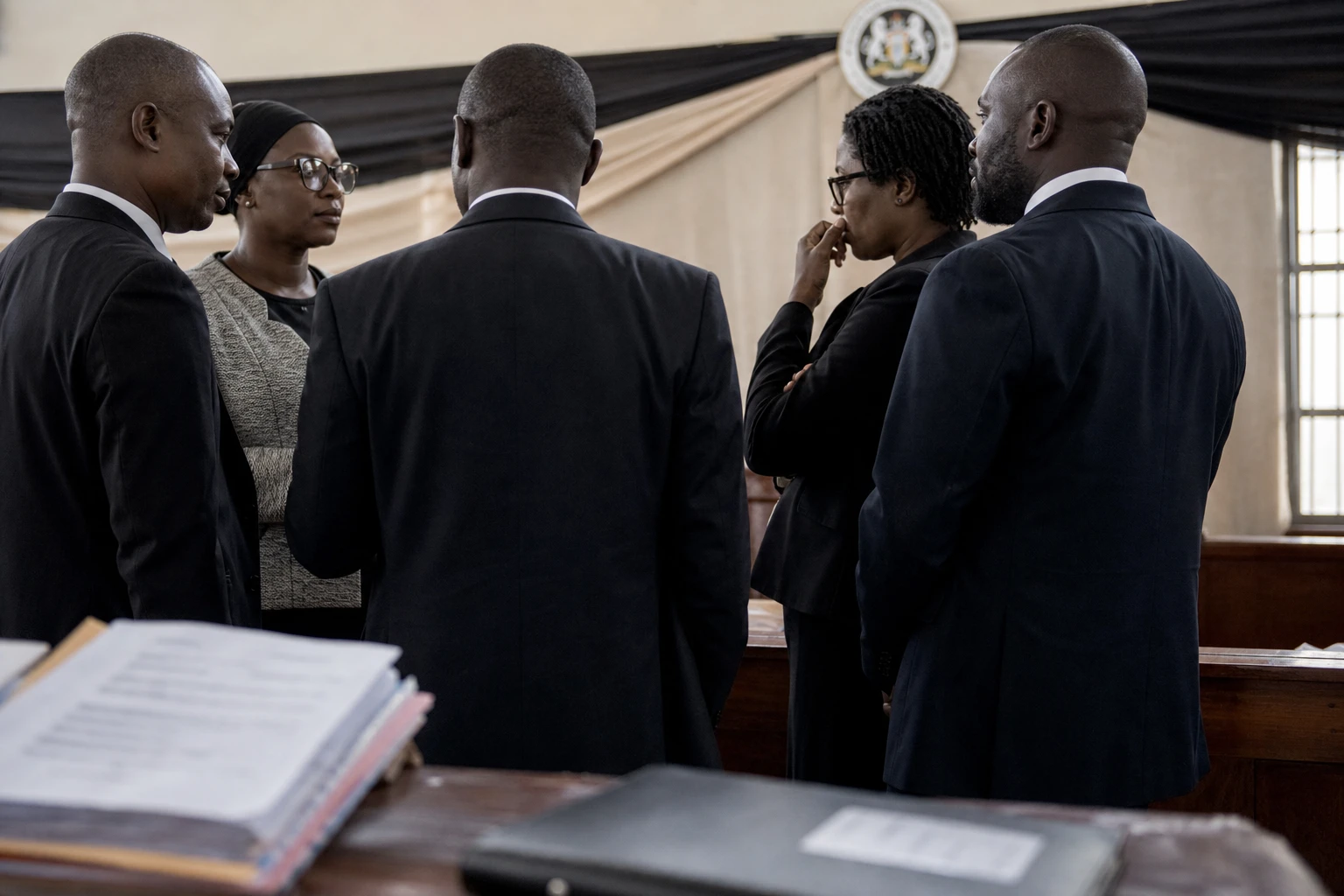
The driver, 46-year-old Adeniyi Mobolaji Kayode, was brought before a magistrates’ court in Sagamu, Ogun State, on four charges, including dangerous driving causing death, reckless and negligent driving, failure to exercise due care, and driving without a valid national licence. Nigerian media and the Associated Press have confirmed the court proceedings.
Since January 2026, the case has been adjourned from one date to another. The first adjournments were due to witnesses not being fully present and procedural steps, including duplication of the case file and its transmission to the state attorney general via the Department of Public Prosecution. The latest publicly available schedule set the next hearing for 25 February 2026, although the case was subsequently adjourned again.
The defence, for its part, has emphasised the burden of the adjournments. One of the driver’s lawyers argued that the repeated delays were making life difficult for his client, who has to attend every hearing to comply with his bail conditions. The debate in this case is therefore not only about the facts of the crash. It also concerns the practical workings of the local justice system.
Why the case reaches beyond sport
The case first highlights a distinctly Nigerian reality: road safety remains a matter of public health, economic order and institutional trust. The Federal Road Safety Corps said the country recorded 9,570 accidents and 5,421 deaths in 2024, followed by an increase in crashes in 2025. These figures give the Joshua case significance beyond that of a straightforward criminal case.
The choice of the Sagamu court in Ogun State also underscores the strategic importance of the Lagos-Ibadan route. The road links Lagos, the country’s main economic centre, to inland cities. It carries goods, workers, travellers and sports teams. When an accident happens there, it affects more than one family. The logistics of a highly mobile economy are also put at risk.
The case also has a diaspora dimension. Anthony Joshua belongs to a sporting and symbolic sphere shared by Nigeria, the United Kingdom and a large African diaspora. The deaths of people close to him in a road accident in Nigeria brought a simple question into the public arena: can the country guarantee the same standards of safety and justice to everyone, including well-known figures and visitors from abroad? This question has been raised at the hearings, but it reaches far beyond the boxer.
In judicial terms, the successive adjournments show the ordinary delays faced by many local courts, though it is not possible to treat them as a general rule. They nonetheless reveal a recurring tension in Nigeria: public demands for speed in high-profile cases, and the longer timescale of criminal proceedings as they move through their own stages. The case is attracting greater attention because it involves a famous name, but it raises the same question in less visible cases.
West African, then continental, significance
At the regional level, the case speaks to ECOWAS, the Economic Community of West African States, because it concerns a major transport corridor between several markets and populations. Road accidents there carry a human cost, but also a commercial one. Nigeria, the region’s largest economy, cannot treat safety on major routes as a secondary issue.
At the continental level, the case is a reminder of an often-underestimated fact: African mobility depends as much on sporting competitions, diasporas and business networks as it does on infrastructure. When a major national route becomes the scene of a fatal accident, the entire travel ecosystem is shown to be vulnerable. The challenge is therefore not only to try a driver. It is also to strengthen licence checks, road discipline, road maintenance and the criminal justice response to serious offences.
How the case proceeds will say a great deal about the Nigerian system’s ability to bring a high-profile case to a conclusion without becoming bogged down. For now, proceedings continue in Sagamu, while the country continues to grapple with the same underlying question: how to make the major roads linking Lagos, Ogun and the rest of Nigeria safer, more disciplined and more reliable routes.