
 Algeria
 Egypt
 Libya
 Morocco
 Sudan
 Tunisia
 Benin
 Burkina Faso
 Cabo Verde
 Côte d'Ivoire
 Ghana
 Guinea
 Guinea-Bissau
 Liberia
 Mali
 Mauritania
 Niger
 Nigeria
 Senegal
 Sierra Leone
 The Gambia
 Togo
 Central African Republic
 Chad
 DR Congo
 Equatorial Guinea
 Gabon
 Republic of the Congo
 São Tomé and Príncipe
 Burundi
 Comoros
 Djibouti
 Eritrea
 Ethiopia
 Kenya
 Madagascar
 Malawi
 Mauritius
 Mozambique
 Rwanda
 Seychelles
 Somalia
 South Sudan
 Tanzania
 Uganda
 Angola
 Botswana
 Eswatini
 Lesotho
 Namibia
 South Africa
 Zambia
 Zimbabwe
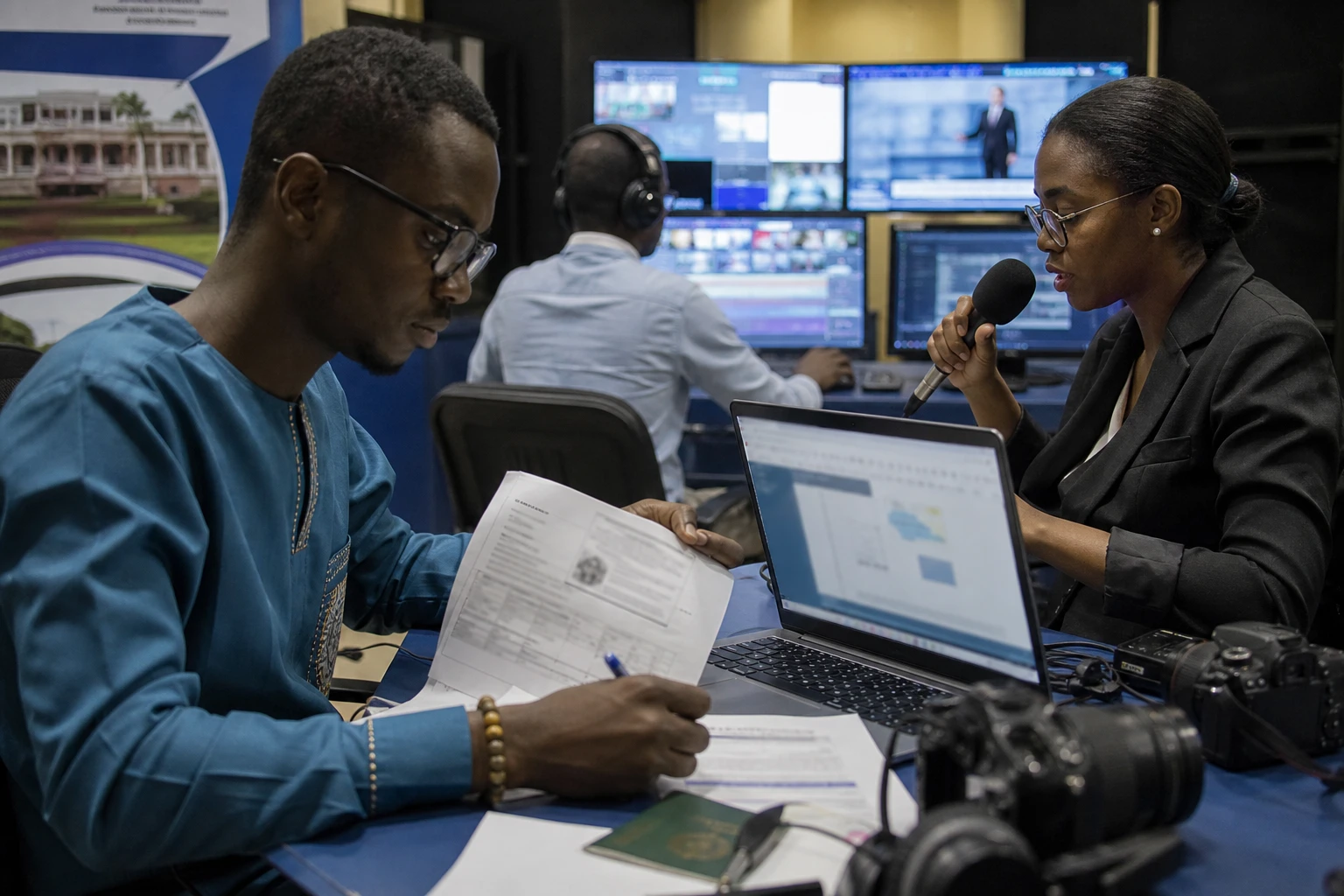
In Yaoundé, a visa decision that weighed on families has been rolled back
For many Cameroonian families, the issue is never simply a stamp in a passport. When a plan to study in France depends on paying a large sum upfront, the entire household’s finances can be thrown off balance. In this case, the debate was about the right to enter, but also about the practical ability to pay without putting the future on hold.
Cameroon remains a major source of students travelling to France. Campus France says the country was among the leading countries of origin for foreign students in France, with 9,767 Cameroonian students in 2022-2023 and 12,291 in 2024-2025. This movement is part of a long-standing university relationship between Yaoundé and Paris, but it now involves a more tightly regulated process through Campus France Cameroon and the long-stay visa system.
Withdrawal of the financial requirements closes a period of tension
At the start of summer 2026, the French embassy in Cameroon had tightened the conditions imposed on some applicants accepted by private French institutions. They were required to provide proof that tuition fees had been paid in full, or equivalent evidence showing that the funds were available. The measure sparked strong reactions in Yaoundé, including a protest outside the embassy, according to several Cameroonian media outlets.
On 10 July 2026, Campus France Cameroon issued a statement saying it had taken note of concerns raised by applicants and families, particularly those who had already paid a deposit, booked accommodation or incurred application costs. On 17 July, at a meeting in Yaoundé, French officials defended the new framework, citing an increase in fraud in Cameroonian student applications. The dispute then became a legal matter when CAP Études, a collective of Cameroonian parents and students, brought a case before the Paris Administrative Court.
In early September, the French position changed. Submissions sent to the Paris Administrative Court on 4 September, followed by the urgent proceedings hearing on 7 September, formalised the withdrawal of the two contested measures. A statement circulated by Cameroonian media later confirmed the definitive abandonment of these special financial requirements for the Cameroonian students concerned.
The general framework for studying in France, however, remains in place. France continues to assess whether study plans are financially viable and says that students without scholarships must demonstrate sufficient funds. Since 1 August 2026, the required income threshold for a long-stay study visa has been set at €877.50 a month, following an increase in the rate. In other words, the announced withdrawal in Cameroon does not remove the requirement to prove that a student can live and study in France; it removes an additional condition targeting certain applications to private institutions.
What the decision means for Cameroonian students
The first consequence is tangible. For families, a return to the standard procedure avoids tying up very large sums from the outset. At a time when departure costs already include tuition, accommodation, insurance, transport and initial living expenses, the difference between paying a deposit and paying in full can determine whether a student leaves or postpones their plans. That is why people involved in student mobility in Cameroon described the change as a real relief for households.
The second effect concerns confidence in the process. Student applications are often seen as a multi-stage journey: academic admission, a Campus France application, a visa and then settling in. When a rule changes partway through, without a clear timetable or sufficient explanation, applicants feel they are navigating uncertain ground. This is particularly sensitive in Cameroon, where demand to study in France remains high and processing centres in both Yaoundé and Douala handle a large volume of applications.
The third issue is more political than administrative. France says it wants to combat fraud and safeguard student mobility. Cameroonian families, student groups and some mobility advisers, for their part, are calling for rules that are clear, stable and proportionate. The episode shows that a power struggle exists even in an area as technical as visas. It also shows how a consular decision made in Yaoundé can quickly become a legal issue in Paris when applicants believe they have been wronged.
A Cameroonian case, but a wider signal for Africa-Europe relations
Cameroon is part of CEMAC, the Economic and Monetary Community of Central Africa, where questions of mobility, education and the movement of skills have a significant impact on individual prospects. When access to education in Europe becomes more or less restrictive, the effects reach beyond Cameroonian applicants alone. They affect family planning, the strategies of partner private institutions in Africa and the appeal of French-language study programmes.
The case also highlights a broader reality: Central Africa continues to send some of its most mobile students to France. In 2023, France was already hosting more than 400,000 international students, and Campus France said global competition to attract talent remained intense. In this context, the quality of the process matters as much as the final decision. A poorly explained rule can quickly become a source of diplomatic friction.
In the short term, attention will remain on how the change is implemented in consular services and by Campus France Cameroon. Students who have already received a refusal based on the previous financial requirement will be watching closely to see what avenues of appeal remain open. For Yaoundé and Paris alike, the case will make one point above all: in Africa-Europe academic relations, stable rules matter almost as much as their content.



