Algeria
 Egypt
 Libya
 Morocco
 Sudan
 Tunisia
 Burkina Faso
 Cabo Verde
 Côte d'Ivoire
 Ghana
 Guinea
 Guinea-Bissau
 Liberia
 Mali
 Mauritania
 Niger
 Nigeria
 Senegal
 Sierra Leone
 The Gambia
 Togo
 Cameroon
 Central African Republic
 Chad
 DR Congo
 Equatorial Guinea
 Gabon
 Republic of the Congo
 São Tomé and Príncipe
 Burundi
 Comoros
 Djibouti
 Eritrea
 Ethiopia
 Kenya
 Madagascar
 Malawi
 Mauritius
 Mozambique
 Rwanda
 Seychelles
 Somalia
 South Sudan
 Tanzania
 Uganda
 Angola
 Botswana
 Eswatini
 Lesotho
 Namibia
 South Africa
 Zambia
 Zimbabwe
A congested coastline, but ambitions continue to grow
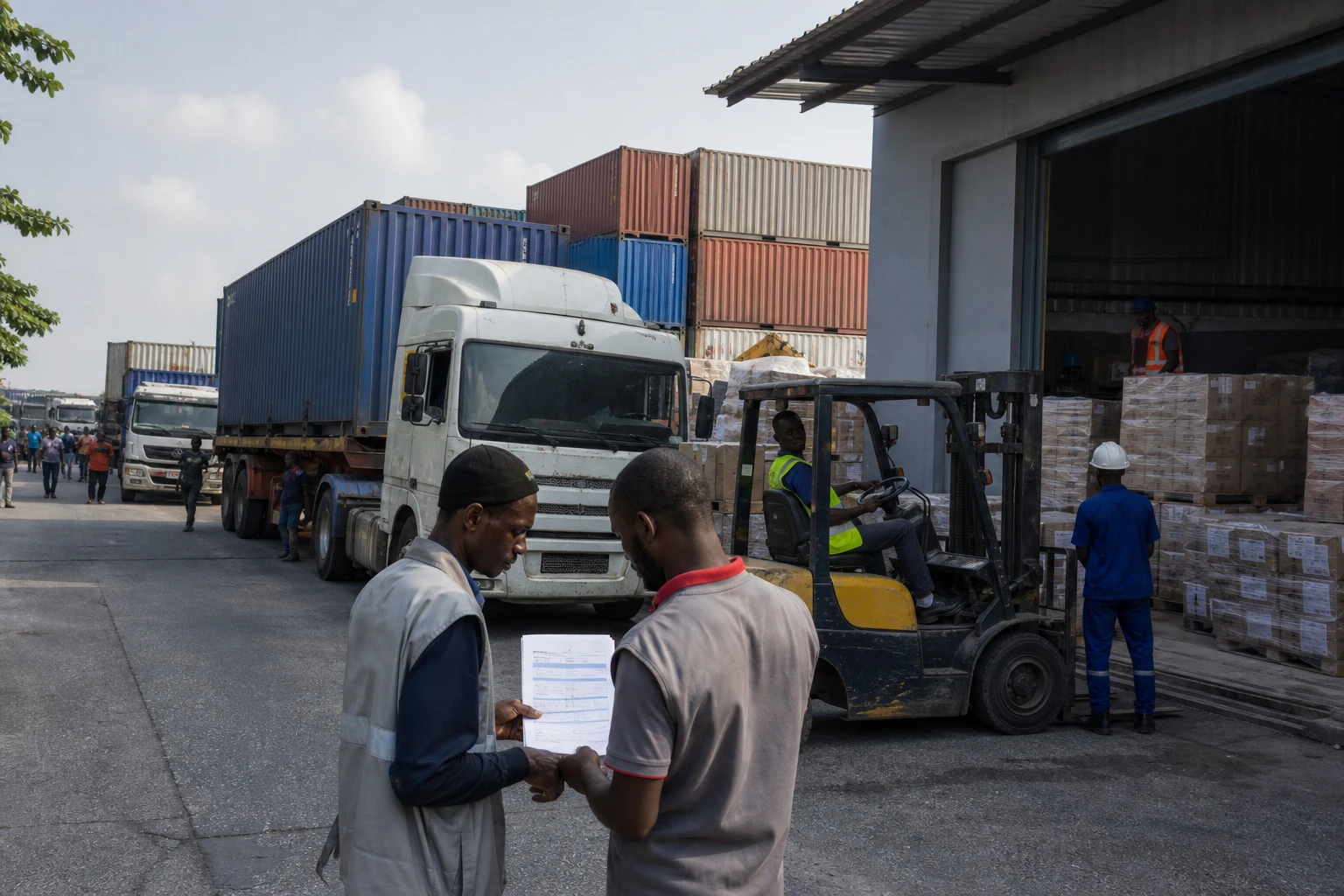
In Nigeria, every new port project tells the same story of tension. On one side is a vast market, an increasingly urban population and imports that remain vital to the economy. On the other are ports already under pressure, especially around Lagos, where trucks, delays and costs weigh on businesses and households alike. In this context, the Badagry project is more than a construction site. It is a test of the credibility of the country’s logistics strategy.
The issue also extends beyond Nigeria’s borders. Badagry lies west of Lagos, near Benin, along a corridor where the ports of Cotonou, Lomé, Tema and Abidjan are also seeking to attract traffic from the Gulf of Guinea and the West African hinterland. In West Africa, port competition is not decided by the size of quays alone. It also depends on roads, rail, customs and the ease of access to inland markets.
Badagry revived by exclusive negotiation agreement
On 7 September 2026, in Copenhagen, the Nigerian federal government and APM Terminals signed a memorandum of understanding with Badagry Port Development Limited to open exclusive negotiations on developing the Badagry deep-water port. The agreement is not a final investment decision. It does, however, establish a concrete framework for work on a project that the authorities describe as strategic to Nigeria’s maritime capacity.
According to information made public, the future port would be developed through a public-private partnership. The first phase предусматривает a container terminal with capacity for 1.2 million TEU, a 740-metre quay and a design depth of 18 metres. Projections also refer to other terminals for general cargo, vehicles, liquid bulk and oil and gas-related services. The plan is for a port designed to accommodate larger vessels than those calling at several of Lagos’s urban facilities.
APM Terminals’ return to the centre of the project is not insignificant. In May 2026, the Nigerian presidency had already said the group was preparing $600 million in investment in the country’s maritime sector, including at Apapa and in logistics infrastructure. The message was clear: Nigeria wants to attract operators able to bring capital, technology and expertise to a sector still held back by bottlenecks.
Easing Lagos congestion, connecting the hinterland, saving time
Badagry’s real challenge is not limited to its draft. It lies in moving goods inland. The authorities want to include road connections to the hinterland from the first phase, followed by a rail link at a later stage. The aim is simple: to prevent a new deep-water port from reproducing the bottlenecks seen around Apapa and Tin Can Island, where the choke point often shifts from the quay to the road.
Nigeria already has a useful precedent in Lekki, inaugurated in 2023. The Lagos deep-water port is described by the Nigerian Ports Authority as the deepest in sub-Saharan Africa, with a depth of 19 metres and capacity for 2.7 million TEU. But even this new facility has not, on its own, absorbed the structural pressures on the Lagos corridor. Badagry is therefore conceived as a second step, not a cure-all.
For economic operators, the expected impact is tangible. A better-connected port reduces waiting times, improves the predictability of deliveries and lowers logistics costs. For residents, this could mean less congestion in the Lagos metropolitan area, but also new pressure on road corridors and free zones that will have to accommodate the activity. Potential winners include transport, warehousing, cargo handling, insurance and processing businesses. Possible losers are those who benefit from current inefficiencies.
A regional contest for Gulf of Guinea traffic
Badagry is part of an established competition. The Port of Cotonou retains an important role in trade with Nigeria, while Lomé has strengthened its role as a transshipment hub. Port modernisation work is also progressing in Cotonou, proof that neighbouring Benin is not standing still. In this contest, geography matters, but it is not enough. Cost, the speed of formalities and the quality of land connections often determine the choices of shipowners and cargo operators.
For Abuja, the stakes are also political and industrial. The country is seeking to better monetise its position as West Africa’s largest market. UN figures put Nigeria’s population at 237.5 million in 2025, with Abuja as its capital and an economy still heavily dependent on external trade flows. In a country where the industrial base remains fragile, logistics is not a secondary service. It determines access to inputs, the price of imported goods and the competitiveness of local producers.
The continental significance is clear. If Badagry moves beyond the drawing board, it will strengthen the network of major West African maritime hubs and push neighbouring ports to accelerate their own investments. If it remains stuck at the stage of promises, it will confirm a familiar reality along Africa’s coasts: the battle to become a hub is won less in press releases than through concrete, rail, customs and disciplined execution. For now, the project is entering a decisive phase of negotiations, financial structuring and technical arbitration.