Algeria
 Egypt
 Libya
 Morocco
 Sudan
 Tunisia
 Benin
 Burkina Faso
 Cabo Verde
 Côte d'Ivoire
 Ghana
 Guinea
 Guinea-Bissau
 Liberia
 Mali
 Mauritania
 Niger
 Nigeria
 Senegal
 Sierra Leone
 The Gambia
 Togo
 Cameroon
 Central African Republic
 Chad
 DR Congo
 Equatorial Guinea
 Gabon
 Republic of the Congo
 São Tomé and Príncipe
 Burundi
 Comoros
 Djibouti
 Eritrea
 Ethiopia
 Kenya
 Madagascar
 Malawi
 Mauritius
 Rwanda
 Seychelles
 Somalia
 South Sudan
 Tanzania
 Uganda
 Angola
 Botswana
 Eswatini
 Lesotho
 Namibia
 South Africa
 Zambia
 Zimbabwe
A match that says much about top-level football in West and East Africa
Just weeks before the start of qualifying for AFCON 2027, Senegal has seen its first home match become an away fixture. The match against Mozambique, which was due to open Group J in Dakar, will instead be played in Maputo at the National Stadium of Zimpeto on 25 September 2026. This is no minor change. It touches on venue management, preparations for major competitions and the sporting balance of a campaign in which every detail counts.
The regional context is clear. The Confederation of African Football has divided 48 national teams into 12 groups of four for a home-and-away qualifying phase played over six matchdays. In Group J, Senegal will face Mozambique, Sudan and Ethiopia. The first two matchdays take place between 24 September and 6 October 2026, before the competition resumes in November, followed by the final two matchdays in March 2027. The finals will be held from 19 June to 17 July 2027 in Kenya, Uganda and Tanzania, the three host countries that have qualified automatically.
Why Dakar could not keep the fixture
The first reason cited by Senegalese authorities concerns Abdoulaye-Wade Stadium in Diamniadio. Since 2022, the venue has usually hosted the Lions’ home matches. But it must be used for preparations for the Dakar 2026 Youth Olympic Games, whose opening ceremony is scheduled to take place at the same stadium on 31 October 2026. The availability of major sports facilities thus becomes a matter of national scheduling, especially when two major events overlap.
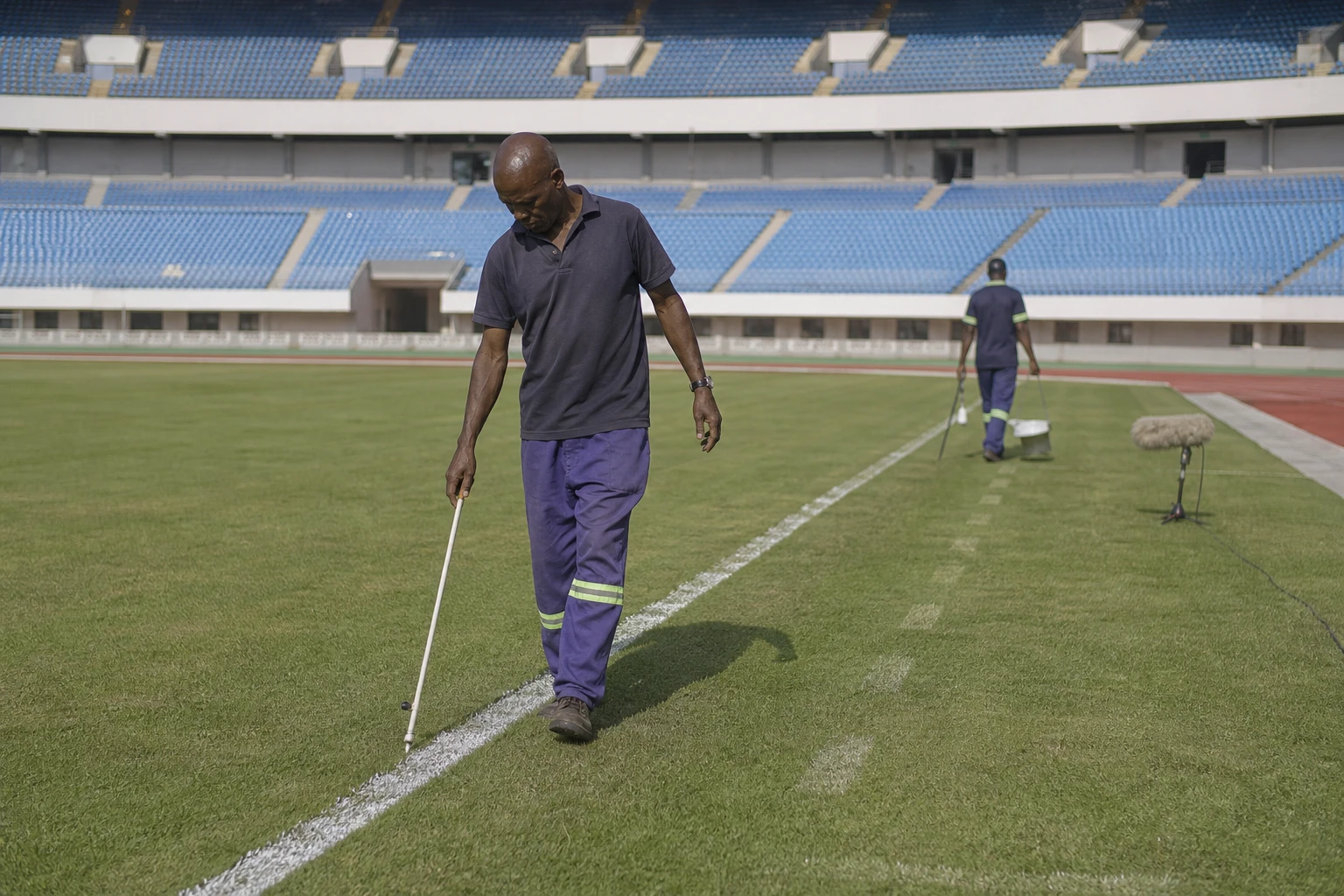
The second reason concerns Léopold Sédar Senghor Stadium, which was chosen for a time as a fallback option. The Senegalese Football Federation initially announced that the match would be played there on 25 September at 19:00 GMT. But, by the time the final decision was made, the pitch apparently could not yet provide the necessary guarantees for an official senior national team fixture. The stadium, renovated with support from Sino-Senegalese cooperation and approved by CAF in July 2026, therefore remains in a delicate phase of ramping up operations.
This point deserves emphasis. In Dakar, upgrading infrastructure is not just about concrete or stands. It also depends on the condition of pitches, CAF requirements and the schedule of national events. In another recent matter, the Ministry of Sports said that the pitch at Senghor Stadium had been receiving enhanced maintenance since 24 August 2026, under technical supervision. In other words, the venue remains at the centre of ongoing adjustments, balancing international competitions, local use and the requirements for approval.
What the change means in practice for the two teams
The venue change first alters home advantage. Senegal loses the support of its fans for this opening match, while Mozambique turns an away fixture into a home one. The Mozambican Football Federation confirmed that the Mambas would start their campaign against Senegal on 25 September, before hosting Sudan at the National Stadium of Zimpeto on 29 September. It also indicated that a swap of matchdays had been agreed, with the first leg in Maputo and the fifth matchday in Senegal.
On the sporting front, the Group J schedule remains unchanged in principle, but the psychological balance shifts. A fixture originally due to be played in Dakar can affect Senegal’s momentum at the start of the competition, even for a team that remains one of the continent’s leading sides. Mozambique, by contrast, benefits from familiar surroundings at Zimpeto Stadium, a venue already used for international matches and authorised by CAF to host games with a restricted capacity at previous competitions. In African qualifying campaigns, this kind of reversal often matters as much as the teams’ raw ability.
The issue also goes beyond the two federations. It shows how African capitals must balance international prestige, stadium maintenance and major multi-sport events. Dakar is counting on the 2026 Youth Olympic Games to strengthen its reputation as a host of major competitions. Maputo, meanwhile, gains valuable exposure by taking over a qualifying fixture that is drawing regional attention. In both cases, local federations must work with CAF as well as public authorities, because sports infrastructure is as much a matter for the state as it is for football.
At continental level, the episode is a reminder that African qualifying campaigns are no longer decided only on the pitch. They also depend on countries’ ability to keep to a schedule, secure approval for their stadiums and manage several events at once. The next phase of Group J will be closely watched in November 2026, followed by the final two matchdays in March 2027. For Senegal and Mozambique alike, the opening fixture will therefore serve as a test — not only for the players, but also for the organisations around them.