Algeria
 Egypt
 Libya
 Morocco
 Sudan
 Tunisia
 Burkina Faso
 Cabo Verde
 Côte d'Ivoire
 Ghana
 Guinea
 Guinea-Bissau
 Liberia
 Mali
 Mauritania
 Niger
 Nigeria
 Senegal
 Sierra Leone
 The Gambia
 Togo
 Cameroon
 Central African Republic
 Chad
 DR Congo
 Equatorial Guinea
 Gabon
 Republic of the Congo
 São Tomé and Príncipe
 Burundi
 Comoros
 Djibouti
 Eritrea
 Ethiopia
 Kenya
 Madagascar
 Malawi
 Mauritius
 Mozambique
 Rwanda
 Seychelles
 Somalia
 South Sudan
 Tanzania
 Uganda
 Angola
 Botswana
 Eswatini
 Lesotho
 Namibia
 South Africa
 Zambia
 Zimbabwe
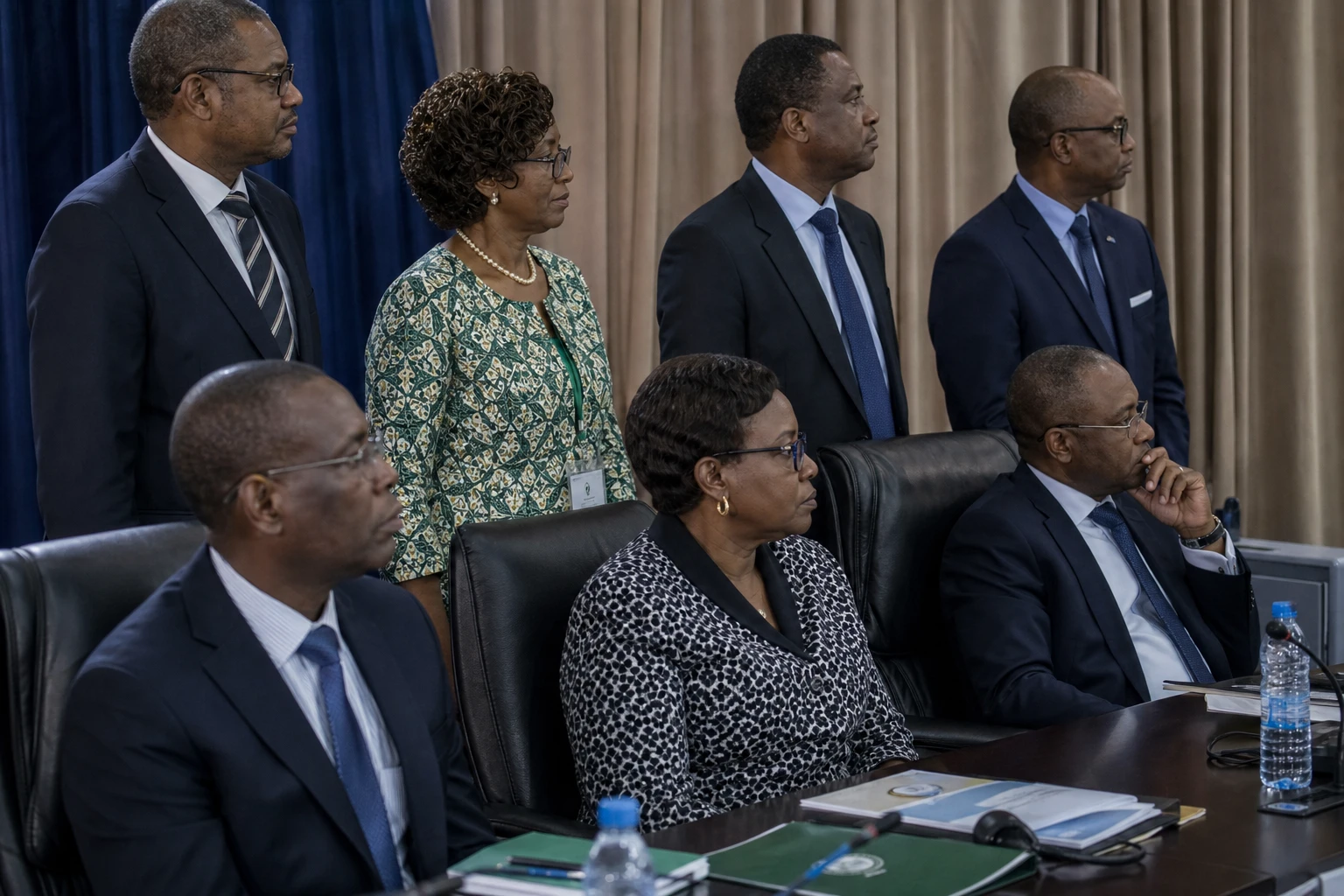
The timetable is now being shaped in Abuja, not just in technical meeting rooms
In West Africa, the single currency is no longer just a summit promise. It has become a test of method. After years of postponed announcements, ECOWAS is now pushing its member states to move beyond the language of experts and into that of political arbitration, where real compromises and power dynamics are decided. The signal sent on 7 September is clear: work on the ECO must move forward without waiting for the next institutional cycle.
This acceleration comes in a region where several integration frameworks coexist. Eight West African countries already belong to WAEMU, which shares the CFA franc, while the rest of ECOWAS retains its national currencies. This coexistence explains some of the difficulty: a common currency cannot simply be decreed; it must be underpinned by fiscal rules, coordination between central banks and lasting political trust.
What ECOWAS has decided, and what heads of state have already agreed
The ECOWAS Convergence Council held its fourteenth session by videoconference on 7 September 2026. Following discussions, it asked the Commission to convene immediately a meeting of the presidential Task Force responsible for the single currency, in order to accelerate the handling of outstanding issues. The Council also confirmed that, in its view, the target of launching the ECO in 2027 remained achievable.
This step does not contradict the course set two months earlier. On 19 July 2026 in Freetown, at the 69th ordinary ECOWAS summit, heads of state had already reaffirmed the 2027 target and called for the presidential Task Force to meet before their ordinary summit in December 2026. The text adopted in Freetown also confirmed a gradual start, involving only countries that met the convergence criteria and were ready to join the arrangement.
On 7 September, the Convergence Council worked from a very specific sequence: the third joint meeting of the technical committees had been held from 31 August to 2 September, followed by the 68th meeting of the Committee of Central Bank Governors on 4 September. These meetings examined member states’ macroeconomic performance, their level of convergence and the conditions still required before launch.
The real challenges are institutional, monetary and political
The heart of the debate is not just a date. It concerns the architecture of the future currency, the authority that will manage it, decision-making mechanisms and the terms on which the first participants will join. Until these issues are clarified, the ECO remains a convergence project rather than an instrument ready for circulation. ECOWAS has not, at this stage, published a list of countries deemed compliant or of the states that could form the initial core.
This caution is understandable. West African economies are not moving at the same pace. Some depend more heavily on commodities, others on agriculture, and still others on diaspora remittances or services. Differences in inflation, public deficits, debt and foreign-exchange reserves complicate the idea of an immediate common currency. In this context, convergence is not a slogan but a lasting alignment of economic policies. The successive assessments carried out by technical committees and central bank governors reflect this reality.
The contrast between the sub-region’s two main currency blocs is stark. On one side, WAEMU has operated with a common currency and shared institutions since 1994. On the other, Nigeria, Ghana, The Gambia, Sierra Leone, Liberia and Guinea use their national currencies. Between them, ECOWAS is trying to build a credible institutional bridge. This is where the project’s practical significance lies: without decision-making mechanisms accepted by all, a common currency remains vulnerable to political deadlock.
The July summit also carried symbolic weight. It confirmed the arrival of Senegalese President Bassirou Diomaye Faye as chair of the Authority of Heads of State and Government, and the start of General Birame Diop’s term as President of the ECOWAS Commission from 1 September 2026. These leadership changes matter. They give the currency project a new political team at the very moment when the arbitration becomes more sensitive.
Why this issue goes beyond the question of a new currency
For governments, a common currency can strengthen regional visibility, simplify some transactions and, in time, support intra-West African trade. For central banks, by contrast, it requires stricter discipline, closer monitoring and transfers of monetary sovereignty that no state grants easily. For businesses, especially small and medium-sized enterprises, the stakes are even more tangible: conversion costs, price predictability, access to credit and the ease of cross-border payments.
For households, the impact would not be automatic. A single currency does not eliminate the high cost of living or budgetary pressures. However, if it is based on credible rules, it can reduce some friction in regional trade and make prices more transparent across the sub-region. That is precisely why ECOWAS emphasises the convergence criteria: the project’s success depends less on its proclamation than on states’ ability to honour shared commitments over time.
The continental significance is also real. The ECO is being watched well beyond West Africa because it touches on a central question of African integration: how to build regional monetary tools without erasing differences in economic trajectories. At the pan-African level, the issue is linked to the ambitions of the AfCFTA, the African Continental Free Trade Area, which aims to facilitate trade between African countries. If ECOWAS manages to stabilise its timetable and resolve its outstanding issues, it will send a strong signal to the rest of the continent. The next meeting to watch is now that of the presidential Task Force, ahead of the ordinary summit in December 2026. That is where the gap between the technical and political dimensions will have to be closed in earnest.