Algeria
 Egypt
 Libya
 Morocco
 Sudan
 Tunisia
 Benin
 Burkina Faso
 Cabo Verde
 Côte d'Ivoire
 Ghana
 Guinea
 Guinea-Bissau
 Liberia
 Mali
 Mauritania
 Niger
 Nigeria
 Senegal
 The Gambia
 Togo
 Cameroon
 Central African Republic
 Chad
 DR Congo
 Equatorial Guinea
 Gabon
 Republic of the Congo
 São Tomé and Príncipe
 Burundi
 Comoros
 Djibouti
 Eritrea
 Ethiopia
 Kenya
 Madagascar
 Malawi
 Mauritius
 Mozambique
 Rwanda
 Seychelles
 Somalia
 South Sudan
 Tanzania
 Uganda
 Angola
 Botswana
 Eswatini
 Lesotho
 Namibia
 South Africa
 Zambia
 Zimbabwe
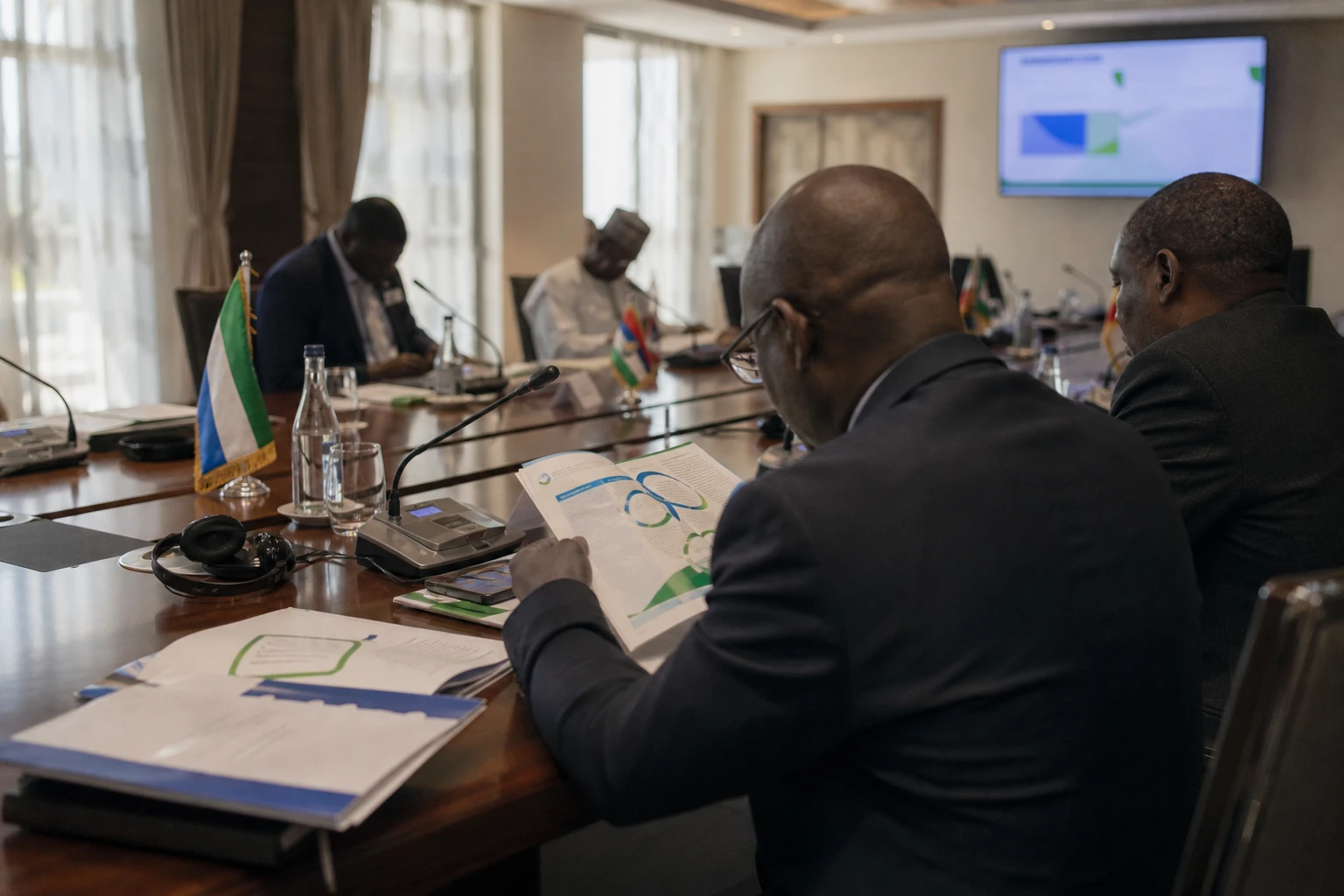
Freetown, Lungi and a highly political ambition
In West Africa, summits are no longer held only in administrative capitals. They also hinge on a country’s ability to turn a regional meeting into an economic, logistical and diplomatic lever. That is precisely the challenge taking shape for Sierra Leone, with the first West Africa Integration and Investment Summit, scheduled for 17 and 18 November 2026 at the Julius Maada Bio International Conference Centre in Lungi, Port Loko District.
The choice of venue is no accident. Lungi has already become a strategic location for major West African gatherings, while Freetown is emerging as another stage for economic diplomacy. Sierra Leone is seeking more than a boost to its image: it wants to show that an ECOWAS coastal state can also serve as a bridge between political decisions, infrastructure and private capital.
The regional context
ECOWAS, the Economic Community of West African States, was established in 1975 and remains the main framework for regional integration in goods, people and economic policies. Its current chair is Julius Maada Bio, President of the Republic of Sierra Leone, who was elected to the regional post on 22 June 2025 for a one-year term. This position gives Freetown particular visibility in a West African region facing security tensions, budgetary constraints and pressure to deliver tangible results.
The regional calendar reinforces this interpretation. In July 2026, Sierra Leone has already hosted the 96th ordinary session of the ECOWAS Council of Ministers in Freetown, ahead of the session of the Conference of Heads of State and Government. The meeting addressed the political and security situation, the Community’s finances and several integration initiatives. The November summit therefore forms part of a broader sequence in which Sierra Leone is testing its ability to move ECOWAS from rhetoric to implementation.
A summit designed as a project engine
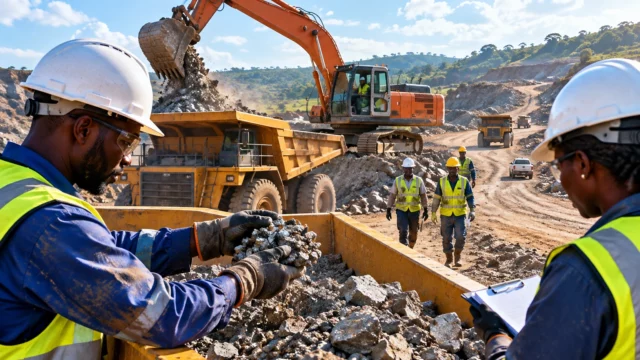
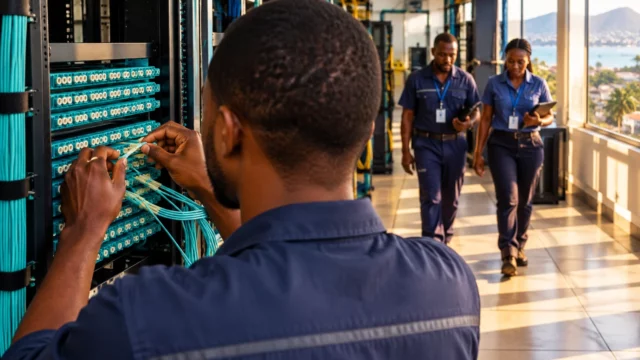
WAIIS, or the West Africa Integration and Investment Summit, was designed as a platform for turning opportunities into action. According to its official programme, preparations begin on 10 November 2026 in Freetown, ahead of the main summit on 17 and 18 November. The event aims to bring together heads of state, businesses, investors, financial institutions and project sponsors around four pillars: energy and green industrialisation, strategic minerals, agribusiness and food systems transformation, and digital transformation and connectivity.
Organisers have also announced a “Deal Room”, where selected projects will be matched with qualified investors, lenders and strategic operators. The idea is clear: not to settle for political declarations, but to lay the groundwork for agreements, development mandates and financing. The summit website refers to an initial list of more than 170 opportunities, with an indicative value of around $180 billion. This figure should be read as a pipeline of opportunities, not as financing already secured.
The project is backed by two steering bodies named by the organisers: PI-CREF, the Presidential Initiative on Climate Change, Renewable Energy and Food Security, and AfCEN, the Africa Climate and Energy Nexus. The organising committee is chaired by Kandeh Kolleh Yumkella, a former senior United Nations official already known for his work on energy and sustainable development. This combination says much about the format being sought: a summit that is technical, political and financial at the same time.
Why Sierra Leone wants to put it to the test
For Freetown, the stakes go beyond simply hosting an event. Sierra Leone is seeking to strengthen its image as a credible host country in a region where investor confidence depends as much on institutional stability as on the quality of projects. The new Julius Maada Bio International Conference Centre in Lungi embodies this strategy: to show that the country can host major gatherings close to an international airport and provide suitable logistics for high-level meetings.
This momentum affects several parts of the economy directly. For the state, it can strengthen economic diplomacy. For local businesses, it opens more direct access to buyers and regional partners. For young people and innovators, the “Youth in Action” programme and sessions on innovation offer a rare platform. But the real impact will depend on one simple thing: the ability to follow announcements with studies, bankable commitments and measurable projects. Without that, the summit would remain a fine showcase. With it, it could become a tool for transformation.
The question is all the more important because West Africa does not lack political frameworks, but mechanisms for implementation. ECOWAS member states have laid down principles of integration for decades. The challenge today is to turn those principles into roads, electricity grids, agricultural value chains, cross-border payments and interoperable digital services. That is precisely where WAIIS aims to stand out.
A reach beyond Sierra Leone
If the summit delivers on its promises, it could serve as a model for other ECOWAS states seeking to link regional integration with investment strategies. The logic is continental: it aligns with the aims of the African Continental Free Trade Area, which requires infrastructure, common standards and projects able to operate across national borders. In this sense, Freetown is not seeking only a national success. Sierra Leone’s capital wants to take its place in the African debate on how to finance integration through concrete projects.
The next milestone to watch will therefore be twofold: the ramping-up of preparations from 10 November 2026, and the summit’s ability in November to announce verifiable commitments, particularly in energy, agribusiness, minerals and digital technology. Freetown will be judged by that measure, far more than by the number of official photographs.