Algeria
 Egypt
 Libya
 Morocco
 Sudan
 Tunisia
 Burkina Faso
 Cabo Verde
 Côte d'Ivoire
 Ghana
 Guinea
 Guinea-Bissau
 Liberia
 Mali
 Mauritania
 Niger
 Nigeria
 Senegal
 Sierra Leone
 The Gambia
 Togo
 Cameroon
 Central African Republic
 Chad
 DR Congo
 Equatorial Guinea
 Gabon
 Republic of the Congo
 São Tomé and Príncipe
 Burundi
 Comoros
 Djibouti
 Eritrea
 Ethiopia
 Kenya
 Madagascar
 Malawi
 Mauritius
 Mozambique
 Rwanda
 Seychelles
 Somalia
 South Sudan
 Tanzania
 Uganda
 Angola
 Botswana
 Eswatini
 Lesotho
 Namibia
 South Africa
 Zambia
 Zimbabwe
In Grand-Popo, school remains a marker of social mobility
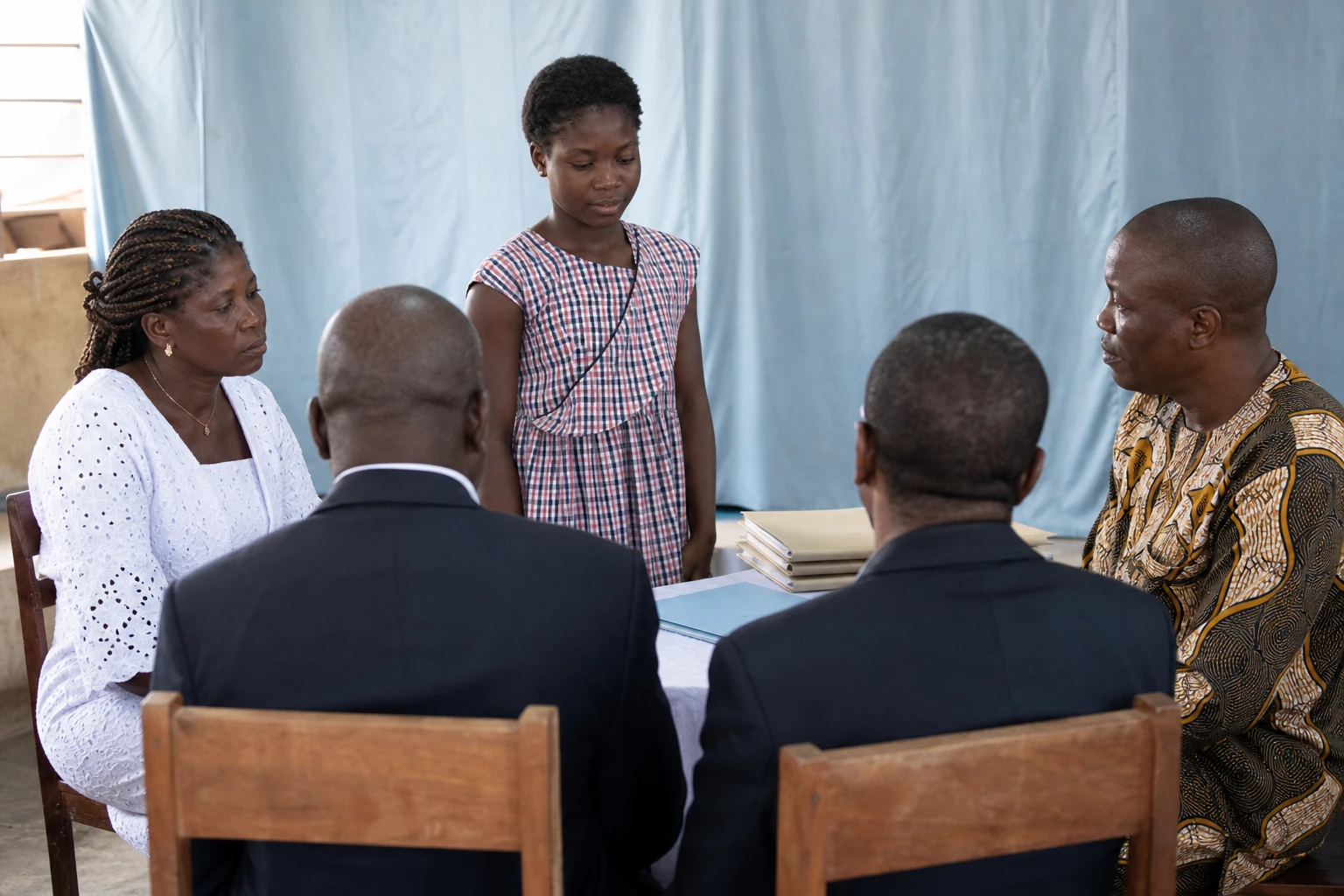
In a coastal commune where families make a living from trade, fishing and small jobs linked to tourism, every academic success means more than a report card. It says something about a household’s future, but also about a school’s ability to deliver on its promise. In Grand-Popo, in south-western Benin, that promise takes concrete shape when pupils from a private school achieve some of the best results in the Certificat d’études primaires, or CEP, the exam that marks the end of primary school.
Grand-Popo is part of the Mono department, in a Beninese region where coastal communes move to the rhythm of local travel, the Atlantic and the Mono River. Official government documents also describe the commune as a seaside town between the ocean and the river, with an economic and geographical identity distinct from the rest of the country.
Academic achievement that speaks to support, not just rankings
The Défi+ school complex, based in Grand-Popo, is highlighting two of its pupils, Abibou Fidaos Ayomidé and Ayina Donald Eliseth, who ranked among the best in their commune in the CEP. The news points to a wider issue: in several parts of Benin, the quality of teaching, consistent family support and access to a stable study environment often matter as much as individual effort. Here, school appears not simply as a place to sit an exam, but as a space that helps keep educational pathways on track.
Benin’s school calendar also gives a sense of the significance of this moment. The ministry responsible for primary education launched the 2026 CEP on 1 June 2026, and the results were scheduled to be published on 26 June 2026. The CEP remains an important step in Benin’s education system because it confirms entry to lower secondary school and serves as the first national benchmark for measuring learning outcomes.
The fact that two pupils have stood out in a particular commune should not be overinterpreted as an isolated exception. But it says something about the quiet work of teaching teams, which is often decisive in areas where families have to balance school expenses, travel time and income-generating activities. In this kind of context, a school that maintains high standards becomes a local force for educational continuity.
What the Défi+ case reveals about schools in Benin
In Benin, the challenge is not only to raise pass rates. It is also to reduce gaps between urban and peri-urban areas and communes farther from major administrative centres. Benin’s Ministry of Nursery and Primary Education emphasises the nationwide organisation of the CEP each year, with registrations, exam centres and online access to results. This points to a more structured system than is often assumed, even if educational support remains highly uneven across regions.
In Grand-Popo, the success of two pupils also carries symbolic weight. It highlights the role of private and community schools in local education. In a country where public schools remain central, these institutions complement provision, support vulnerable educational pathways and can act as a link for children from low-income households. The challenge is therefore twofold: helping children pass the exam, then enabling them to continue into lower secondary school without interruption.
This perspective matters for Benin, but it also extends beyond its borders. Across the ECOWAS region, primary school remains a decisive starting point for the movement of skills, civic education and equal opportunity. When a commune posts good results, it does more than fuel local pride; it helps build the human capital that all of West Africa needs.
A new school year marked by high expectations in a country seeking educational stability
Timing matters. As the new school year approaches, Beninese families look less to major national announcements than to concrete evidence that the system is holding up. A good CEP result is reassuring because it shows that a child has cleared the first hurdle. It also reassures parents who pay for schooling in a context where every expense counts, especially in communes where incomes remain irregular and seasonal.
For Grand-Popo, the impact is immediate. For the school, it is a validation. For Benin’s education system, it is one signal among others: progress also depends on schools able to turn day-to-day support into visible results. And for the region, it is a useful reminder. The quality of primary education remains one of the best indicators of what a country is preparing for its young people — or failing to prepare.