Algeria
 Egypt
 Libya
 Morocco
 Sudan
 Tunisia
 Benin
 Burkina Faso
 Cabo Verde
 Côte d'Ivoire
 Ghana
 Guinea
 Guinea-Bissau
 Liberia
 Mali
 Mauritania
 Nigeria
 Senegal
 Sierra Leone
 The Gambia
 Togo
 Cameroon
 Central African Republic
 Chad
 DR Congo
 Equatorial Guinea
 Gabon
 Republic of the Congo
 São Tomé and Príncipe
 Burundi
 Comoros
 Djibouti
 Eritrea
 Ethiopia
 Kenya
 Madagascar
 Malawi
 Mauritius
 Mozambique
 Rwanda
 Seychelles
 Somalia
 South Sudan
 Tanzania
 Uganda
 Angola
 Botswana
 Eswatini
 Lesotho
 Namibia
 South Africa
 Zambia
 Zimbabwe
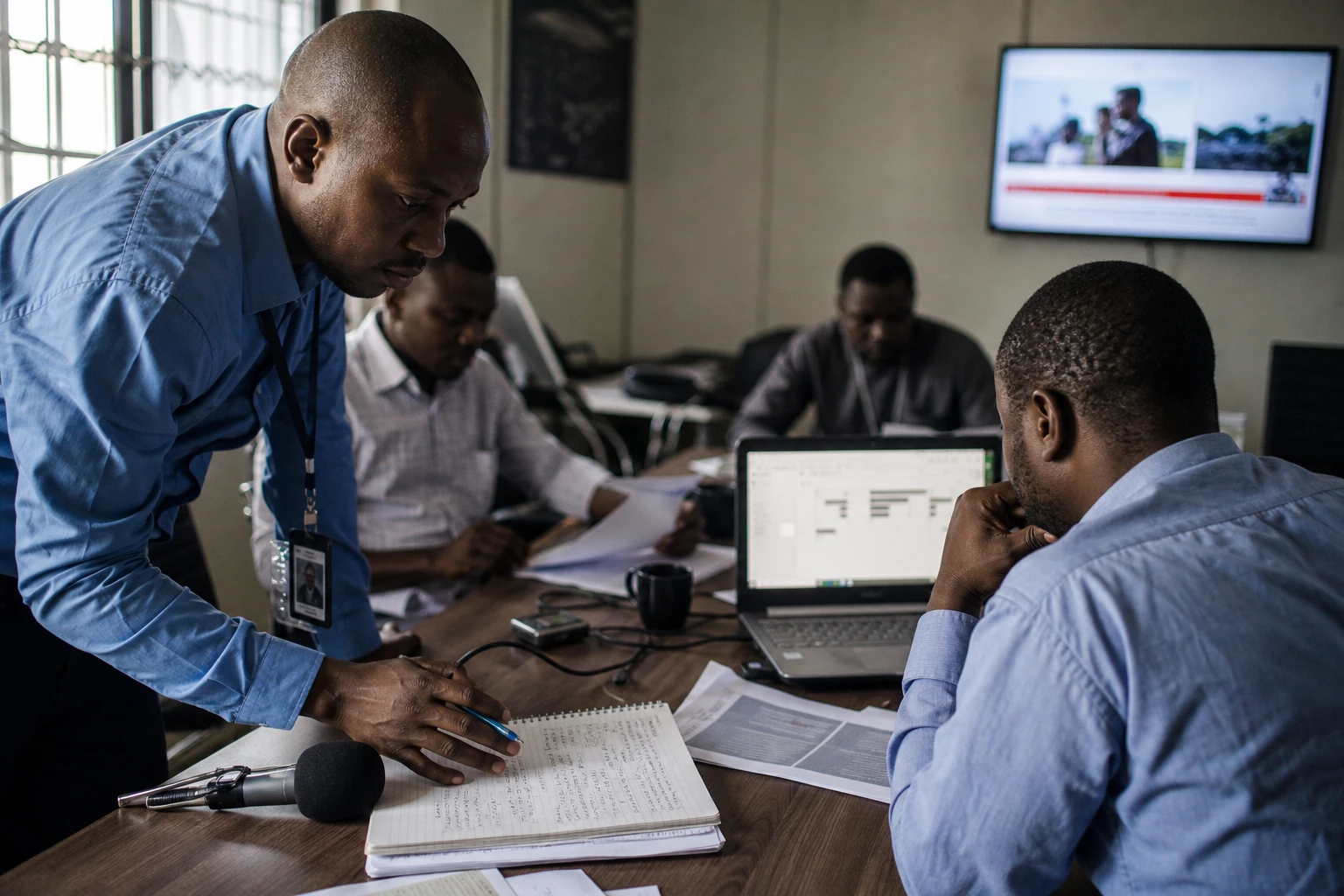
In Niamey, the battle over the narrative continues after the gunfire
In Niger, a mutiny is never just about an airstrip or a barracks. It quickly becomes a battle for legitimacy, in which every word matters as much as the weapons. After the events of 28–29 August in Niamey, the military authorities chose to frame the crisis in political and foreign terms, rather than as a simple disciplinary matter.
On 4 September 2026, the Council of Ministers, meeting in Niamey, said that an “attempt to destabilise” the country had been “instigated and sustained” by a network described as linked to Paris, with the support of “African lackeys”, without naming any country in particular. The statement came amid already high tensions since the military takeover in July 2023, following several days of measured official silence.
A Niger under pressure, between domestic refoundation and regional confrontation
Niger is governed by the National Council for the Safeguard of the Homeland, established after the coup of 26 July 2023 that ousted Mohamed Bazoum. Since then, Niamey has broken with its former French security partnership, moved closer to Russia and joined Mali and Burkina Faso in the Alliance of Sahel States, a political and security organisation presented as an alternative to ECOWAS, the Economic Community of West African States.
This regional realignment has a direct effect on how every crisis is interpreted in Niamey. In this context, the slightest crack in the military establishment becomes a strategic issue. The authorities also linked the affair to the security of Base 101, near Diori Hamani International Airport, a sensitive site that was already at the centre of the mutiny’s opening hours.
What established facts say about the 29 August mutiny
According to cross-checked reports by Reuters, the Nigerien News Agency and the Associated Press, mutinous soldiers attacked the airport and the presidential palace in Niamey during the night of 28–29 August, triggering hours of gunfire and explosions before loyalist forces regained the upper hand. Early casualty figures remain cautious, but the AP reported that soldiers had been killed or arrested, while a government source cited by Reuters referred to Nigerien fatalities without specifying a number.
On 3 September, the Nigerien News Agency reported that the defence and security forces had recovered large quantities of weapons, ammunition, vehicles and communications equipment after operations around Base 101. On the same day, other bodies close to the authorities, including the Consultative Council for the Refoundation and civil society organisations, issued statements in support of the government and the army, showing that the episode had also served as a test of political cohesion.
The sequence of events on 5 September therefore forms part of a precise chronology: an attempted mutiny on 28–29 August, a gradual restoration of control, then the government’s political and foreign framing of the affair on 4 September. This chronology matters because it shows that the authorities are seeking less to describe an isolated military incident than to build a case around a threat to national sovereignty.
Why Paris remains a convenient target, but is not the only issue
Since 2023, Nigerien authorities have often blamed internal crises on foreign manoeuvres, particularly French ones, sometimes referring to African countries accused of acting as intermediaries or accomplices. On 5 September 2026, this line was revived, but with a notable nuance: the statement no longer named a specific African state, whereas previous episodes had sometimes pointed to Chad or other neighbours.
This rhetorical choice serves several purposes. First, it refocuses the crisis on sovereignty, a highly mobilising theme in Niger since the break with several Western partners. Second, it avoids further straining relations with African capitals on which Niamey depends, directly or indirectly, for security, diplomacy and trade. Finally, it allows the authorities to turn an internal weakness into proof of national vigilance.
But this strategy has its limits. On the ground, the mutiny primarily exposed an internal vulnerability: contested military discipline, the circulation of weapons, coordination challenges among services and the political cost of a regime that must constantly prove it is in control. For Niamey’s population, the questions remain very practical: everyday security, the spread of rumours, continuity of public services and confidence in a transition that promises stability while remaining under pressure.
A Nigerien affair, but also a Sahelian one
This mutiny resonates far beyond Niamey because it touches on a challenge shared by the Sahel’s military regimes: the difficulty of turning a seizure of power into lasting order. In Mali, Burkina Faso and Niger, the authorities have made security sovereignty a central political marker. Yet internal threats remain strong, even as states must respond to jihadist insecurity, regional tensions and economic pressure.
The next question will therefore be twofold. On the one hand, Niger’s authorities will have to say whether they will bring prosecutions, publish names or refer a case to international justice, as the government raised on 4 September. On the other, they will have to show that the army remains a cohesive force, since every crack weakens the image of control built since 2023. Across the continent, the episode is a reminder that a military transition is judged not only by its slogans of sovereignty, but by its ability to prevent the state from turning against itself.
In this case, Niger is also seeking to impose its own vocabulary. It speaks of refoundation, state security and foreign aggression. Observers, meanwhile, mainly note that a new crisis has exposed the fragility of a government installed by force of arms, in a country where the political balance remains precarious and every alert in Niamey can quickly become a Sahelian issue.
Key facts
| Key fact | Verified information |
|---|---|
| Main location | Niamey, capital of Niger |
| Date of the mutiny | Night of 28–29 August 2026 |
| Site mentioned | Base 101 and the Diori Hamani International Airport area |
| Official account | The government spoke of an attempt to destabilise the country on 4 September 2026 |
| Regional context | Tensions within the framework of the Sahel and the Alliance of Sahel States |