Algeria
 Egypt
 Libya
 Morocco
 Sudan
 Tunisia
 Benin
 Burkina Faso
 Cabo Verde
 Côte d'Ivoire
 Ghana
 Guinea
 Guinea-Bissau
 Liberia
 Mali
 Mauritania
 Niger
 Nigeria
 Senegal
 Sierra Leone
 The Gambia
 Togo
 Cameroon
 Central African Republic
 Chad
 DR Congo
 Equatorial Guinea
 Gabon
 Republic of the Congo
 São Tomé and Príncipe
 Burundi
 Comoros
 Djibouti
 Eritrea
 Ethiopia
 Madagascar
 Malawi
 Mauritius
 Mozambique
 Rwanda
 Seychelles
 Somalia
 South Sudan
 Tanzania
 Uganda
 Angola
 Botswana
 Eswatini
 Lesotho
 Namibia
 South Africa
 Zambia
 Zimbabwe
In Nairobi, the debate goes beyond kiosks
In the streets of Nairobi, competition is not just about brands and prices. It also touches on the place Kenya wants to reserve for its informal economy: the street vendors, small workshops and microbusinesses that provide a livelihood for a large share of urban households. When the political leadership promises to “protect” these activities, it is speaking both to vulnerable entrepreneurs and to voters worried about the cost of living.
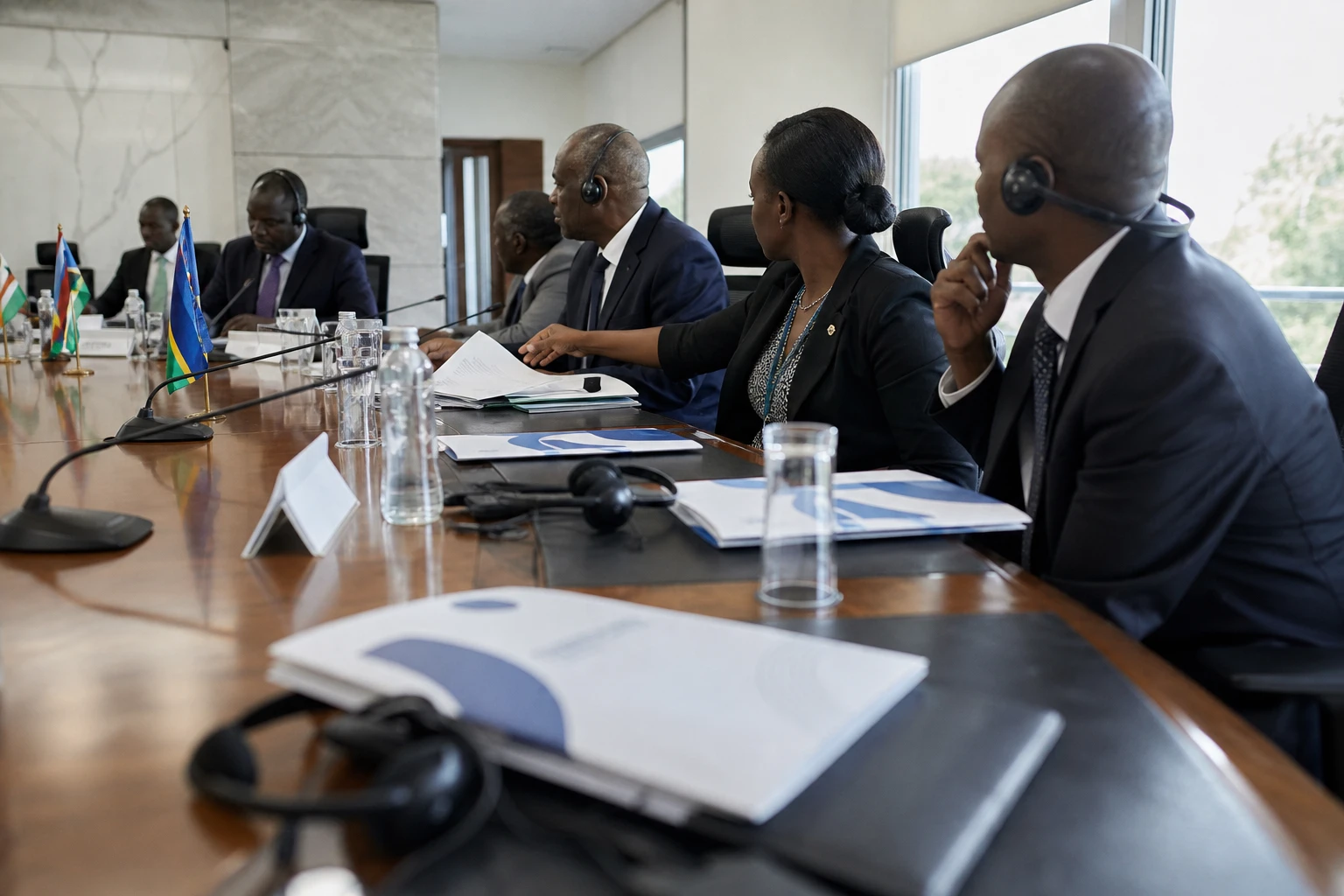
The issue is sensitive in a country that remains a commercial hub for East Africa, but is also a place of refuge for refugees, asylum seekers and regional migrants. In Kenya, this reality is reflected both in Nairobi’s streets and in the rules governing the movement of people within the East African Community (EAC), which comprises eight partner states and provides for the free movement, establishment and work of certain categories of citizens from the region.
What William Ruto announced
Kenyan President William Ruto has ordered foreign nationals to stop engaging in small-scale commercial activities, targeting hawking, street stalls and some forms of small-scale retail. He has also asked his government to fast-track a bill intended to bar non-Kenyans from certain sections of trade deemed reserved for nationals. Reports published in Nairobi say the measure is due to take effect on Monday 7 September 2026.
The head of state has put forward a two-pronged argument. On the one hand, he has reiterated that Kenya remains open to foreign capital. On the other, he has argued that foreign investors should create jobs and produce locally, rather than compete with small Kenyan traders in activities that require little capital. This distinction between investment and microbusiness lies at the heart of his argument.
The decision follows a meeting at State House in Nairobi with representatives of micro, small and medium-sized enterprises. Several Kenyan media outlets reported that grievances also concerned the tax burden and competition in the distribution of everyday consumer goods. In other words, the issue of foreigners is part of wider discontent among small operators, not a single isolated episode.
An existing legal framework
Kenya is not starting from scratch. National legislation already recognises refugees’ right to work and engage in commercial activity, subject to recognised qualifications and valid documents. The Class M permit is specifically intended for refugees wishing to take up employment or practise a trade, business or profession.
The latest data from the United Nations refugee agency show that, as at 31 July 2026, Kenya had 635,983 refugees and 229,015 asylum seekers. The total number of displaced people under protection therefore exceeded 864,000, with 118,387 refugees and asylum seekers registered in Nairobi alone. The refugee population remains concentrated in Garissa and Turkana counties, but a growing share now lives in urban areas.
These figures do not tell the whole story, but they illustrate the scale of the issue. In urban neighbourhoods, foreigners seen in hair salons, construction, motorcycle taxis or clothing sales do not all have the same status. Some are refugees authorised to work. Others are migrants from the region, benefiting from the EAC’s facilitated movement. Still others may be in an administrative grey area. The new presidential directive lumps these different realities together, creating a risk of indiscriminate treatment.
Between social protection and xenophobic tensions
At its core, Nairobi’s message raises a familiar question in East Africa: who can sell what, and under what conditions? EAC treaties uphold the free movement and establishment of citizens of the region, but this freedom does not remove national rules on registration, permits and taxation. In practice, governments are constantly balancing regional integration against protection for small local operators.
For Kenyans most exposed to inflation, unemployment and falling purchasing power, the promise to reserve certain trades for nationals may seem politically expedient. For foreign traders already established in the country, it creates uncertainty over their licences, stock and right to remain. For the authorities, it offers a visible response to genuine social pressure, but does not in itself address the root causes of small businesses’ vulnerability: the cost of credit, taxes, rents, import charges and weak domestic demand.
The episode also has regional implications. Following the July controversy over a Burundian vendor arrested in Nairobi, Kenya’s foreign ministry had already sought to reassure East African nationals. This time, the tone is more direct. It could therefore fuel concern among Burundians, Ugandans, Tanzanians, Congolese and Ethiopians living in the Kenyan capital, even when their activities are legally authorised.
What this decision says about the region
Kenya often presents itself as an economic hub for East Africa. It attracts capital, regional headquarters, services and a share of the region’s labour mobility. But this regional role has a downside: it makes tensions over the place of foreigners in the economy’s lowest-paid sectors more visible. In a region where movement is increasing, the line between integration and closure remains unstable.
The developments in Kenya also resonate beyond the EAC. They come at a time when several African countries are tightening controls on foreign commercial activities, each in its own way. The challenge for Nairobi and other capitals will be to determine whether protecting local businesses means broadly excluding non-nationals or introducing more nuanced regulation that can distinguish between refugees, legally registered regional workers and unauthorised operators. The credibility of Kenya’s economic and political policy in the coming months will depend in large part on getting that distinction right.