Algeria
 Egypt
 Libya
 Morocco
 Sudan
 Tunisia
 Benin
 Burkina Faso
 Cabo Verde
 Côte d'Ivoire
 Ghana
 Guinea
 Guinea-Bissau
 Liberia
 Mali
 Mauritania
 Niger
 Nigeria
 Senegal
 Sierra Leone
 The Gambia
 Togo
 Cameroon
 Central African Republic
 Chad
 DR Congo
 Equatorial Guinea
 Gabon
 Republic of the Congo
 São Tomé and Príncipe
 Burundi
 Comoros
 Djibouti
 Eritrea
 Ethiopia
 Kenya
 Madagascar
 Malawi
 Mauritius
 Mozambique
 Rwanda
 Seychelles
 South Sudan
 Tanzania
 Uganda
 Angola
 Botswana
 Eswatini
 Lesotho
 Namibia
 South Africa
 Zambia
 Zimbabwe
A vulnerable maritime corridor once again
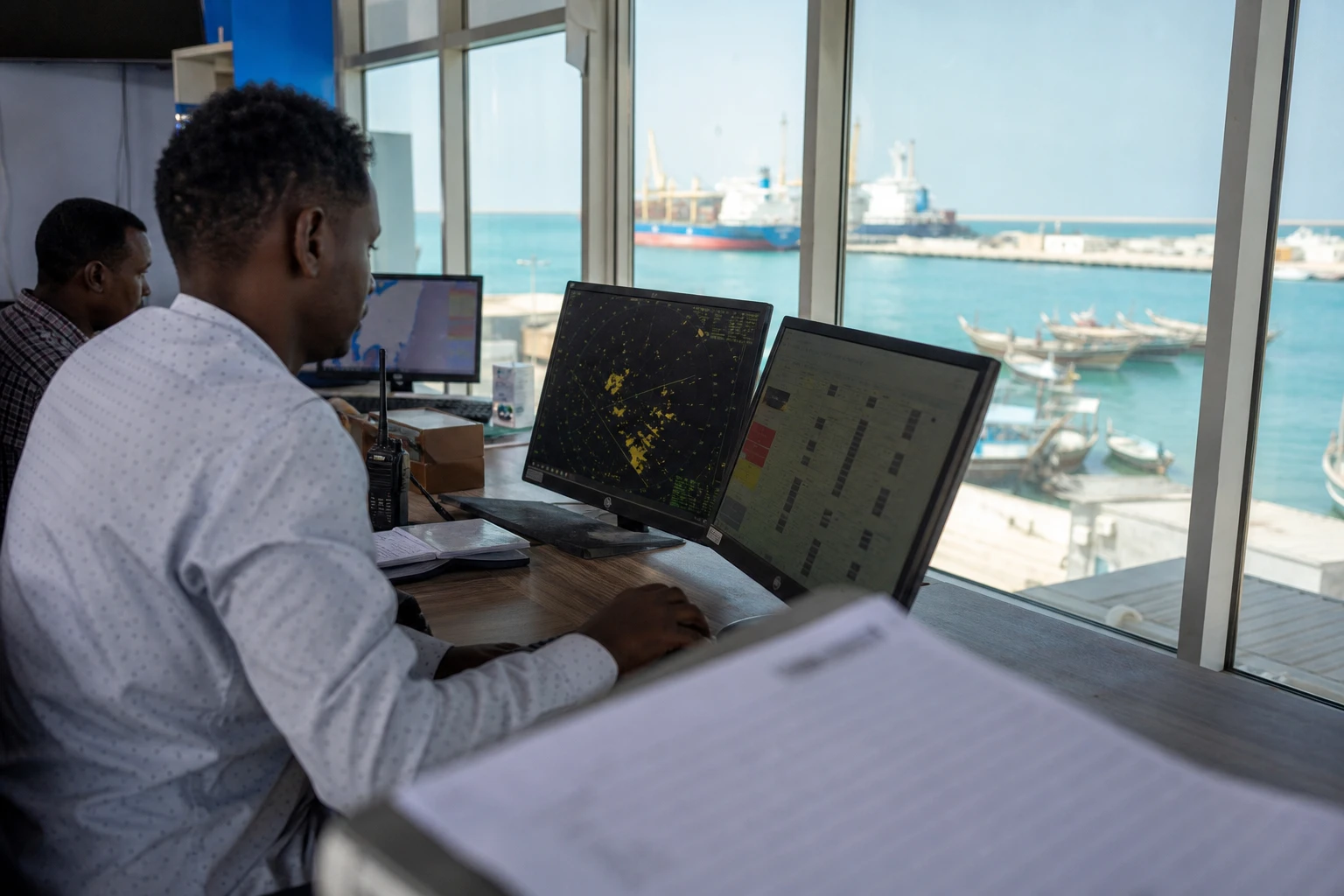
The Gulf of Aden is more than a commercial corridor. It is also a barometer of security in the Horn of Africa. When attacks resume off Somalia, crews, insurers, ports and supply chains immediately reassess their routes, costs and risks.
Since spring 2026, several incidents have put Somali piracy back at the centre of maritime alerts. In early July, the secretary-general of the International Maritime Organization said that 44 seafarers were being held by pirates and armed robbers in Somali waters, while calling for a coordinated response. At the same time, the European naval mission Atalanta confirmed several cases of piracy off northern Somalia and said it was still tracking four active cases at the end of July.
In Puntland, maritime security remains a political issue
In Somalia, the issue is not confined to the sea. It also affects Puntland, in the country’s north-east, where criminal networks exploit a vast territory, uneven state presence and a fragile coastal economy. Mogadishu has a firmer grip on central institutions, but the northern coastline remains exposed to trafficking and mobile armed groups.
This vulnerability is part of a broader regional context. The fight against piracy relies in particular on the Djibouti Code of Conduct and its Jeddah Amendment, a framework bringing together 22 coastal and island states in the western Indian Ocean and the Gulf of Aden to strengthen maritime co-operation. Somalia remains a central player because its waters and coastline serve as a starting point for the threat, but also because its domestic stability shapes the regional response.
The facts: attacks, hostage-taking and a change in tactics
Data published by the IMB show that 38 incidents of piracy and armed robbery were recorded worldwide in the first half of 2026, a historically low level. But Somalia still accounts for a disproportionate share of the human toll: 94% of seafarers taken hostage during the period were captured by Somali pirates, according to the same report.
Recent attacks point to a resurgence in capability. Atalanta said on 3 July that a bulk carrier, the Golden Arsenal, had been attacked north-east of Bosaso, then confirmed on 17 July the seizure of the tanker Asana in the Gulf of Aden. The AP and Reuters reported that the ship had been boarded by armed men and taken towards Somali waters, reviving fears of an organised resurgence.
The key point is less the raw number of incidents than their operational sophistication. Armed groups are no longer limiting themselves to small coastal boats. Evidence gathered by European maritime authorities points to a gradual shift towards larger targets, with the use of speedboats, captured vessels as support craft and greater mobility far from shore. In other words, piracy is once again becoming a logistical system, not just opportunistic theft.
Why the threat is rising again now
Several factors are converging. First, economic and political fragility in northern Somalia leaves some coastal groups with few alternatives. Second, maritime traffic in the area has become denser again, widening the choice of targets. Finally, the redeployment of naval assets to other regional hotspots, notably the Red Sea and the Strait of Hormuz, has created a tactical lull. This is not a complete vacuum, but an area under less surveillance, and therefore more profitable for armed groups.
The impact varies between actors. For shipowners, it means higher security, diversion and insurance costs. For seafarers, it increases the risk of abduction and prolonged isolation. For Somalia, it also threatens the image of a country seeking to strengthen its maritime institutions and show that it can secure its waters. And for Puntland, the pressure is twofold: it must contain criminal networks exploiting the coast while ensuring the issue is not reduced to a simple imported security problem.
The phenomenon is also driven by the economic value of the ransoms. Piracy remains a source of income in some coastal areas where formal employment is scarce and maritime trade routes are nearby, visible and exploitable. This does not justify it. But it helps explain why networks become active again as soon as surveillance declines and trade routes remain accessible.
An alert for Somalia, but a pan-African issue
The impact extends far beyond Somalia. The Gulf of Aden links East Africa, the Arabian Peninsula and the western Indian Ocean. Any surge in piracy there affects the region’s ports, supply lines, energy exports and traffic towards the Red Sea. It is therefore an issue of maritime sovereignty for littoral states, but also one of economic security for the continent as a whole.
The next point to watch is how long this resurgence lasts. If attacks multiply from established coastal bases, the region could face a longer cycle than the isolated incidents seen early in the year. Somali authorities, Atalanta mission partners, the IMO and states involved in regional mechanisms will then have to balance naval presence, coastal intelligence, law enforcement and support for local forces. That will determine whether this remains a temporary alert or marks a new phase of structured piracy off Somalia.