Algeria
 Egypt
 Libya
 Morocco
 Sudan
 Tunisia
 Benin
 Burkina Faso
 Cabo Verde
 Côte d'Ivoire
 Ghana
 Guinea
 Guinea-Bissau
 Liberia
 Mali
 Mauritania
 Niger
 Nigeria
 Senegal
 Sierra Leone
 The Gambia
 Togo
 Cameroon
 Central African Republic
 Chad
 DR Congo
 Equatorial Guinea
 Gabon
 Republic of the Congo
 São Tomé and Príncipe
 Burundi
 Comoros
 Djibouti
 Eritrea
 Ethiopia
 Kenya
 Madagascar
 Malawi
 Mauritius
 Mozambique
 Rwanda
 Seychelles
 Somalia
 South Sudan
 Tanzania
 Uganda
 Angola
 Botswana
 Eswatini
 Lesotho
 Namibia
 Zambia
 Zimbabwe
Remote farms, a much larger market
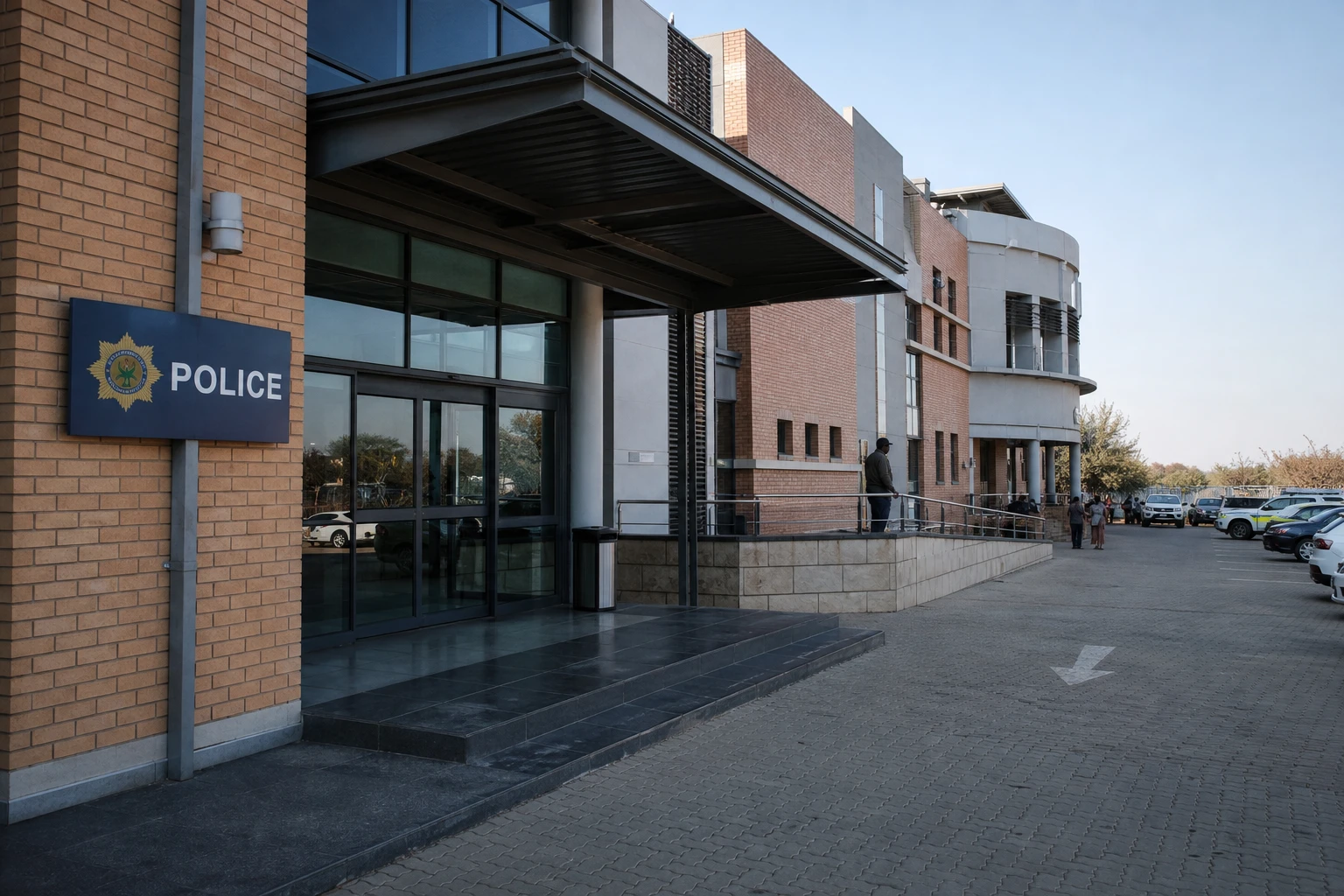
In South Africa’s North West province, a farm can be used to grow maize, raise livestock or, more rarely, conceal an industrial criminal operation. That is what law enforcement officers uncovered again at Klipvoorstad, north of Johannesburg, where a clandestine methamphetamine laboratory was dismantled following a tip-off from local residents. A 62-year-old man was arrested, while three others fled.
The details matter. This was not an improvised workshop, but a structured production chain, with chemicals, specialised equipment and on-site logistics. In South Africa, a member of the Southern African Development Community (SADC), such a discovery no longer points to an isolated incident. It is part of a series of operations that show traffickers moving upmarket and networks becoming better able to adapt.
Third seizure in a few months
According to the South African police, the operation took place overnight from Wednesday 2 to Thursday 3 September 2026, at a property about 200 kilometres north of Johannesburg. Officers seized equipment used to manufacture the synthetic drug and arrested the property’s owner. The investigation is now seeking to identify the three men who fled when the police arrived.
This case is not isolated. In August 2026, another crystal meth lab was discovered in Limpopo, near the Zimbabwean border. Police then announced a seizure estimated at 600 million rand, with five arrests, including two Mexican nationals. A few months earlier, in May 2026, another major operation had targeted a clandestine site in North West province. South African authorities are therefore describing a succession of raids, not a one-off episode.
The recurrence is alarming to security services because it suggests the existence of several footholds. First, the South African countryside offers places to hide. Second, the networks appear to be taking advantage of existing regional routes between southern Africa, Mozambique, Zimbabwe and South Africa’s major urban centres. Finally, the presence of foreign nationals in some cases fuels the theory that these are transnational circuits rather than strictly local trafficking operations.
Transnational networks, but also a strong domestic market
Organised crime specialists have been following this issue for several years. The Global Initiative Against Transnational Organized Crime describes southern Africa as an important hub for illicit markets, where drugs, chemical precursors and distribution networks circulate. In its recent work, the organisation points to the expansion of supply chains involving, in particular, Latin American actors, alongside local intermediaries.
But a strictly external perspective would be incomplete. Local demand plays a central role. Methamphetamine, often called “tik” in South Africa, remains a widely used drug in some urban and peri-urban areas. This reality fuels a profitable domestic market, with quick returns and relatively low risks for groups able to move production sites. The country is therefore not merely a transit corridor; it is also a place of consumption, distribution and, increasingly, manufacture.
For residents of the areas concerned, the impact is tangible. Remote farms can become dangerous places, with toxic substances, suspicious comings and goings, and tensions with neighbours. For the authorities, however, each discovery also provides an opportunity to trace supply chains, seize costly equipment and document links between local crime and international flows. The South African police response therefore depends as much on community intelligence as on cooperation between specialist units.
What this says about southern Africa today
The Klipvoorstad case goes beyond South Africa alone. Across the region, trafficking is being reshaped around a few constants: porous borders, opportunistic corruption, maritime routes and criminal groups’ ability to move their operations quickly. Southern Africa is also a region where licit and illicit markets often intersect along the same logistical corridors, complicating the work of customs, police and organised crime units.
The continental implications are clear. If South Africa continues to feature in cases involving methamphetamine production, other southern African countries will need to strengthen surveillance of chemical routes, remote farms and secondary ports. The issue also concerns the African Union because it touches on human security, public health and judicial cooperation. A network manufacturing drugs in the South African countryside can supply markets in Johannesburg, Harare, Maputo or further afield.
The next steps will play out on two fronts. On the one hand, South African services must maintain pressure on hidden laboratories. On the other, SADC and neighbouring states must improve their ability to harmonise controls on chemical precursors, road routes and financial flows. In a regional space already crossed by other trafficking operations, every dismantled lab makes one thing clear: networks adapt quickly, but states are also starting to read the map more effectively.