Algeria
 Egypt
 Libya
 Morocco
 Sudan
 Tunisia
 Benin
 Burkina Faso
 Cabo Verde
 Côte d'Ivoire
 Ghana
 Guinea
 Guinea-Bissau
 Liberia
 Mali
 Mauritania
 Niger
 Nigeria
 Senegal
 Sierra Leone
 Togo
 Cameroon
 Central African Republic
 Chad
 DR Congo
 Equatorial Guinea
 Gabon
 Republic of the Congo
 São Tomé and Príncipe
 Burundi
 Comoros
 Djibouti
 Eritrea
 Ethiopia
 Kenya
 Madagascar
 Malawi
 Mauritius
 Mozambique
 Rwanda
 Seychelles
 Somalia
 South Sudan
 Tanzania
 Uganda
 Angola
 Botswana
 Eswatini
 Lesotho
 Namibia
 South Africa
 Zambia
 Zimbabwe
Two West African capitals seek a relationship with practical value, not just symbolism
When two West African countries engage at the highest level, the question is not merely diplomatic. It is also highly practical: how can they increase the flow of goods, energy, services and trust between economies that still know too little about each other? In Conakry, the Republic of Guinea and The Gambia have chosen to embark on this work with a more structured approach.
This rapprochement is taking place within an established regional framework. Guinea and The Gambia are both members of ECOWAS, the Economic Community of West African States, which has 12 member states since Burkina Faso, Mali and Niger withdrew in January 2025. The organisation’s mandate is to promote economic integration, the free movement of people and sectoral cooperation in West Africa.
In Conakry, talks aimed at going beyond protocol
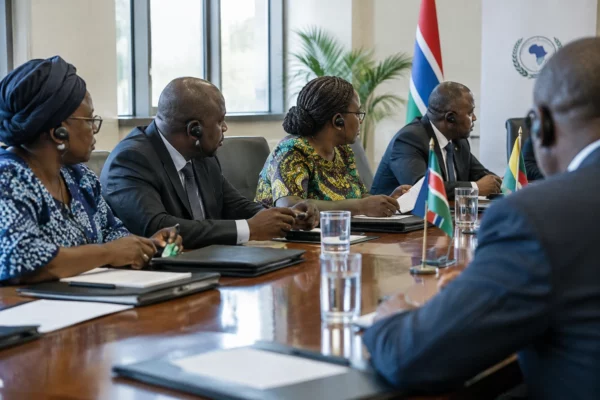
On Wednesday 2 September 2026, Gambian President Adama Barrow made an official visit to Conakry, where he was received by his Guinean counterpart, Mamadi Doumbouya. A joint communiqué signed after the talks affirmed the two sides’ determination to give their relations greater substance.
The discussions covered bilateral relations as well as current subregional, regional and international affairs. The two heads of state identified several priority areas: defence, transport, trade, mining, energy and agriculture, as well as tourism, research, technology, youth, sport, fisheries, higher education and culture. This wide-ranging agenda reflects a practical approach. The two countries do not want to limit themselves to gestures of friendship. They are seeking operational links.
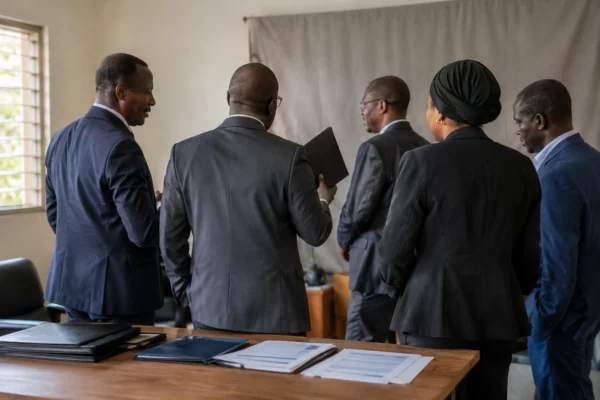
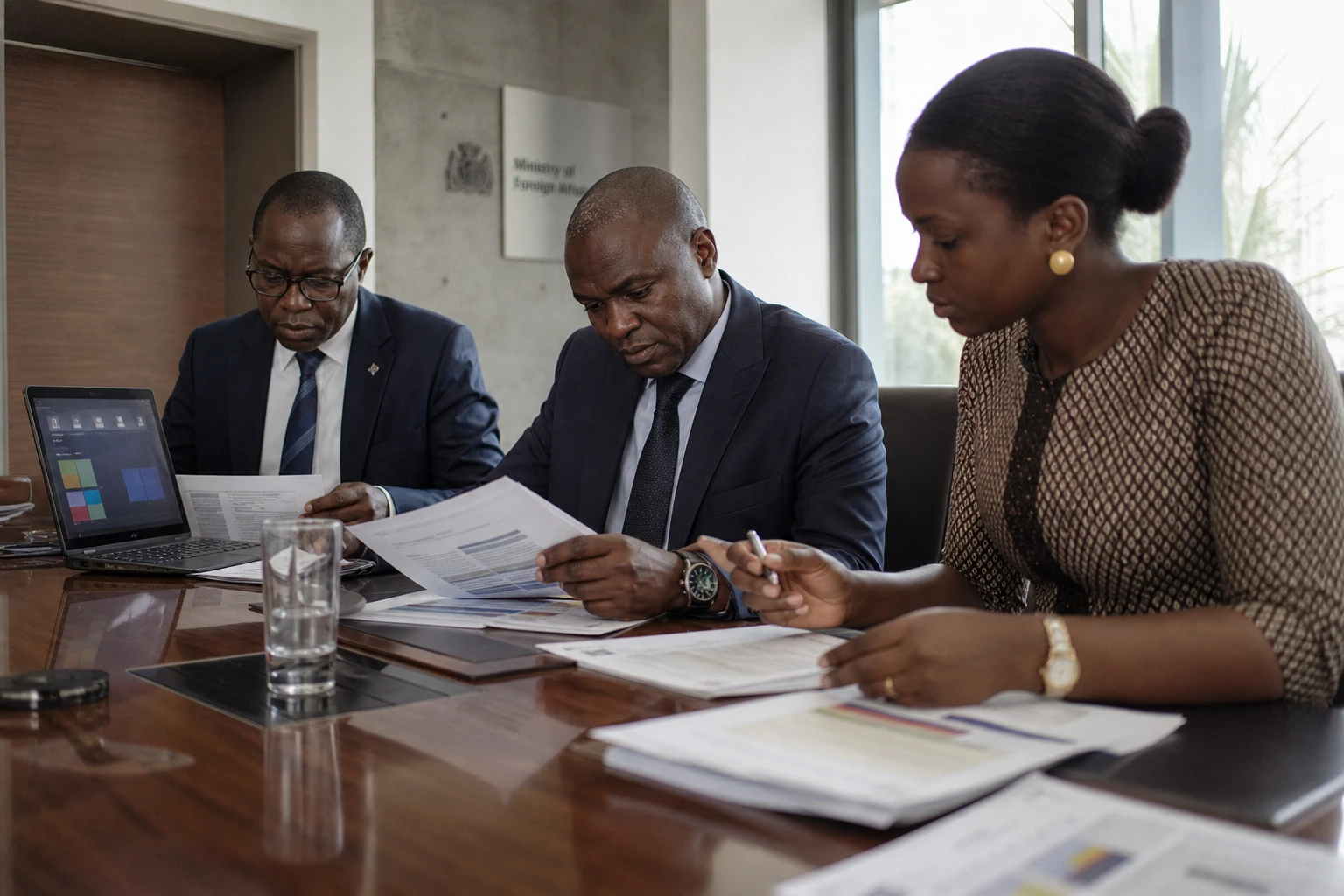
The foreign ministers were instructed to establish a permanent consultation framework and follow-up mechanisms. The stated goal is clear: to open diplomatic missions and ensure that decisions taken at the summit are effectively implemented. In short, the two capitals want to prevent dialogue from remaining at the level of good intentions.
This visit is not an isolated event. It follows other recent diplomatic engagements, from Bamako to Bissau and Banjul to other West African capitals, at a time when the region is seeking to stabilise its exchanges and alliances. It also continues the engagement begun when Adama Barrow attended Mamadi Doumbouya’s inauguration in Conakry on 17 January 2026.
Trade remains limited, but the potential is real
The notable feature here is the contrast between the political rhetoric and commercial reality. Trade between Guinea and The Gambia remains modest. The Observatory of Economic Complexity puts its value at just over $1.8 million in 2024. That figure is very low given the potential of the two markets and their regional geographical proximity.
For The Gambia, a small coastal state whose foreign trade remains structurally unbalanced, any diversification of partners can make a difference. Global trade data also show an economy heavily reliant on imports, with a narrow export base. Guinea faces a different challenge: it has broader mining, energy and agricultural assets, but is still seeking to turn more of its resources into value chains, jobs and sustainable revenue.
In this context, a Guinea–The Gambia partnership could serve several purposes at once. First, it could facilitate logistical and commercial complementarities across ECOWAS, where the free movement of goods and people remains a major goal but has yet to be achieved consistently. Second, it could support more targeted exchanges in energy, a sensitive area for Banjul, which remains exposed to weaknesses in regional networks, particularly through interconnections and West African projects. Finally, it could help build structured ties between government departments, businesses and transport operators, rather than leaving bilateral contacts dependent solely on presidential visits.
The social dimension is also significant. The authorities have referred to the peoples of the two countries. This is not incidental. In a region where families, languages, religious networks and trading routes have long crossed borders, diplomatic ties can support everyday movement. They can also simplify procedures for business operators, students, researchers and cultural practitioners.
A West African perspective on the rapprochement
The signal sent, then, goes beyond the Banjul–Conakry partnership. It is a reminder that integration in West Africa is not built solely through major treaties. It also takes shape through bilateral agreements, trade corridors, energy cooperation and close-range diplomacy. In an ECOWAS weakened by recent political realignments, this kind of initiative retains both political and practical value.
For Guinea and The Gambia, the challenge now is to turn the joint communiqué into a clear agenda: open or strengthen diplomatic representations, set work priorities, launch technical initiatives and regularly review the results. Without this follow-up, the partnership will remain a gesture of principle. With it, it could become a modest but useful lever for West African cooperation.