Algeria
 Egypt
 Libya
 Morocco
 Sudan
 Tunisia
 Benin
 Burkina Faso
 Cabo Verde
 Côte d'Ivoire
 Ghana
 Guinea
 Guinea-Bissau
 Liberia
 Mali
 Mauritania
 Niger
 Nigeria
 Senegal
 Sierra Leone
 The Gambia
 Togo
 Cameroon
 Central African Republic
 Chad
 DR Congo
 Equatorial Guinea
 Gabon
 Republic of the Congo
 São Tomé and Príncipe
 Burundi
 Comoros
 Djibouti
 Eritrea
 Ethiopia
 Kenya
 Madagascar
 Malawi
 Mauritius
 Mozambique
 Rwanda
 Seychelles
 Somalia
 South Sudan
 Uganda
 Angola
 Botswana
 Eswatini
 Lesotho
 Namibia
 South Africa
 Zambia
 Zimbabwe
Funding remains fragile, but the project sends an important signal for Tanzania
In Dodoma, mining officials keep repeating the same word: turn the country’s subsoil into jobs, revenue and industry. Graphite is at the heart of this equation. This black mineral, unremarkable to the eye, has become strategic for batteries and industrial uses linked to the energy transition. In Tanzania, it is now attracting investors and development finance institutions alike.
Against this backdrop, Epanko holds a special place. The project is led by EcoGraf, an Australian company developing a portfolio of graphite assets in Tanzania. In February 2026, the European Investment Bank announced a cooperation agreement with EcoGraf, providing up to €2 million in technical assistance to bring the project closer to being “investment-ready”. For the European Union, the issue is also one of supply chains for critical raw materials. For Tanzania, it is a race against time involving funding and local value addition.
What EcoGraf is seeking, and what the Tanzanian state wants to avoid
On 3 September 2026, EcoGraf launched a share purchase plan targeting about A$2 million. According to information released by the company, the capital raising is intended to support preparations for financing the Epanko project, alongside other resources already announced, including the possibility of additional backing from institutional investors. The company also says it is working on offtake agreements, or commitments to purchase in the future, which are essential to reassuring financiers.
The funding requirement is real. EcoGraf puts the construction cost for the first phase at about US$181.2 million, with an initial capacity of 73,000 tonnes of graphite concentrate a year for 15 years. The company is then aiming to scale up. It has also mandated KfW IPEX-Bank to arrange debt of up to US$105 million. This structure shows a project still dependent on several layers of financing, from private capital and concessional debt to European public support.
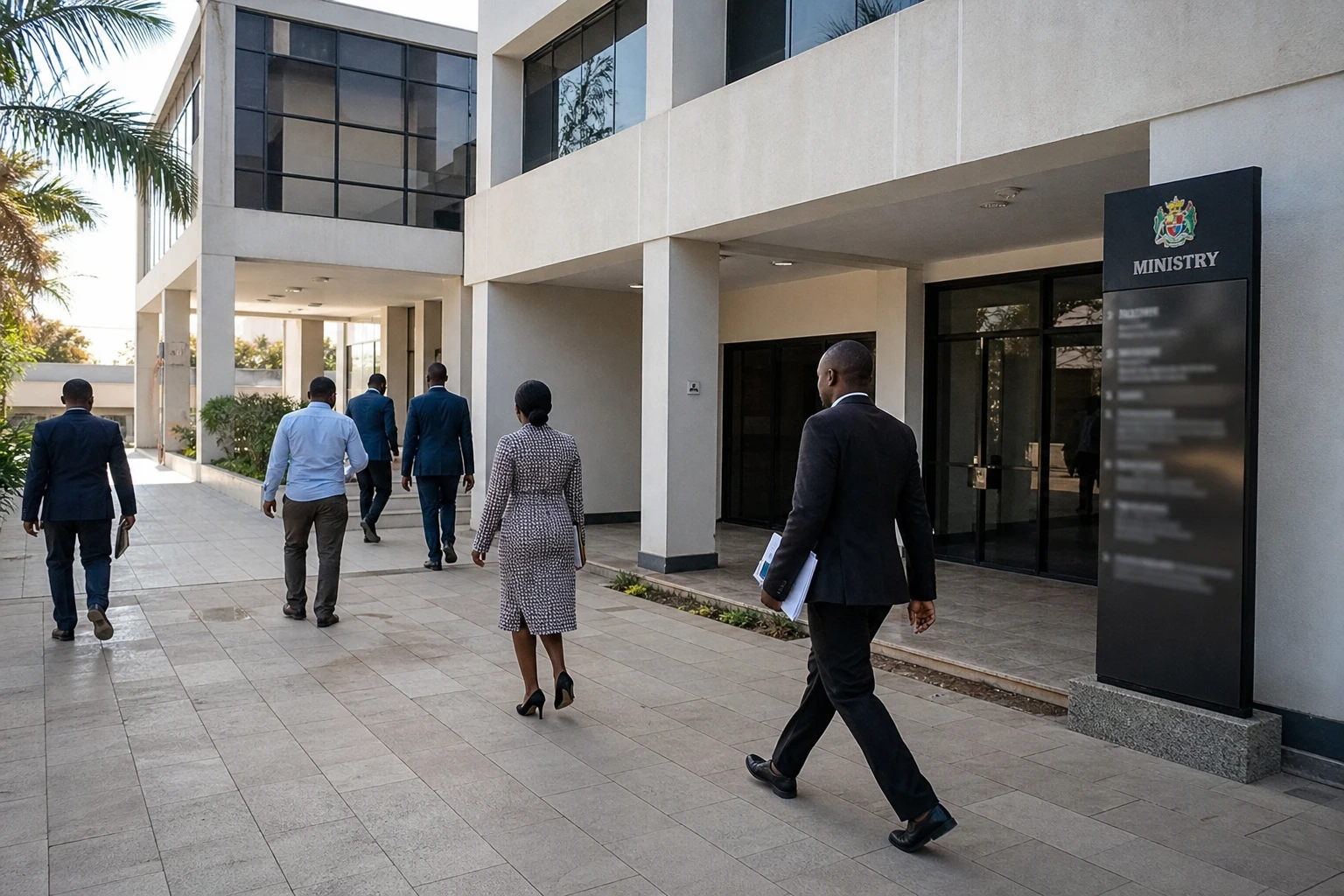
On the Tanzanian side, the government wants to prevent major mining projects from remaining on paper for too long. The Ministry of Minerals confirmed in March 2025 that EcoGraf had been granted a Special Mining Licence for Epanko. The same official statement presents the project as part of the national strategy to move the sector up the value chain. The government speaks of revenue, jobs and local processing of the ore before export.
Why Epanko matters beyond Morogoro
Epanko concerns more than just Mahenge district, in the Morogoro region. The project is part of a broader picture, in which Tanzania is advancing several graphite projects at once: Mahenge, Nachu, Chilalo, Bunyu and Lindi Jumbo. The Ministry of Minerals describes the country as holding more than 18 million tonnes of graphite reserves, with deposits concentrated mainly in Lindi, Morogoro and Tanga. This diversity gives Tanzania a rare advantage in East Africa: multiple projects, multiple operators and the ability to engage with several markets at once.
The economic implications are direct. Graphite is used in electric vehicle batteries, as well as in some industrial processes. For financiers, the question is no longer just geological. It concerns infrastructure, energy, water, roads and the stability of contracts. For local communities, the stakes are more tangible still: access to jobs, subcontracting opportunities, land compensation, the movement of goods and pressure on public services. This is often where the difference lies between a major project announced and a mine that genuinely benefits its region.
The region is watching the project closely. East Africa is seeking to have a greater say in mining value chains, while the East African Community, or EAC, aims to strengthen economic integration among its members. In this context, Tanzania is pursuing a clear line: attract capital, but retain more value locally. This approach echoes the message delivered in Dodoma on local processing of minerals and economic sovereignty.
A test of Dodoma’s mining credentials
For EcoGraf, the decisive step remains closing the financing. For Tanzania, the challenge is broader: turning the appeal of critical minerals into measurable industrialisation. The country already has a strong case to make, with its graphite deposits and the growing number of licences across several sites. But the credibility of a mining hub is built less on announcements than on mines entering production, jobs created and exports that genuinely capture more value.
What happens next will therefore depend on three things. First, EcoGraf’s ability to complete its financing package without delaying Epanko. Second, the continuity of Tanzanian public support, as the government seeks to make graphite an industrial lever rather than a mere raw export. Finally, the appetite of international buyers, especially in Europe and Asia, for graphite presented as more sustainable and better traced. It is at this intersection that a significant part of the value of Africa’s critical minerals is now at stake.