Algeria
 Egypt
 Libya
 Morocco
 Sudan
 Tunisia
 Benin
 Burkina Faso
 Cabo Verde
 Côte d'Ivoire
 Ghana
 Guinea
 Guinea-Bissau
 Liberia
 Mali
 Mauritania
 Niger
 Nigeria
 Senegal
 Sierra Leone
 The Gambia
 Togo
 Central African Republic
 Chad
 DR Congo
 Equatorial Guinea
 Gabon
 Republic of the Congo
 São Tomé and Príncipe
 Burundi
 Comoros
 Djibouti
 Eritrea
 Ethiopia
 Kenya
 Madagascar
 Malawi
 Mauritius
 Mozambique
 Rwanda
 Seychelles
 Somalia
 South Sudan
 Tanzania
 Uganda
 Angola
 Botswana
 Eswatini
 Lesotho
 Namibia
 South Africa
 Zambia
 Zimbabwe
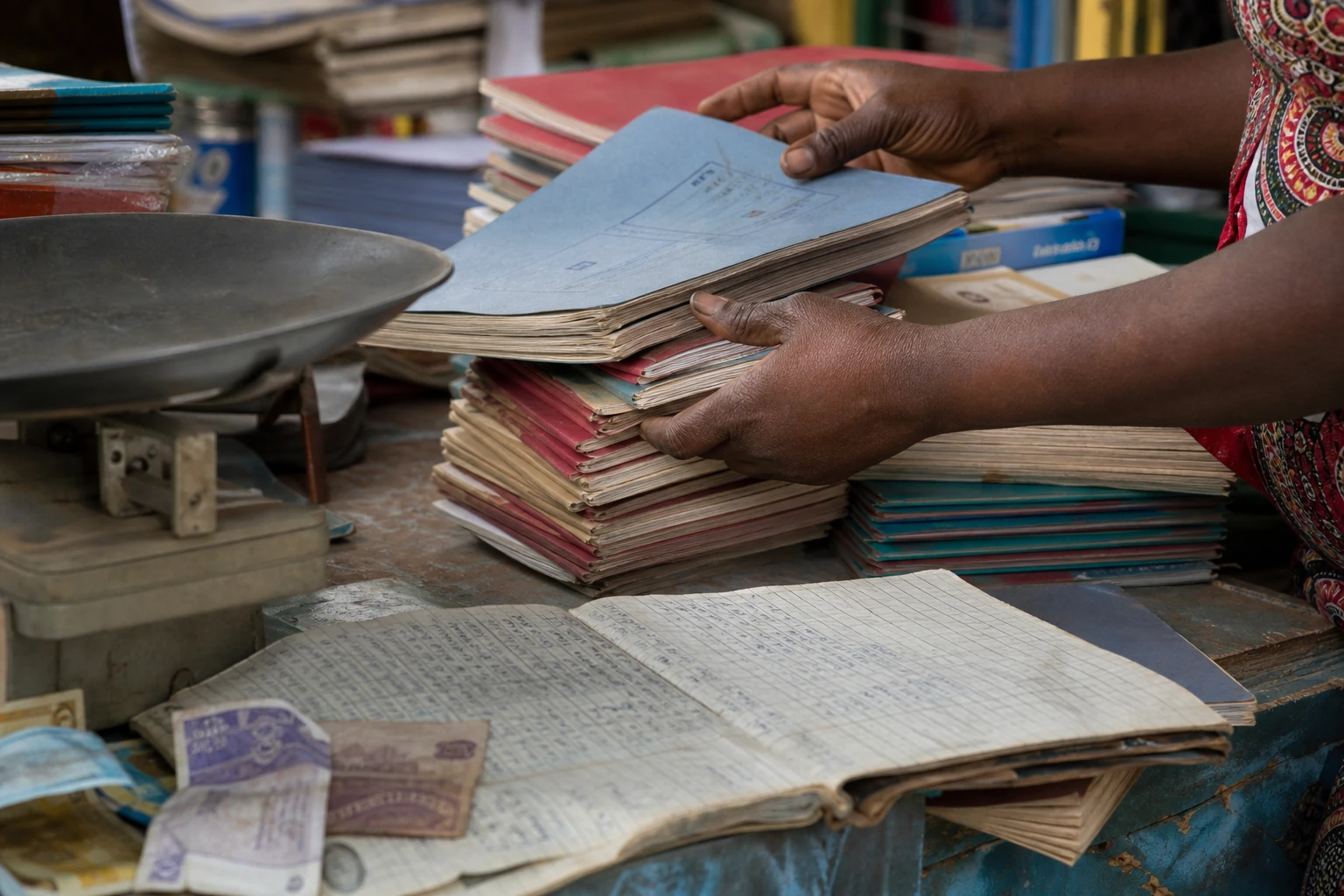
When the start of term is also decided at the market
In several African capitals, the start of the school year is not just a matter of the academic calendar. It has become a test of purchasing power. Between exercise books, uniforms, textbooks and “additional fees”, the real cost of schooling weighs on families, who often have to choose between education, transport, healthcare and food. The debate is therefore not only about prices. It concerns access to education itself, especially when textbooks are hard to come by or when public schooling is officially free but not always so in practice.
The issue extends beyond any one country. Across Africa, supply chains for school materials remain heavily dependent on imports, exposing households to freight costs, currency fluctuations and intermediaries’ margins. For 2024, a market study compiled from trade data estimates African imports of stationery at around 359,000 tonnes, worth $779 million. Nigeria accounts for a particularly large share, but other markets, including Cameroon, remain highly vulnerable to these price pressures.
School expenses go beyond buying exercise books
In Cameroon, the issue is longstanding but remains pressing. The country’s third household survey showed that average annual education spending per pupil reached 47,490 CFA francs in 2006/2007, or nearly 4.7% of households’ annual expenditure. The same document notes that the main reason 6- to 18-year-olds did not attend school was the high cost of access, cited by 34.7% of respondents. More recently, a national statistical study reported average annual education spending of about 75,000 CFA francs per child, a level that remains a heavy burden for many households.
This gap between average figures and families’ lived experience is central. National statistics provide an overview, but conceal disparities between urban and rural areas, salaried and informal-sector households, and public and private schools. In a country where poverty is more prevalent in rural areas and the northern regions, the same basket of school supplies does not weigh equally on households in Douala, Yaoundé, Maroua or Garoua. The cost of schooling thus becomes a marker of territorial as well as social inequality.
Cameroon’s legal framework nevertheless sets out an ambition to provide free primary education in public schools. The presidential text published on the presidency’s official website states that the government guarantees free essential textbooks in public primary education, with priority given to priority education areas. But the supply chain remains fragile, leaving a gap between principle and effective provision. When books are imported, delays, logistical costs and resale practices add to parents’ budgets.
The problem is not limited to primary education. In several countries, families also pay for access to private schools, tutors, transport or informal payments to get through certain doors in the public system. Here too, the issue is not merely financial. It raises questions about governments’ ability to make education genuinely accessible, especially when incomes from the informal sector, which account for the majority of income in many African households, remain irregular.
Missing textbooks, parallel markets and distribution governance
In Guinea, the debate is focused more on curriculum textbooks. These are supposed to be free, but distribution channels remain disrupted. Local press reports and statements by education-sector stakeholders describe a parallel market in which textbooks are being sold, sometimes despite bans. This creates a twofold problem: pupils lack the materials they are supposed to have, while the official supply chain loses credibility.
The issue also affects the urban middle class, often seen as better protected but still hit by price rises and shortages. When curriculum textbooks are unavailable in districts and sub-prefectures, the gap between centres and outlying areas widens. The consequence is simple: teachers move ahead, but not all pupils have the same tools to keep up. In the long term, the quality of learning is undermined.
In Morocco, the start of the school year puts the distribution of textbooks and supplies under pressure every year. Parliamentary questions and professional warnings in 2025 and 2026 pointed to occasional shortages, informal sales and margins deemed insufficient for booksellers. The Moroccan parliament relayed complaints about books being unavailable for certain year groups, while industry professionals called for better organisation of the distribution system. Here, the problem is not just the final price. It is also linked to regulation of a market where established booksellers, informal resellers and publishers operate side by side.
In Madagascar, the Ministry of National Education confirmed the importance of the 2025-2026 school year and support programmes, while the World Bank reported that textbook distribution for the early grades had been expanded. But a report by the institution also highlighted the persistently limited access to textbooks, with only some schools having the materials they need. Here too, the challenge is not just printing books. They must be transported, distributed and replenished on time.
A continent-wide challenge for public education
What links Cameroon, Guinea, Morocco and Madagascar is not a single shared reality in their schools. It is the same fragility in the supply chain. Imported supplies, dependence on a handful of wholesalers, insufficient stocks, disputed margins, parallel channels and squeezed household budgets: the start of the school year brings all these weaknesses into focus. In practice, school costs become a silent tax on households, especially when wages stagnate and the informal sector accounts for a large share of employment.
At continental level, the issue also points to regional education and industrialisation policies. The African Continental Free Trade Area, still taking shape, will only have real meaning for families if it also reduces the cost of everyday goods, including school supplies. For now, the urgent needs are tangible: ensure textbooks are available, prices are transparent and distribution channels are accountable. That is where the simplest and most decisive promise of public education is tested year after year: enabling every child to start at the same time as the others.