Algeria
 Egypt
 Libya
 Morocco
 Sudan
 Tunisia
 Benin
 Burkina Faso
 Cabo Verde
 Côte d'Ivoire
 Ghana
 Guinea
 Guinea-Bissau
 Liberia
 Mali
 Mauritania
 Niger
 Nigeria
 Senegal
 Sierra Leone
 The Gambia
 Togo
 Cameroon
 Central African Republic
 Chad
 DR Congo
 Equatorial Guinea
 Gabon
 Republic of the Congo
 São Tomé and Príncipe
 Burundi
 Comoros
 Djibouti
 Eritrea
 Ethiopia
 Madagascar
 Malawi
 Mauritius
 Mozambique
 Rwanda
 Seychelles
 Somalia
 South Sudan
 Tanzania
 Uganda
 Angola
 Botswana
 Eswatini
 Lesotho
 Namibia
 South Africa
 Zambia
 Zimbabwe
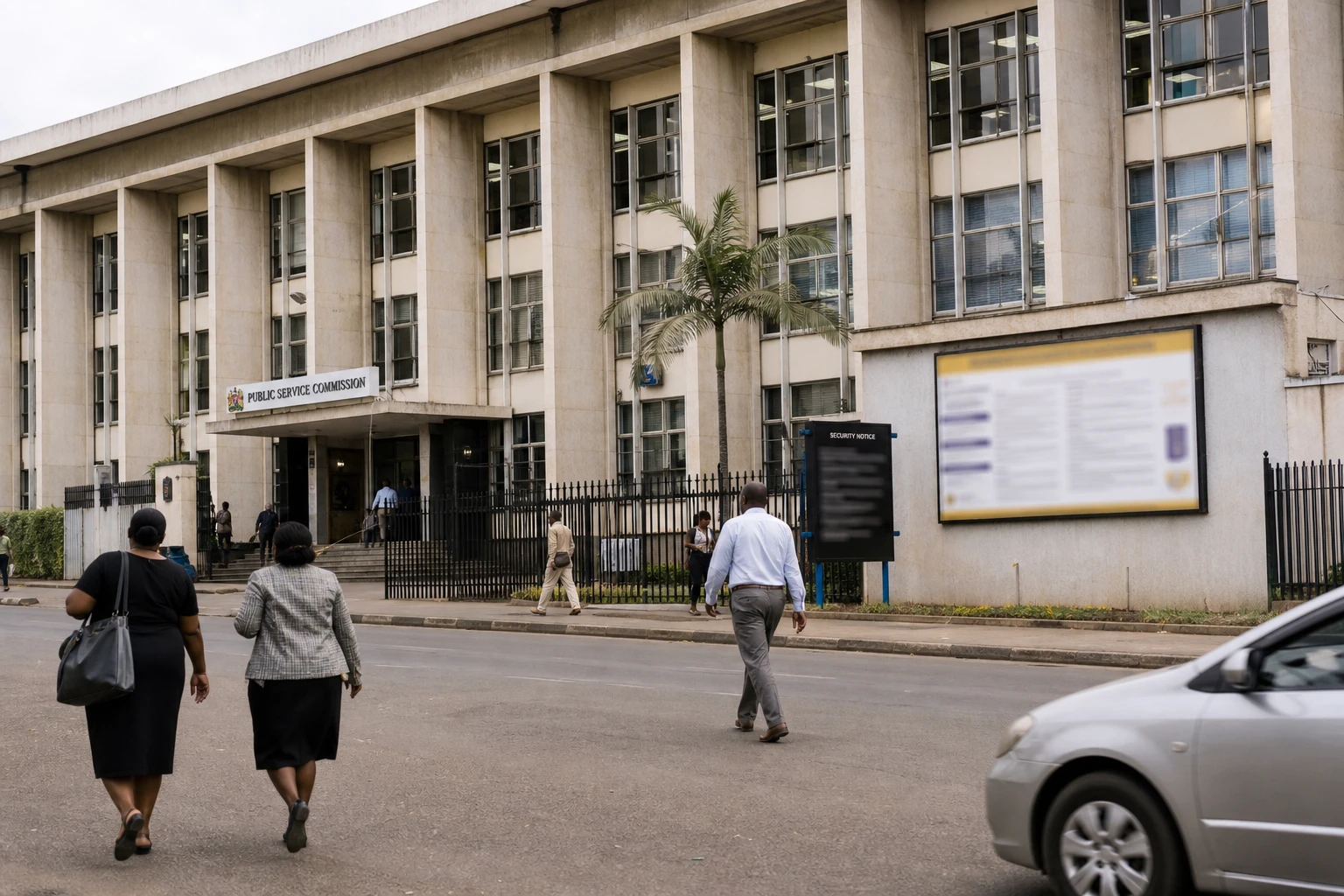
Another warning for Kenyan newsrooms
In Nairobi, a newspaper can publish, investigate and cause discomfort. But it can also attract pressure that goes beyond a simple editorial disagreement. The abduction of Alex Kiprotich, an associate editor-in-chief at the Standard, has revived a longstanding concern in Kenya: when journalists cover those in power, who really protects them?
The case affects more than one newsroom. It raises questions about the safety of information professionals in a country where Nairobi is the hub of most media activity, but where risks also extend to roads, counties and areas near political flashpoints. Kenya remains one of East Africa’s most active media environments, within the East African Community, but this vitality comes with persistent vulnerability.
What happened between Nakuru and Masinga
Accounts reported by several Kenyan media outlets broadly converge. On Tuesday 1 September 2026 at about 9.30pm, Alex Kiprotich was travelling on the Gilgil–Nakuru road in central Kenya when a civilian vehicle forced him to stop. Four armed men, described as masked, then took him away by force. He was found alive during the night near Masinga Dam, in Machakos County, more than 200 kilometres from where he was abducted.
According to reports published in Nairobi, he was located at about 2am and then brought to safety after seeking refuge in a nearby home. Other accounts put the alert received by his newsroom at about 3am. This difference over the exact time does not change the essential facts: the journalist was abducted, taken a long distance and then abandoned alive, in an operation that resembles targeted intimidation more than an ordinary crime.
The Standard and several professional organisations condemned the attack as an assault on press freedom. The Kenya Media Working Group, publishers’ associations and organisations such as AMWIK called for a swift and independent investigation. The response was clear: the issue is not only the individual, but newsrooms’ ability to work without threats.
A country where attacks on the press remain documented
This case has not arisen in a vacuum. In 2024, Kenya experienced a period of acute tensions surrounding protests against the Finance Bill. Journalists were beaten, injured or prevented from covering events. The International Federation of Journalists and its African branch had denounced police brutality against professionals clearly identified as journalists.
The Media Council of Kenya recorded 130 violations in 2024 in its annual report on press freedom. The report also notes that Nairobi accounted for 26% of cases that year, and remained the epicentre of violations in 2025. It further finds that physical assaults are still the most common form of abuse, while intimidation and threats continue to weigh on journalists.
Another important finding is that those responsible for these violations are not always private or anonymous actors. The Media Council’s report notes that police were the main perpetrators in 2024, before county authorities became the leading actors in reported violations in 2025. This sheds light on the Kenyan situation on any given day: pressure on the press does not come only from the streets; it can also reflect the instincts of the public apparatus.
What this abduction says about the balance of power
For newsrooms, the stakes are immediate. When a journalist is intercepted on an intercity road, held in isolation for hours and then released far from where he was taken, the message to the sector is clear. It is aimed not only at the victim, but also at teams investigating security, politics, public affairs or abuses of authority. The intended effect is often self-censorship.
For citizens, the consequences are even broader. In Kenya, as elsewhere in East Africa, the media remain a key source of information on tax increases, protests, county governors, public appointments and electoral tensions. If journalists retreat, civic space shrinks. Those most affected are the people who rely on local information to understand decisions made in Nairobi, Nakuru, Machakos or outlying counties.
The contrast is all the more striking because Kenya has a constitutional framework that protects freedom of expression and the right to information. In practice, the gap between the text and the reality on the ground remains visible whenever journalists are assaulted, arrested, prevented from working or, as in this case, abducted by armed men. The balance of power then depends less on written law than on whether those responsible are genuinely held to account.
Significance beyond Kenya
This case matters beyond Kenya’s borders. It is part of a continent-wide trend in which political crises, social movements and institutional transitions expose the media to greater risks. The question, therefore, is not only that of a high-profile abduction, but of the concrete guarantees afforded to journalists in African democracies under strain.
The East African Community needs a robust public sphere to follow debates on taxation, local governance, security and social protest. An incident such as this is a reminder that a free press is not institutional window dressing. It is a condition for democratic scrutiny. The next test will be the announced investigations: how quickly and independently they proceed, and whether they can identify those responsible, their networks and any protection they may enjoy.