
 Algeria
 Egypt
 Libya
 Morocco
 Sudan
 Tunisia
 Benin
 Burkina Faso
 Cabo Verde
 Côte d'Ivoire
 Ghana
 Guinea
 Guinea-Bissau
 Liberia
 Mali
 Mauritania
 Niger
 Nigeria
 Senegal
 Sierra Leone
 The Gambia
 Togo
 Central African Republic
 Chad
 DR Congo
 Equatorial Guinea
 Gabon
 Republic of the Congo
 São Tomé and Príncipe
 Burundi
 Comoros
 Djibouti
 Eritrea
 Ethiopia
 Kenya
 Madagascar
 Malawi
 Mauritius
 Mozambique
 Rwanda
 Seychelles
 Somalia
 South Sudan
 Tanzania
 Uganda
 Angola
 Botswana
 Eswatini
 Lesotho
 Namibia
 South Africa
 Zambia
 Zimbabwe
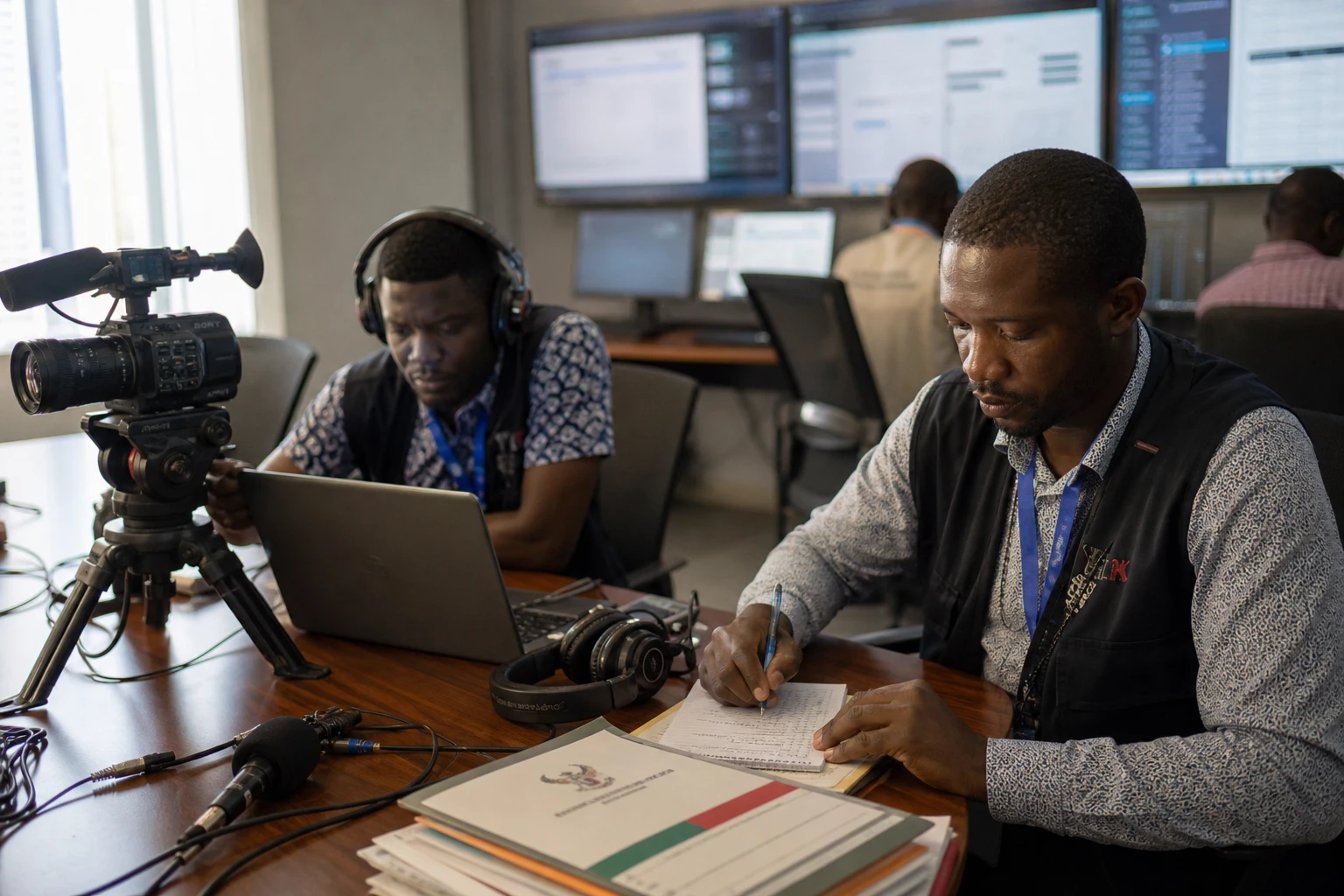
A discreet but decisive project for public finances
In Yaoundé, public procurement remains one of the State’s major levers. When it works poorly, it is not only government departments that slow down. Construction projects, school supplies, roads and, more broadly, public spending also lose momentum and transparency.
Cameroon now wants to take a more ambitious step. The aim is no longer simply to put a few forms online. The challenge is to connect the tools, government departments and stakeholders involved in the entire public procurement cycle, from planning to monitoring implementation. The Ministry of Public Contracts already presents digitalisation as a means of making the process more predictable, visible and transparent. The forthcoming roadmap is intended to give it a more comprehensive structure.
This shift comes in a country where public procurement carries considerable weight in the functioning of the State. In 2025, MINMAP services recorded 8,143 contracts in the pipeline, worth a total of CFAF 1,745.9 billion, according to figures reported by the Cameroonian business press and by the ministry in its activity reports.
What the national master plan sets out
The project has a technical name, but its substance is very practical. The African Development Bank has published the award of the contract to draw up the national master plan for digitising the public procurement information system. The contract was awarded to the NC Consulting/Eyra International consortium for CFAF 241.36 million, for a period of six months.
The terms of reference, launched under the Public Finance Governance Support Project, first provide for an assessment of existing systems, including the software and applications already in use. They then call for an analysis of information flows between stakeholders, the identification of infrastructure, organisational and legal needs, and proposals for several digitisation scenarios and an implementation programme. The AfDB says the funding is part of PAGFIP, a project focused on public finance governance and spending efficiency.
In practice, the project is intended to go beyond COLEPS, the Cameroon Online E-Procurement System, already used for planning and part of the procurement process. In 2024, the Ministry of Public Contracts said it wanted to extend COLEPS to all stakeholders to ensure the monitoring of the full life cycle of public contracts. An official budget document also stated that, by 31 December 2023, 8,607 contracts had already been planned online on the platform, representing 98.6% of budgeted contracts.
The foundations are therefore already in place. But they remain fragmented. The tools for planning, procurement, oversight and monitoring do not yet communicate effectively enough with one another. That is precisely what the forthcoming plan is intended to address. The logic is simple: fewer duplications, less information loss, greater traceability and better management of deadlines.
Why this reform matters beyond technology
Digitising public procurement is not a matter of administrative convenience. It affects the credibility of the State. In a system involving large sums, even a minor validation delay, a break in the documentary chain or a lack of transparency at any stage of procurement can affect businesses, local authorities and end users. A delayed road in Garoua, equipment arriving late at a hospital, or a school whose construction takes too long all carry real costs for citizens and the economy.
For government departments, the issue is also a budgetary one. An integrated system makes it easier to monitor commitments, contract awards and implementation. It helps link the planning of needs more effectively to payment schedules and internal controls. For businesses, especially Cameroonian SMEs, digitisation can lower some barriers to access, provided the rules are clear and the platform remains easy to use. For oversight bodies, it can strengthen auditing capacity and the traceability of decisions.
Cameroon is not starting from scratch. Public authorities have already made digitisation part of a broader reform of public finance management. In its project documents, the AfDB notes that PAGFIP aims to strengthen budget management, resource mobilisation and transparency. In this context, public procurement is becoming a strategic link, not merely a technical compartment.
The regional context also gives this shift added significance. In Central Africa, CEMAC has for several years sought to modernise public finances and improve the quality of spending. Cameroon, the region’s largest economy, often serves as a testing ground. If its public procurement system becomes more coherent, it could provide a practical model for other administrations in the sub-region facing the same coordination and transparency challenges.
The African significance of a governance project
This project also says something broader about governance in Africa. Governments are no longer seeking to digitise solely to modernise their image. They are working to connect their databases, reduce blind spots and improve the management of public spending. The AfDB clearly reflects this approach in its support for Cameroon, linking digitisation with resource mobilisation and a better business climate.
What happens next will depend on implementation. A master plan alone changes nothing. Political decisions, budgets, genuine system interconnections and buy-in from contracting authorities, delegated contracting authorities and oversight services will then be needed. That is where the difference between a reform announced and a reform that works will be made. The next benchmark will be Cameroon’s ability to bring planning, procurement, monitoring and accountability onto a single digital chain.



